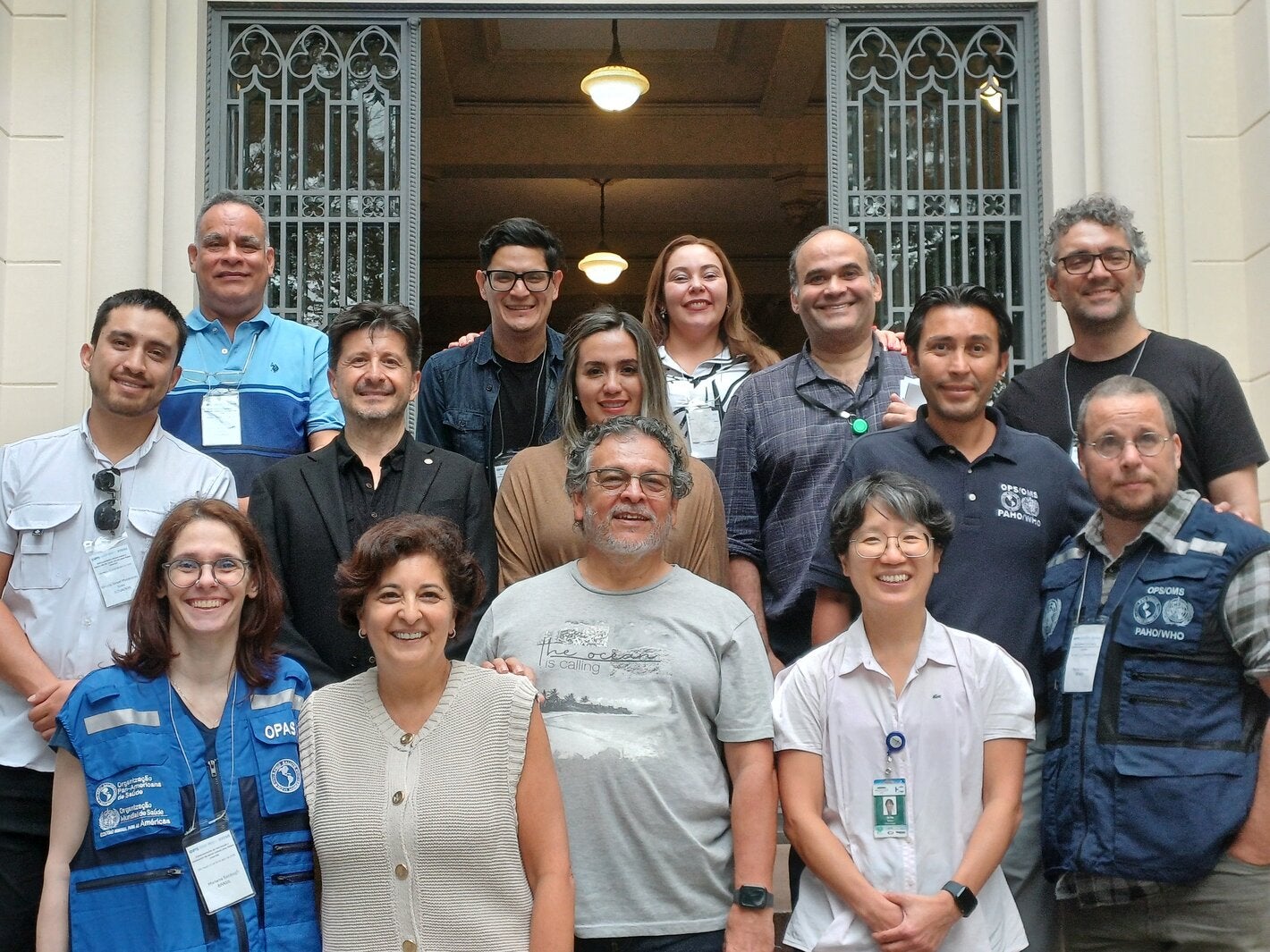
São Paulo, Brazil, April 28, 2026 – The Pan American Health Organization (PAHO), through its Department of Health Emergencies, is conducting a training course on minimally invasive autopsy (MIA) from April 27–30. The activity, carried out in collaboration with the Faculty of Medicine of the University of São Paulo (FMUSP), aims to strengthen countries’ capacity across the Region to improve the early detection of yellow fever.
Minimally invasive autopsy, performed through a single puncture to obtain targeted tissue biopsies, enables the rapid collection of diagnostic samples that facilitate the confirmation of yellow fever in humans. The initiative is part of regional efforts to strengthen response capacities for emerging diseases. “Our goal is to strengthen the early detection of yellow fever in all countries, especially in remote areas, through capacity-building and the use of key tools such as minimally invasive autopsy,” said Angel Rodríguez Mondragón, Clinical Management Advisor in PAHO’s Department of Health Emergencies.
The course is being held amid a challenging epidemiological context for the Region. Since 2024, 441 cases of yellow fever have been confirmed in the Americas in areas without recent transmission history, including territories outside the Amazon region, according to the PAHO epidemiological alert published on March 13, 2026. This geographic expansion of yellow fever, combined with the disease’s high fatality rate, reinforces the need to strengthen timely detection and clinical management.
Minimally invasive autopsy is emerging as an innovative tool with strong potential to support these efforts. By enabling sample collection through precise and faster techniques, its application facilitates the investigation of causes of death in humans, particularly in resource-limited settings or remote areas. This contributes to reducing underreporting and improving the quality of mortality data, a strategic element for guiding public health policies.
Another advantage of MIA, experts highlighted, is its greater acceptability among the relatives of deceased individuals, which may facilitate the implementation of these procedures in different cultural contexts.
The six specialists participating in the course, including pathologists from Colombia and Ecuador who will replicate the training for other professionals in their countries, highlighted the challenges their countries face in investigating deaths associated with infectious diseases, as well as the potential of MIA to strengthen national diagnostic capacities. The possibility of applying this methodology in hard-to-reach territories represents a significant advancement for public health surveillance in the Region.
Through initiatives such as this training, the Pan American Health Organization contributes to the development of national capacities and access to innovative methods and techniques that support better decision-making and timely outbreak response.
PAHO will continue supporting countries in strengthening their capacities for early detection, clinical management, and coordinated response to yellow fever, while promoting regional cooperation and knowledge exchange as fundamental pillars for addressing emerging health threats.
This activity was carried out with support from the European Union.