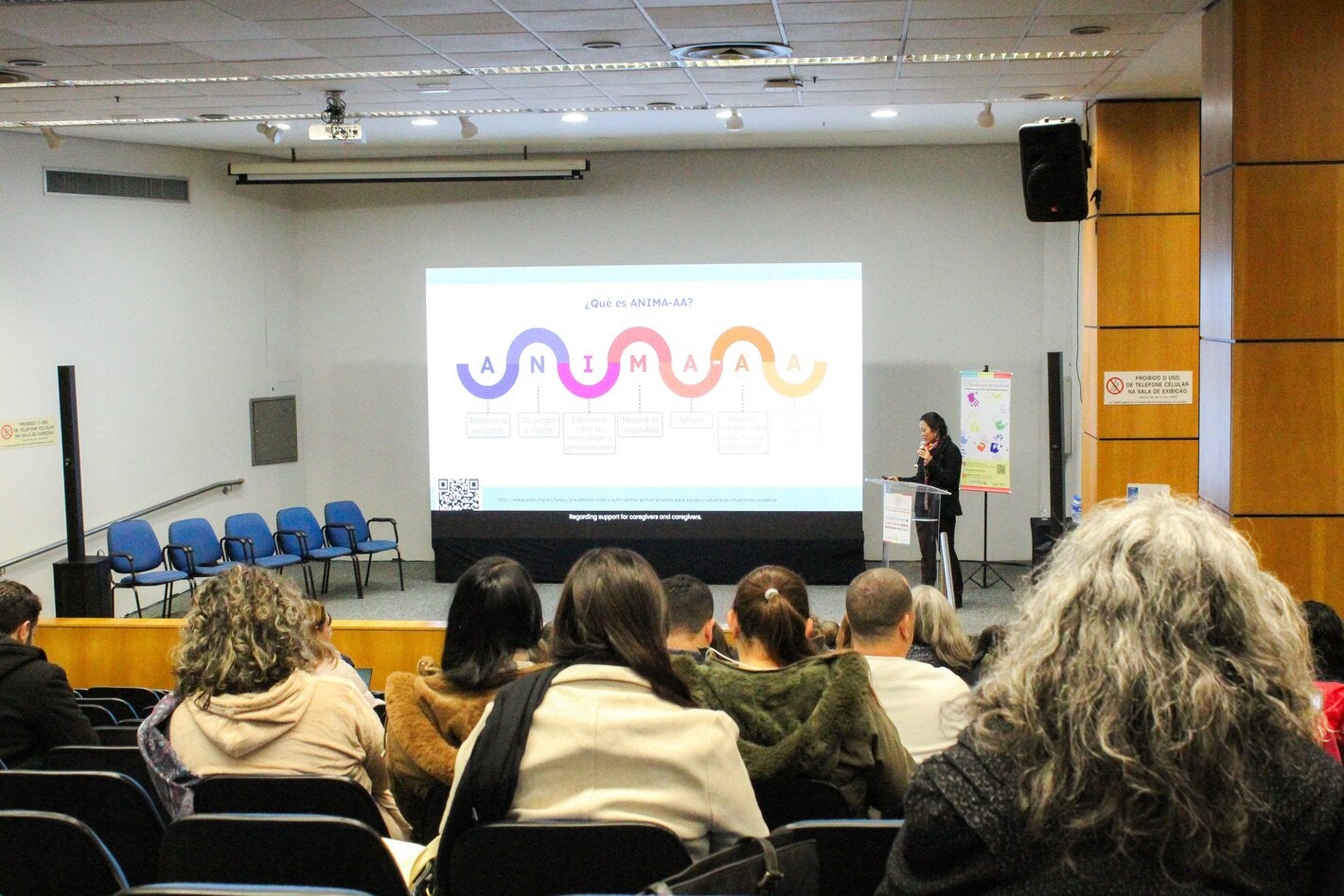
On June 23 and 24, PAHO/WHO, the Human Development and Violence Research Centre (DOVE), and partners convened an international seminar on “Violence and Child Development: Evidence and Policy Pathways for Prevention in Brazil” in Porto Alegre, bringing together researchers, policymakers, and practitioners to share evidence and strengthen prevention efforts.
The hybrid seminar brought together more than 400 participants, both in person in Porto Alegre, and online via YouTube. Participants included Brazilian researchers, practitioners, and policymakers working on child development and the prevention of interpersonal violence at local, state, and national levels, as well as international experts.
The event was co-organized with other partners such as the Instituto Cidades Seguras and the Pontifical Catholic University of Rio Grande do Sul
Presentations underscored the impact of violence on health, well-being, and child development in Brazil, and explored evidence-based solutions from a life-course perspective. Discussions also addressed child development, violence, and social determinants of health, particularly gender and race.
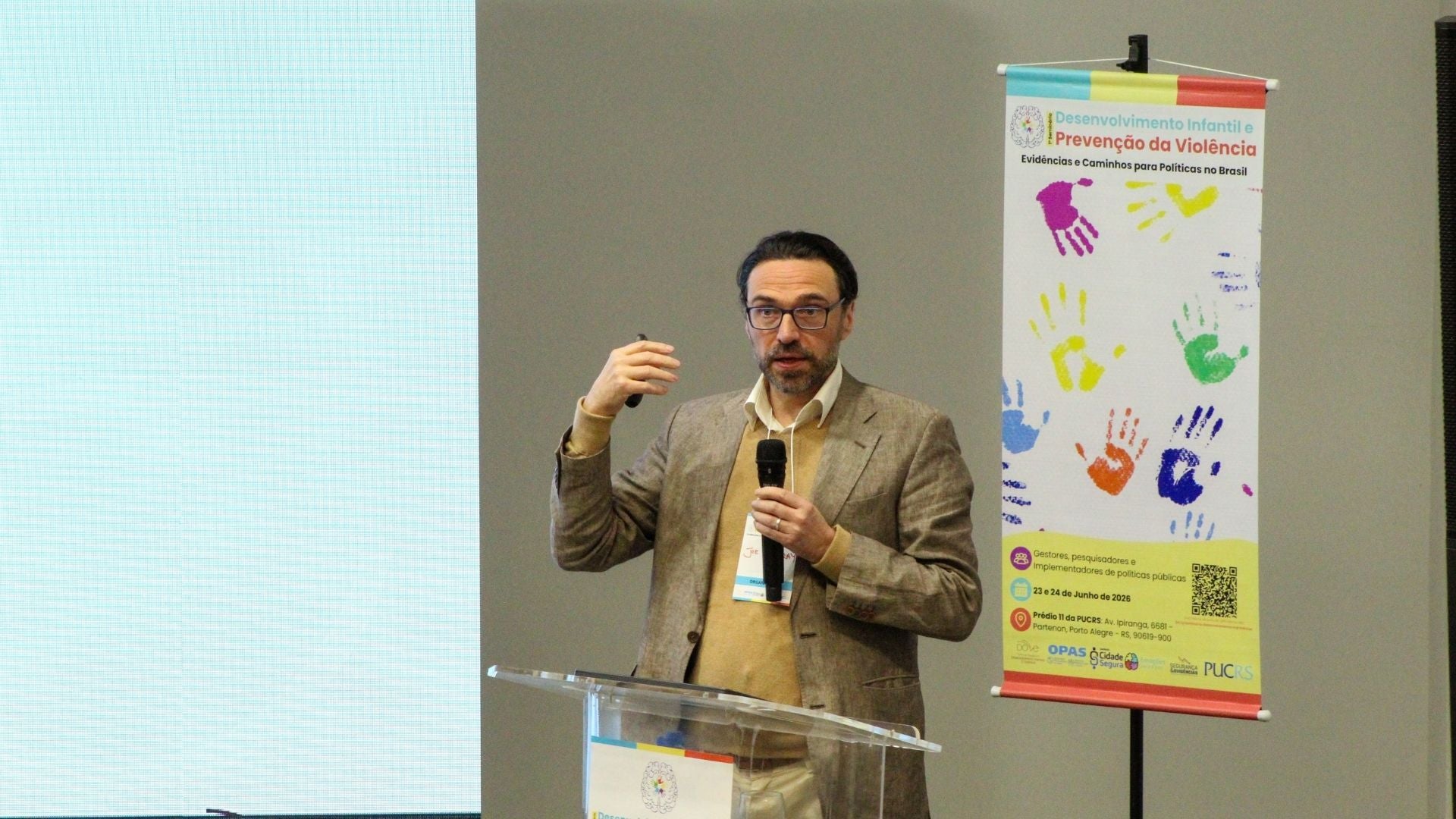
The seminar brought together scientific evidence and practical experience, helping to bridge the gap between research and policy implementation. Sessions included updates from program evaluations and research on child protection, childhood development, and parenting support. These sessions were led by DOVE, the Center for the Study of Violence at the University of São Paulo, the Center for Early Childhood Science, and other experts in Brazil.
Representatives from sectors, including health, human rights, and citizen security, shared experiences translating into policy and practice across the country. Examples from the national level, state level of Rio Grande do Sul, and municipalities of Pelotas, Lajeado, and Santo Antonio do Descoberto showcased progress in local implementation, including efforts led by a civil society coalition to end the violence against children.
The seminar also provided an important opportunity to provide an update on the implementation of INSPIRE: Seven Strategies to End Violence against Children, and to review Brazil’s progress in advancing the pledges made at the 2024 Global Ministerial Conference to End Violence against Children in Bogotá, Colombia. These discussions further helped to inform and strengthen the country’s contributions to the Second Global Ministerial Conference to End Violence against Children, to be held in November of this year.
The event was coordinated by the DOVE Research Center, which became a WHO Collaborating Centre for Evidence-Based Violence Prevention Across the Life Course in April 2025. As one of several joint activities planned with PAHO/WHO and partners, the seminar reinforced a shared commitment to expanding access to evidence and supporting its use in policies and practices that can prevent violence and promote healthier, safer environments for children and their communities in Brazil and the Region.