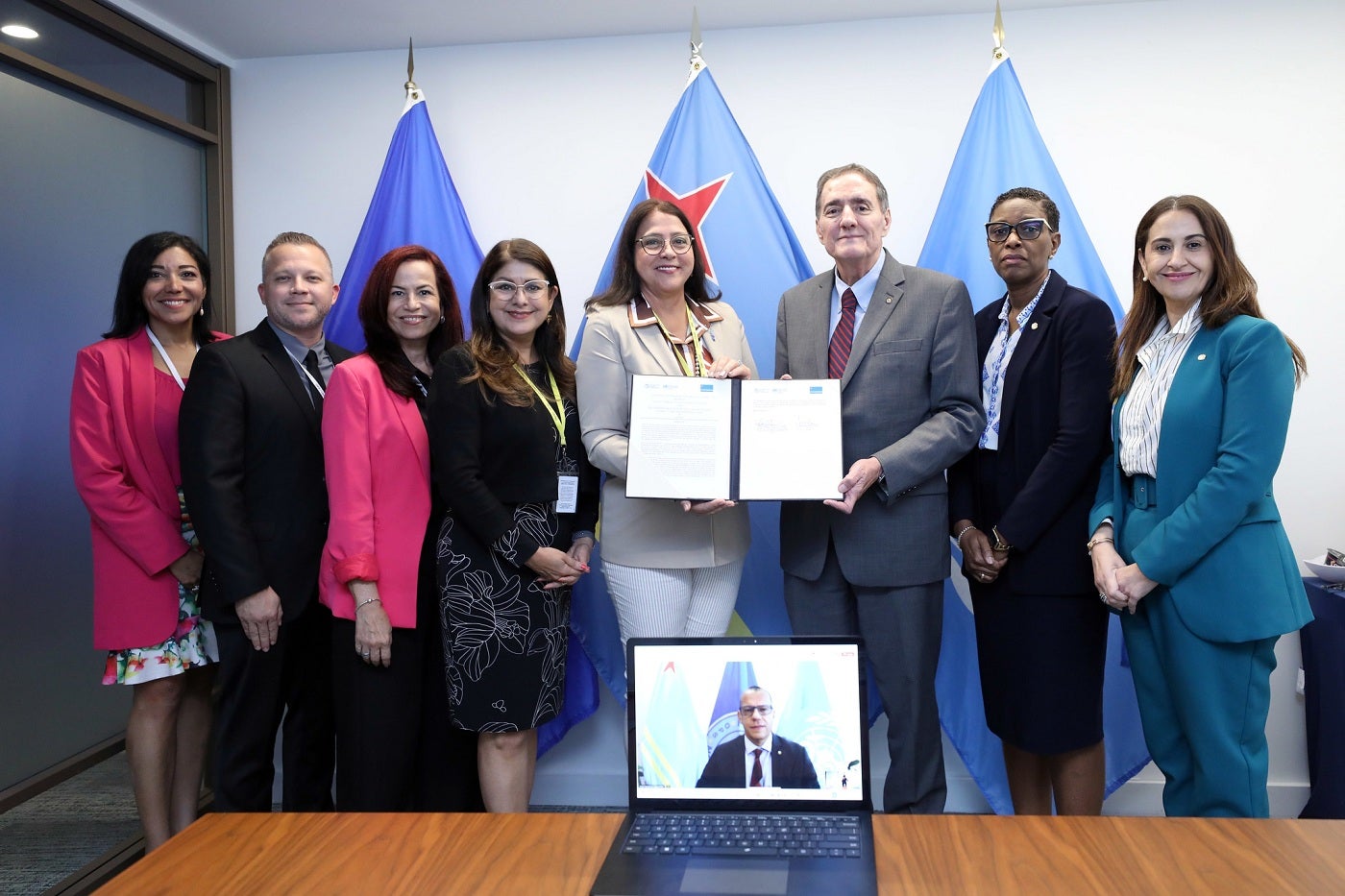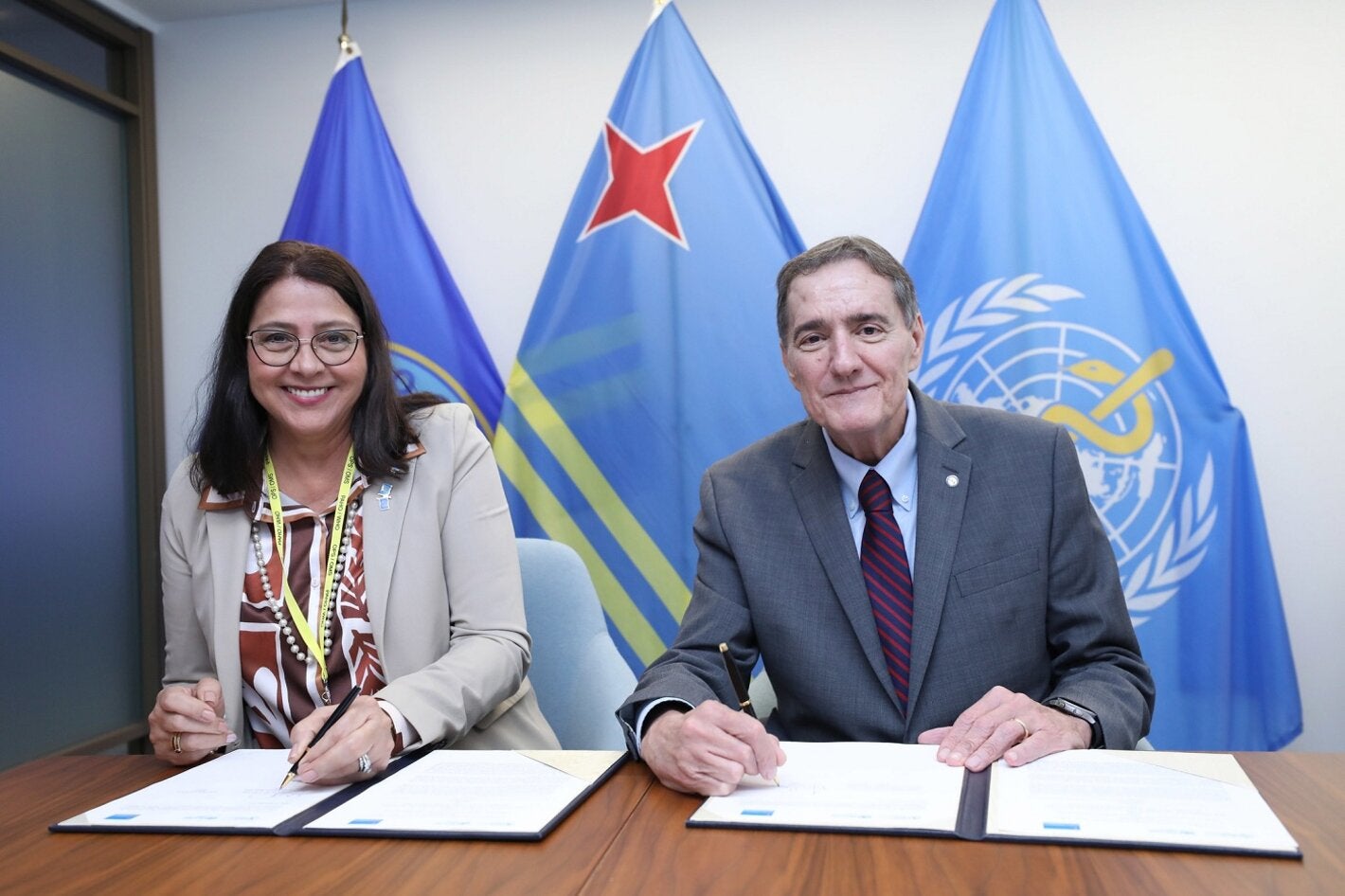
Washington, D.C., 30 September 2025 (PAHO) — The Pan American Health Organization/World Health Organization (PAHO/WHO) and the Government of Aruba today signed the Country Cooperation Strategy (CCS) for 2025–2030, reaffirming their shared commitment to strengthening Aruba’s health system and advancing health and well-being for all.
The agreement was signed by PAHO Director, Dr. Jarbas Barbosa, and Aruba’s Minister of Public Health, Social Affairs, Elderly Care and Addiction Care, Drs. Mervin Wyatt-Ras, during a bilateral meeting at PAHO Headquarters in Washington, D.C., held on the sidelines of the 62nd Directing Council of PAHO.
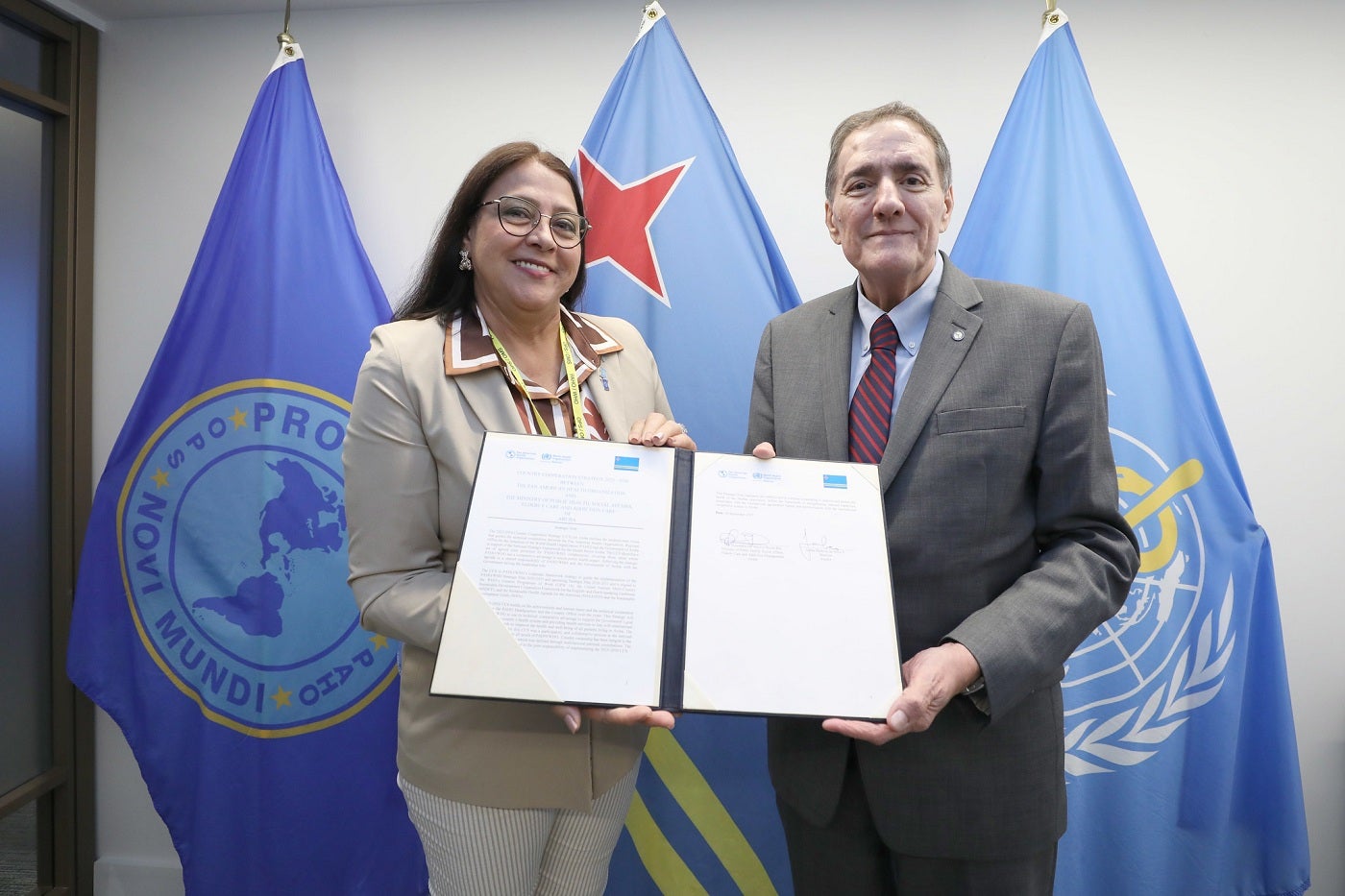
“This occasion marks a significant milestone in our collaborative efforts to enhance health and well-being in Aruba,” said Dr. Jarbas Barbosa, PAHO Director. “The Country Cooperation Strategy reflects our shared commitment to advancing health equity and sustainable development and ensures that our technical cooperation is focused, aligned with national priorities, and responsive to the needs of Aruba.”
The five-year strategy outlines key lines of action to guide PAHO/WHO technical cooperation with Aruba. These include:
- Strengthening the health system to expand Universal Health Coverage across the life course;
- Enhancing prevention and control of communicable and noncommunicable diseases, including mental health;
- Formalizing multisectoral collaboration through a Health in All Policies approach to address social and environmental determinants of health.
The development of the CCS, coordinated by the PAHO/WHO Trinidad and Tobago Country Office, was informed by a dynamic national consultation held in October 2024 in Oranjestad. That process brought together senior representatives from Aruba’s Department of Public Health, government ministries, United Nations agencies, and civil society. Participants reached consensus on a Strategic Agenda aligned with the country’s National Health Policy and Development Plan for 2025–2030.
The strategy recognizes the importance of the management of noncommunicable diseases through primary health care. Discussions during the CCS development also included initiatives to strengthen baby-friendly care, improve information sharing between health institutions, and expand prevention programs to address risk factors like obesity and physical inactivity.
This milestone builds on a long history of technical cooperation through which PAHO has provided technical assistance, data, and policy guidance to Aruba. The partnership has supported the country’s efforts to improve care quality, reduce health costs, and respond to emerging health challenges.
With this new CCS in place, PAHO and the Government of Aruba reaffirm their partnership to work hand-in-hand to improve the health and lives of all people in Aruba, while contributing to regional and global health goals.