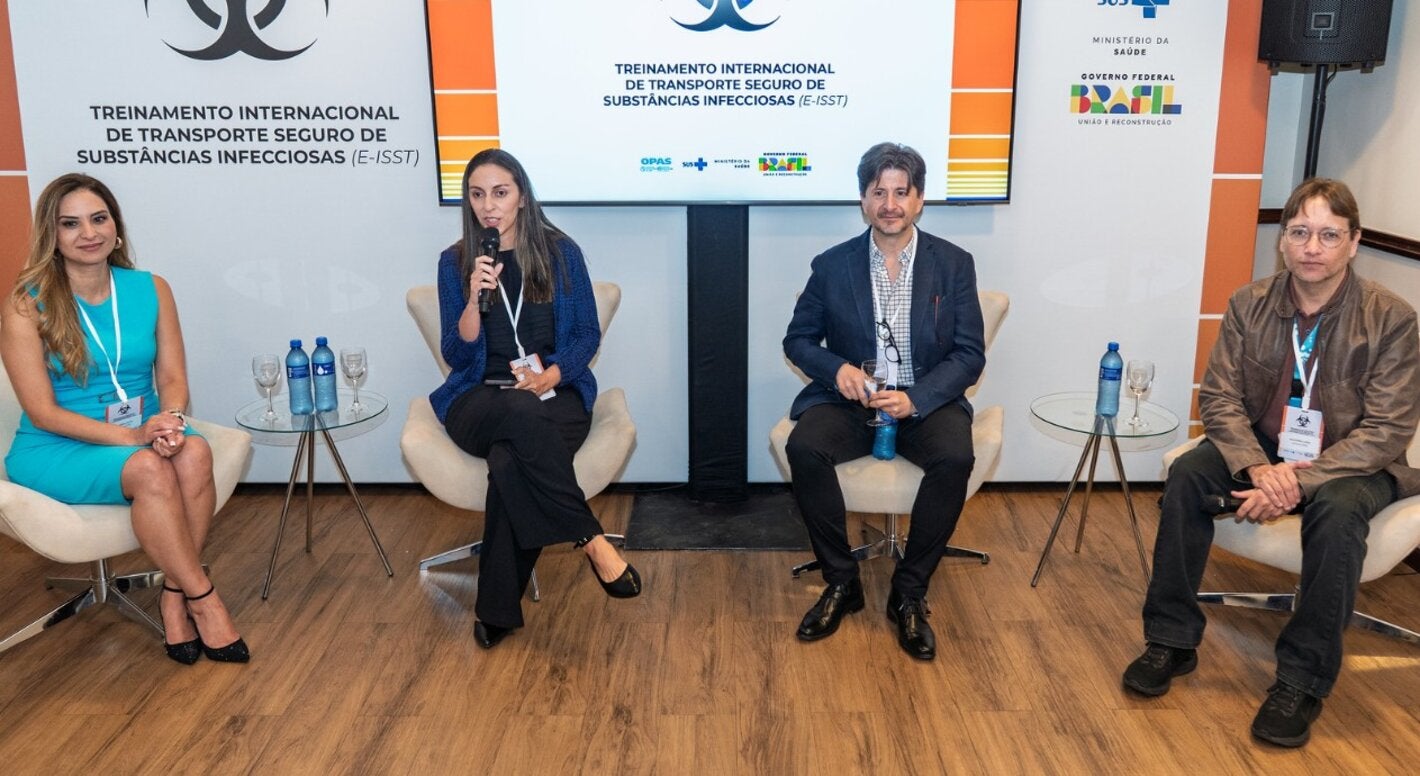
Brasilia, May 31, 2025 (PAHO) - The Pan American Health Organization (PAHO), in coordination with the Brazilian Ministry of Health, conducted two certification courses on Air Transport of Infectious Substances, held in Brasilia between May 27 and 30, 2025.
The training, requested by the General Coordination of Laboratories (CGLAB) of the Ministry of Health, aimed to strengthen the basic capabilities of the International Health Regulations (IHR) and ensure the readiness of laboratories to respond quickly and safely to pathogens with epidemic and pandemic potential.
A total of 61 professionals participated in the workshops, including specialists from the Brazilian State Public Health Laboratories, the Ministry of Health itself, PAHO in Brazil and, with special authorization, representatives from two institutions in Argentina.
The certification obtained focuses on the air transport of infectious substances Category A and B and, although it does not grant the authority to replicate category A training, it allows professionals to train others in ground transport and in the air shipment of category B biological materials. In addition, participants now have the skills necessary to assume shipper responsibilities, including proper identification, classification, packaging, labeling, documentation and incident management in the transport of specimens, as well as the processing of import/export permits and notification of consignees of shipments.
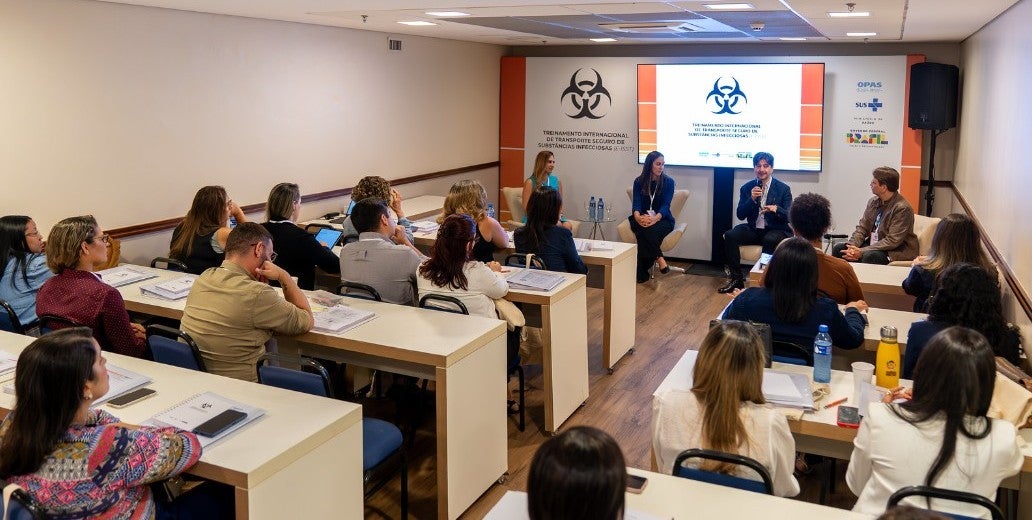
In compliance with the IHR, this certification ensures the safe transport of infectious samples nationally and internationally, contributing to the shipment of materials to regional public health reference laboratories and WHO collaborating centers for diagnosis and molecular characterization.
This effort is part of PAHO's ongoing work to support the countries of the Region in strengthening public health laboratory networks and preparing for health emergencies.