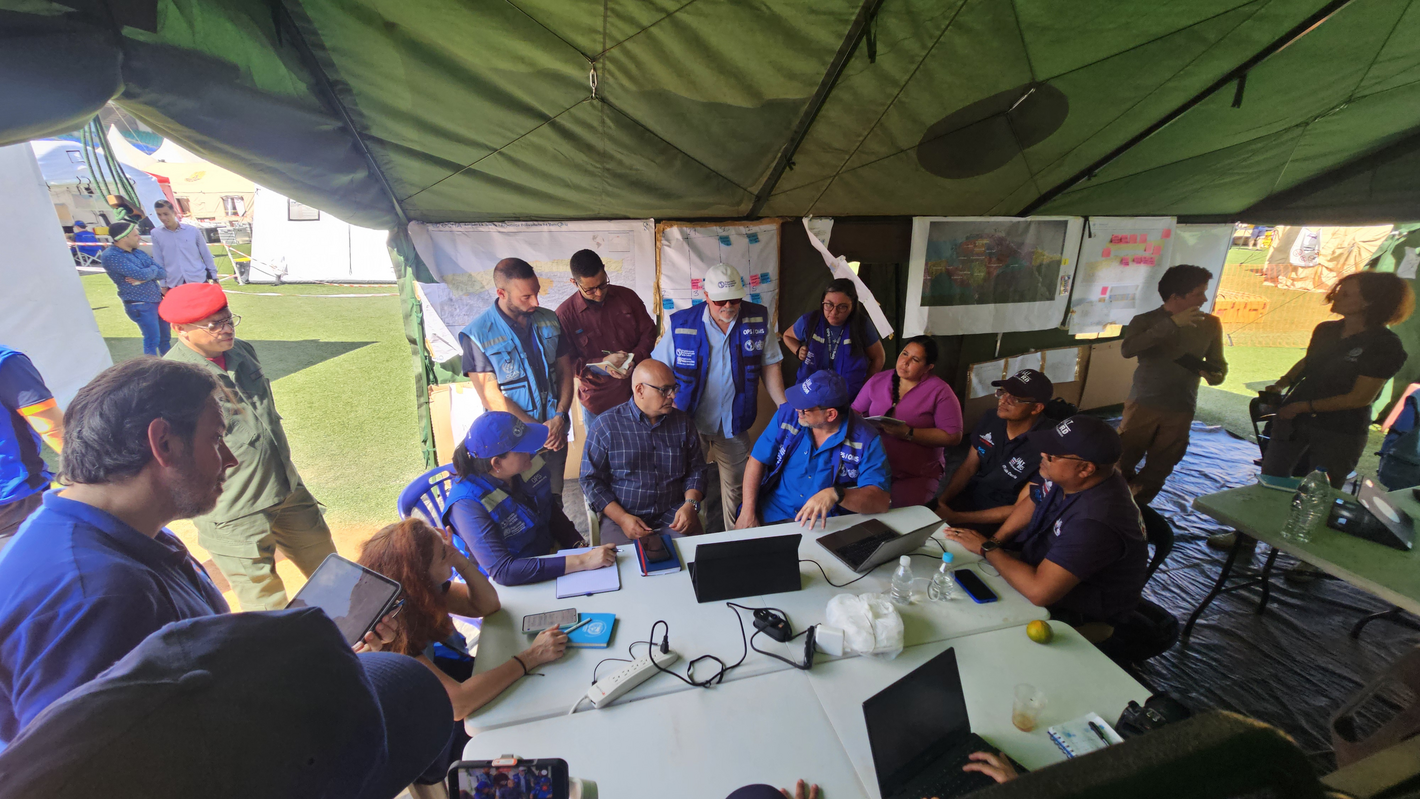
Caracas, Venezuela, July 31st, 2026 – In the aftermath of the earthquakes in Venezuela, the rapid mobilization of Emergency Medical Teams (EMTs) and specialized medical personnel has been critical to strengthening health services in affected areas. Ensuring that these resources are matched to priority health needs and deployed where they are needed most has been the responsibility of the Medical Information and Coordination Cell (CICOM), established by the Ministry of People’s Power for Health (MPPS, for its Spanish initials) with technical support from the Pan American Health Organization/World Health Organization.
In large-scale emergencies, meeting health needs requires more than simply increasing the number of medical teams in the field. Effective response depends on identifying priority health needs and matching them with the appropriate medical capacities. CICOM was activated to facilitate this process, serving as the national mechanism for coordinating the reception, deployment, and integration of international medical assistance.
Since its activation, CICOM has coordinated the deployment of 22 Emergency Medical Teams, including teams currently operating in affected areas, teams in the mobilization phase, and teams that have already completed their missions. Overall, 43 Emergency Medical Teams and Specialized Care Teams from 22 countries have engaged with national coordination mechanisms and PAHO/WHO to support the health response.
CICOM reviews international offers of assistance, supports the evaluation and acceptance of incoming teams, coordinates their deployment, and facilitates their integration into the national health response. Through both in-person coordination and the Virtual CICOM platform, the mechanism maintains a common operational picture of available capacities, identified needs, and ongoing activities across response areas.
The coordination mechanism also plays an important role in strengthening public health surveillance. Through the use of the Emergency Medical Team Minimum Data Set (MDS), deployed teams report standardized information on health services delivered, allowing data to be integrated into national surveillance systems. Based on 305 MDS reports submitted to date, EMTs continue contributing to epidemiological surveillance, supporting the early detection and monitoring of health risks in affected areas.
Beyond coordinating emergency medical deployments, CICOM supports efforts to ensure continuity of care for affected populations. CICOM, the Ministry of Health, and the International Organization for Migration (IOM) are working together to strengthen clinical care pathways in temporary camps, including patient referral systems, follow-up mechanisms, and access to essential health services. These efforts help ensure that people displaced by the earthquakes can continue receiving the care they need, including for chronic conditions and ongoing treatments.
The CICOM also facilitated the operational integration of innovative models of medical support. During the response, the Specialized Care Team for Emergency Remote Clinical Support (SCT-ERCS) was operationalized for the first time within an international EMT response through collaboration between the University of Miami, the Panamerican Trauma Society, and the PAHO EMT Americas Secretariat. The SCT-ERCS provided provider-to-provider specialist consultation, extending specialist surge capacity beyond physical deployments while supporting frontline clinicians caring for patients in affected areas.
The Virtual CICOM platform was a key digital component of the CICOM, strengthening operational coordination through the management of international offers of assistance, real-time information sharing, and the visualization of Emergency Medical Team deployments and capacities.
The experience in Venezuela highlights the importance of having established coordination mechanisms in place before disasters occur. By facilitating timely decision-making, information sharing, and the effective deployment of international medical assistance, CICOM helps ensure that specialized health services reach affected communities when and where they are needed most.
As the response continues, CICOM remains a key component of the health emergency operation, supporting national authorities and international partners in delivering coordinated, efficient, and needs-based medical assistance to populations affected by the earthquakes.
PAHO/WHO acknowledges the financial support provided by the Spanish Agency for International Development Cooperation (AECID) and MSD, through the WHO Foundation’s Health Emergencies Alliance, in supporting the establishment and operation of CICOM during the Venezuela earthquake response.