Bogotá, December 5, 2025 – The Pan American Health Organization/World Health Organization (PAHO/WHO), with support from the Government of Canada and the European Union, contributed to the comprehensive response to Colombia’s national health emergency triggered by the yellow fever outbreak declared by the Ministry of Health and Social Protection on April 16, 2025.
Under the leadership of the national government and in close coordination with priority departments and municipalities, as well as frontline response teams in affected territories, PAHO/WHO supported surveillance, prevention, and response efforts through the coordinated work of multiple technical cooperation areas.
The response included actions in vaccination, community and epidemiological surveillance, laboratory surveillance, vector control, intersectoral coordination, risk communication and community engagement (RCCE), and clinical management.

In 2025, yellow fever spread to new areas, causing severe outbreaks with high mortality rates. The response strategy addressed the increase and/or persistence of reported cases in the departments of Tolima, Putumayo, Meta, Caldas, Cauca, and Guaviare. Yellow fever is a serious viral disease transmitted by infected mosquitoes that can cause fever, muscle pain, vomiting, jaundice (yellowing of the skin and mucous membranes), and even severe bleeding. There is no specific treatment, making prevention — through vaccination, the use of mosquito repellent, elimination of mosquito breeding sites, and seeking medical care during the early stages of illness — essential to saving lives.
The coordinated response involved the Ministry of Health and Social Protection, the National Institute of Health (INS), the National Food and Drug Surveillance Institute (INVIMA), the Ministry of Environment and Sustainable Development, National Natural Parks, the Ministry of Agriculture and Rural Development, departmental and municipal health secretariats, Regional Autonomous Corporations (CARs), among other entities. PAHO/WHO’s presence and technical cooperation contributed to containing disease transmission, strengthening preparedness in affected territories, and leaving installed basic capacities for future public health emergencies.
Sustained and timely immunization
An additional 1.3 million vaccine doses were procured beyond those already planned through the Revolving Fund, along with the timely delivery of cold chain equipment donations and logistical supplies for the Expanded Program on Immunization (EPI). These efforts contributed to increasing vaccination coverage and controlling the outbreak.
This was made possible through resource mobilization following the early identification of vaccine supply shortages in the country, challenges within the vaccination logistics chain, and the resources required to deploy the vaccination campaign. In addition, the training of vaccinators and epidemiologists in field investigations, as well as the training of managers in pharmacovigilance processes, helped establish the necessary procedures to identify and validate Events Supposedly Attributable to Vaccination or Immunization (ESAVI).

Community and epidemiological surveillance
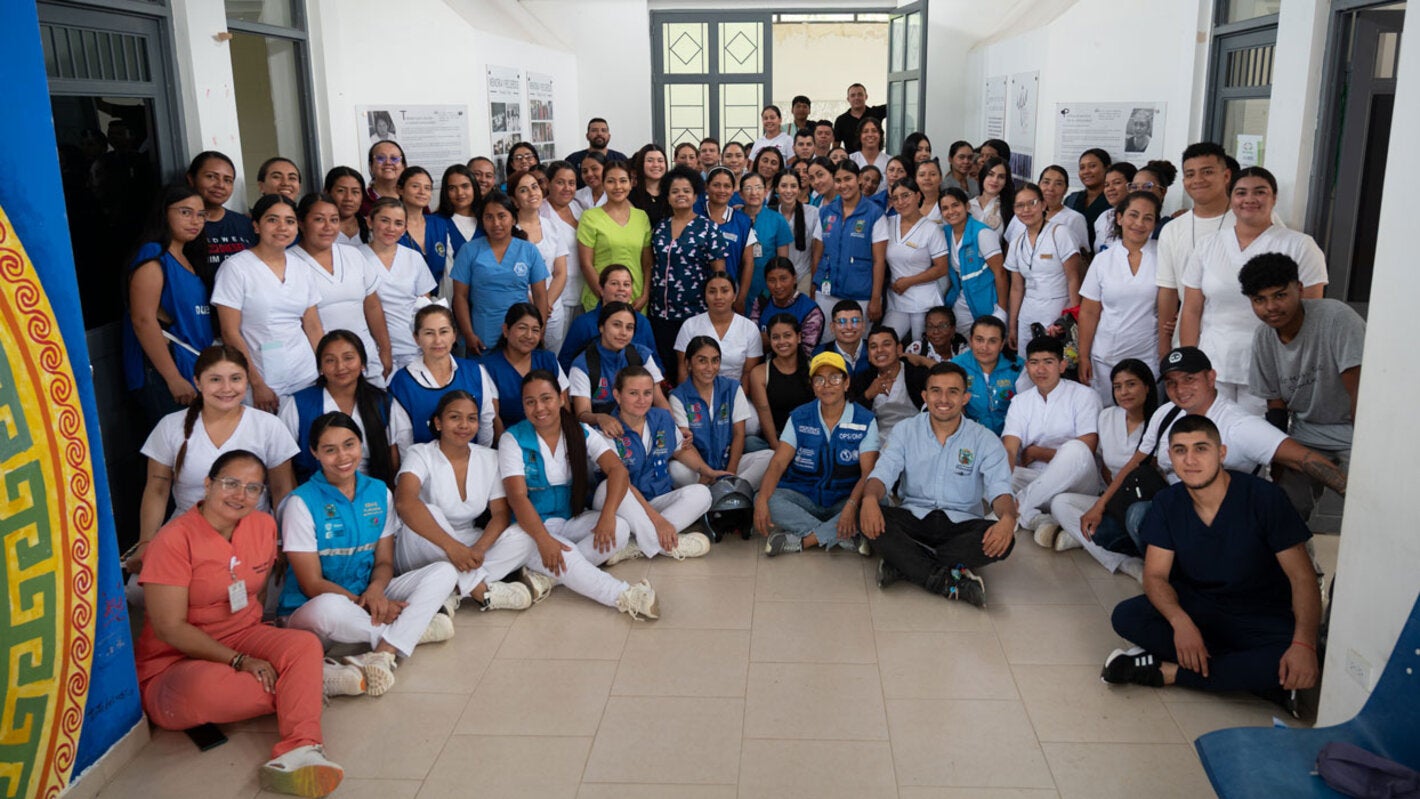
PAHO provided technical support to strengthen community and epidemiological surveillance, enhancing local capacities for the early detection of warning signs. Intensive field-based training processes were carried out with community agents, outreach workers, and community surveillance volunteers to improve the timely identification of alerts within communities.
From a public health surveillance perspective, technical cooperation included strengthening early warning systems, supporting case and outbreak investigations, and promoting integrated data analysis, including epizootic surveillance as a key component for anticipating risks. This coordinated work among national and local authorities, community teams, and PAHO reaffirms the commitment to continue supporting a rapid, coordinated, and evidence-based response to protect populations at risk.
Laboratory surveillance
As part of its laboratory technical cooperation, PAHO/WHO also supported the yellow fever outbreak response through the timely provision of supplies and reagents, ensuring continuity of molecular diagnostics and proper sample management.
In parallel, efforts strengthened epizootic surveillance and entomology capacities, particularly in vector capture and taxonomy, alongside the implementation of entomovirology activities. These actions helped generate evidence on the vectors involved and supported risk assessments during the outbreak response.

Vector control
In coordination with the Ministry of Health and Social Protection and the National Institute of Health (INS), nine training workshops were conducted on Integrated Vector Management, Entomology, Vector Control, and Insecticide Application Equipment.
These workshops strengthened the capacities of 314 staff members from Vector-Borne Disease (VBD)/Zoonoses and Entomology/Diagnostic Laboratory and Public Health programs within the departmental health secretariats of Amazonas, Arauca, Norte de Santander, Valle del Cauca, Cauca, Guaviare, Caquetá, Casanare, and Guainía.
The workshops were well received by technical and operational personnel from departmental VBD programs, as they provided tailored, field-based training that strengthened local capacities for intervention and control in response to vector-borne disease outbreaks and epidemics in their territories.
The vector control and insecticide application equipment management component was essential for standardizing calibration and application methods, identifying active ingredients, formulations, and product toxicity, strengthening knowledge of safety measures for risk prevention, optimizing the storage of supplies, and ensuring regular preventive maintenance of equipment.
Intersectoral coordination
Colombia strengthened intersectoral coordination for yellow fever surveillance and response through joint efforts among national, departmental, and municipal government entities, with technical support from PAHO/WHO.
This collaboration helped strengthen capacities for the timely detection and reporting of epizootics in non-human primates (NHPs), as well as for risk communication and community engagement in priority territories.
As a result, progress was made in the development of the National Guidelines for Epizootic Surveillance in Non-Human Primates, collaboratively developed by health and environmental authorities. This tool leaves installed capacity for future zoonotic emergencies and further consolidates the integration of the One Health approach to protect human, animal, and environmental health across the country.
Risk communication and community engagement
PAHO/WHO strengthened risk communication and community engagement as an essential public health component that helps protect lives. To promote consistent prevention messaging, a collection of informational materials was developed and distributed, while 526 health workers in southern Tolima were trained to help address fears related to measures such as vaccination through active listening and appropriate community support.
At the same time, social listening activities were implemented to identify rumors and provide verified information that would enable communities to make informed decisions. These efforts were complemented by training sessions for regional journalists — including sports radio broadcasters — aimed at improving the quality and accuracy of information shared with the public.
Social mobilization was another key component of the response. The Health Watch Network was activated, with 500 community leaders trained in person and more than 6,000 participants connected virtually using clear communication tools. In rural areas, barriers and motivators related to vaccination were identified, and participatory methodologies such as theater exercises and radio-dialogue activities were used to develop a graphic novel explaining yellow fever through community narratives and culturally relevant references.
To ensure broad territorial coverage, a multichannel strategy was implemented, including a radio campaign across 37 stations, daily loudspeaker announcements in the 10 most affected municipalities, and community mural initiatives in Ataco and Cunday, leaving permanent visual messages reminding communities that “Your health is your power.”
Clinical management
As part of comprehensive case management efforts, PAHO/WHO supported the Ministry of Health and Social Protection in disseminating and implementing the updated technical guidelines for clinical management.
To support these efforts, four national facilitators were trained in yellow fever clinical management and have since replicated the training for specialists at referral health facilities managing severe cases. Toolkits were also developed for first-level healthcare personnel and primary healthcare teams to support training and implementation of the guidelines in prioritized health facilities.
PAHO/WHO further supported capacity-building through a virtual webinar on necropsy procedures, sample collection, and shipment for post-mortem case confirmation. In addition, a virtual yellow fever course is currently under development.
Given the public security challenges in high-risk municipalities and incidents affecting Medical Mission personnel, support was also provided for the training of healthcare workers on Medical Mission principles. As a result, 1,459 professionals were trained, and protective emblems were delivered to 10 health facilities along with 300 identification vests for field personnel.