Washington, D.C., 9 November 2026 (PAHO) – From 4 to 6 November, the Pan American Health Organization (PAHO) conducted a technical mission to Mexico to support the strengthening of advanced practice nursing and to validate the regional AVANZA-APN tool, developed by the Organization to guide countries in the implementation and consolidation of these roles. The mission brought together health authorities and representatives of academic institutions, health services and nursing organizations to analyze the country’s progress, challenges and opportunities in this area.
PAHO promotes the expansion of the nursing scope of practice, through advanced practice nursing (APN), as a recognized strategy to expand access to and the problem-solving capacity of the first level of care, particularly in rural, remote and underserved areas.
The mission began on 4 November with the National Symposium on Advanced Practice Nursing, held at the School of Nursing and Obstetrics (FENO) of the National Autonomous University of Mexico (UNAM). The event brought together 97 participants from health and academic institutions and organizations from different regions of the country, who shared experiences around three axes: organizational and political; education and competency development; and the regulatory environment. During the day, graduates of master’s programs in APN shared their experiences, expectations, challenges and opportunities for entering the workforce.
“PAHO’s technical cooperation supports countries in making advanced practice nursing a reality at the first level of care, especially in rural and underserved areas, where it is most needed. Mexico is now a benchmark for Latin America for having formalized the expanded nursing role and advanced practice. To support countries along this path, PAHO developed the regional ADVANCE-APN tool, which provides a framework to guide decision-making and strengthen the expansion of the role of nurses,” said Benjamín Puertas, Chief of the Health Workforce Unit at PAHO.
On 5 November, the delegation visited the IMSS-Bienestar Atlacomulco Maternity Hospital in the State of Mexico, where it learned about experiences with the expanded nursing role in obstetric care. During the visit, participants exchanged perspectives with managers and health teams on the factors that facilitate the implementation of these roles, as well as the barriers that remain.
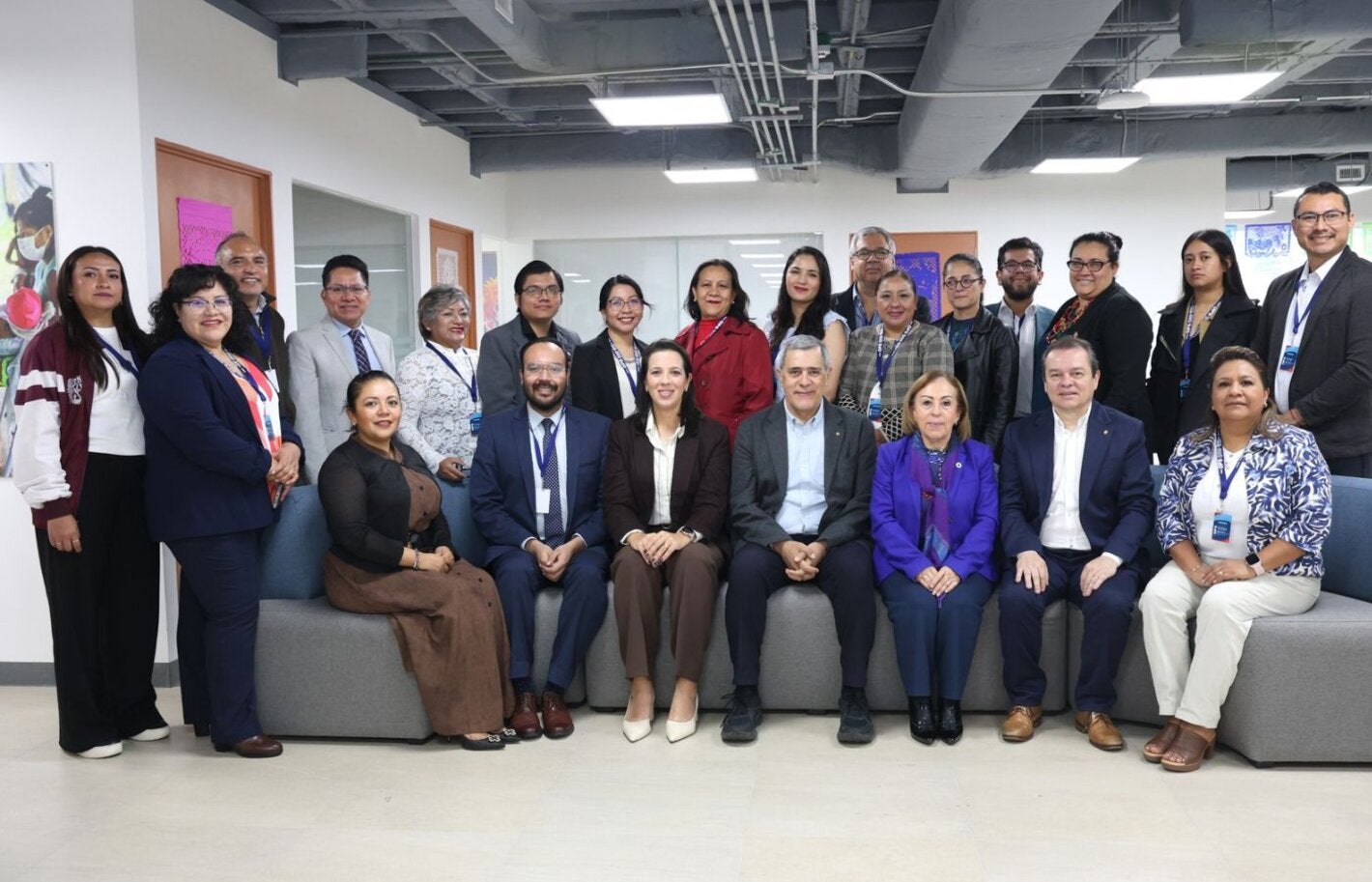
On 6 November, as the central activity of the mission, PAHO facilitated the application of the tool “ADVANCE-APN: Analysis and Assessment of National Progress towards Advanced Practice Nursing,” with the participation of 23 representatives of the intersectoral working group. The tool makes it possible to analyze national conditions for introducing, expanding and consolidating advanced practice nursing roles, and to prioritize actions based on their relevance, acceptability and feasibility. In addition to obtaining the national maturity profile and defining priorities for each axis, participants assessed the clarity, relevance and applicability of the items as part of the tool’s validation.
“The ADVANCE-APN tool allows country stakeholders to jointly analyze where they stand and decide where to move forward. By applying it through consensus, the intersectoral group determined the level of maturity in each axis and identified priorities for its roadmap. In addition, their input on the clarity, relevance and applicability of the items will allow us to refine the tool so that other countries in the Region can use it,” explained Bruna Moreno, international consultant, Health Workforce Unit at PAHO.
This mission is part of PAHO’s technical cooperation with Mexico to strengthen the nursing workforce and builds on the lines of work addressed during the Policy Dialogue for Strengthening the Nursing Workforce in Mexico, held in November 2025. As next steps, PAHO will systematize the results of Mexico’s experience and will continue to support the consolidation of the national roadmap, in line with the Policy on the Health Workforce 2030.
The activity received financial support from the Spanish Agency for International Development Cooperation (AECID).