Washington, D.C., December 9, 2025 (PAHO) – The Pan American Health Organization (PAHO) has renewed its call for countries in the Americas to close vaccination gaps amid a resurgence of pertussis, or whooping cough, which has been steadily increasing since 2023, according to the latest epidemiological update released yesterday.
Globally, whooping cough rose sharply in 2024, reaching 977,000 cases, nearly six times the 167,407 cases reported in 2023. The Western Pacific accounted for the largest share (591,193 cases), followed by Europe (296,543 cases).
A similar trend was observed in the Americas. After the region recorded its lowest number of cases in 2022 (3,284 cases), cases increased significantly in 2023 (11,202 cases) and again in 2024 (66,184 cases). Between January and November 2025, ten countries—selected for the epidemiological update—reported increases compared to previous years. Complete regional data for 2025 will be available in 2026.
“Whooping cough is a vaccine-preventable disease, but its resurgence highlights gaps in immunization and epidemiological surveillance,” said Dr. Daniel Salas, Executive Manager of PAHO’s Special Program on Integrated Immunization. “It is urgent that countries ensure high and consistent vaccination coverage, especially among children under five, to protect the most vulnerable and prevent outbreaks,” he added.
Vaccination coverage and most affected groups
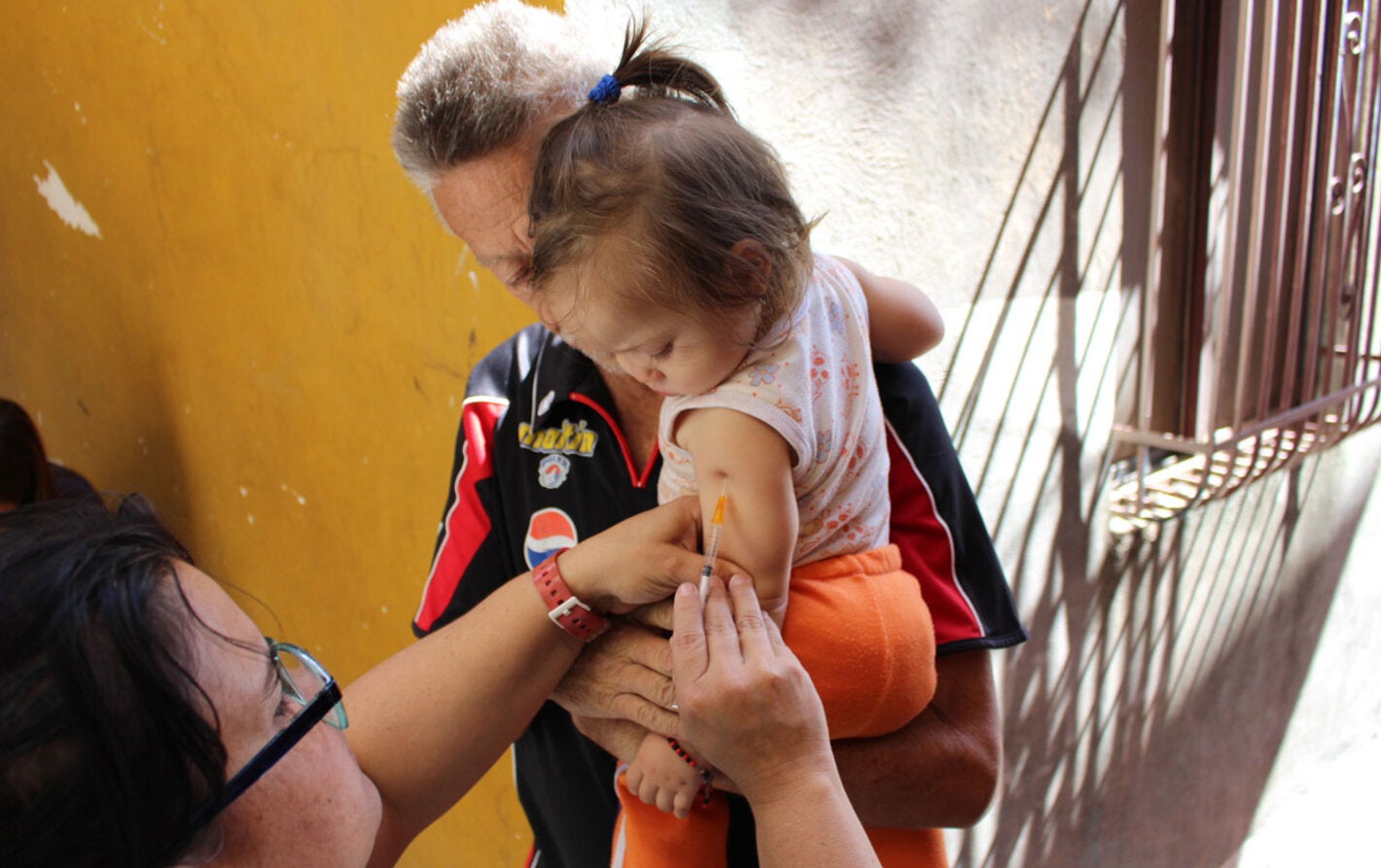
During the COVID-19 pandemic, whooping cough vaccination coverage in the Region fell to its lowest levels in two decades, with 87% for the first dose (DTP1) and 81% for the third dose (DTP3). In 2024, coverage improved to 89% and 87%, respectively, although disparities between and within countries persist.
PAHO recommends that countries achieve and maintain a vaccination coverage of 95% or higher with the three doses of the DTP vaccine in children under one year, as well as booster doses during childhood and adolescence to prevent outbreaks. In 2024, 21 countries achieved coverage of 95% or higher for DTP1, ten countries ranged 90- 94%, ten 80-89%, and four countries reported vaccination coverage below 80%. These results highlight the need to continue strengthening vaccination across the region.
Children less than 12 months are the most affected age group, accounting for 30–40% of cases in countries like Argentina, Brazil, and Colombia. Outbreaks have also been reported in indigenous communities and rural areas, where vaccination coverage is lower.
PAHO recommendations
- Strengthen epidemiological surveillance and laboratory confirmation of cases.
- Ensure vaccination coverage is above 95% in children and provide booster doses for pregnant women and healthcare workers, prioritizing maternity staff and caregivers of infants.
- Implement respiratory isolation measures for suspected or confirmed cases and ensure timely antibiotic treatment.
- Promote early diagnosis and prevention messages directed to health professionals and the general population.
“Timely and complete vaccination, together with robust surveillance, is the most effective strategy to prevent whooping cough, a disease that can cause severe illness, complications, or even death, especially in unvaccinated children under one year,” emphasized Dr. Salas.