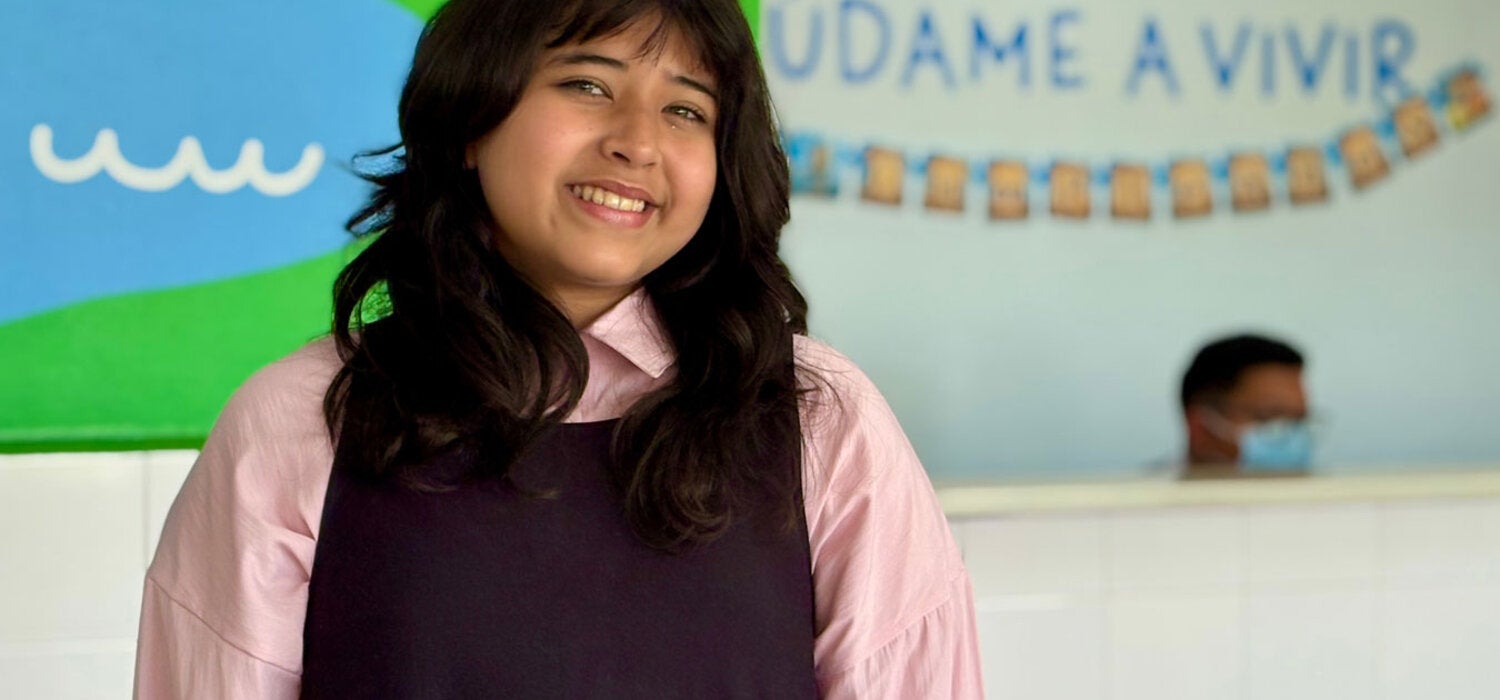
• Camila
    PAHO/Nubia Carvajal
    Credit

Childhood cancer: a journey to help Camila overcome her fear

For International Childhood Cancer Day, PAHO highlights the story of Camila, who overcame her fear of leukemia and chemotherapy thanks to Emely’s Suitcase, a resource created by the Organization together with the Ayúdame a Vivir Foundation that has supported more than 500 children in El Salvador, reducing treatment abandonment and reinforcing hope across Latin America and the Caribbean.

— February 2026 —

Two weeks left before her 11th birthday Camila Navarrete was told that something was not right. At the time, her life revolved around going to school in San Salvador, El Salvador, and enjoying her free time dancing, doing crafts, and drawing. Nothing had prepared her for what was coming.

On October 8, 2021, after several medical consultations and tests, the diagnosis that would change her life arrived.

“My parents didn’t tell me directly. They just said I was going into treatment, but I didn’t know anything,” Camila recalls. “When I heard the word ‘chemotherapy,’ that’s when I knew what I had. At that moment, what I felt most was fear.”

Fear of what?

“That I was going to die. That was what scared me the most.”

In Latin America and the Caribbean, an estimated 30,000 children and adolescents under the age of 19 are diagnosed with cancer each year, and nearly 10,000 die from the disease. Childhood cancer includes several types of tumors that develop during childhood and adolescence. The most common are leukemia—like the one Camila faced—brain cancer, lymphomas, and solid tumors such as neuroblastoma.

The disparities in survival rate are profound: in high-income countries of the Americas, more than 80% of children with cancer are cured, while in many low- and middle-income countries, on average only five out of ten survive. High mortality rates are linked to late or incorrect diagnoses, limited access to quality care, treatment abandonment, complications from associated infections, and higher relapse rates. Reducing these inequalities remains a major public health challenge.


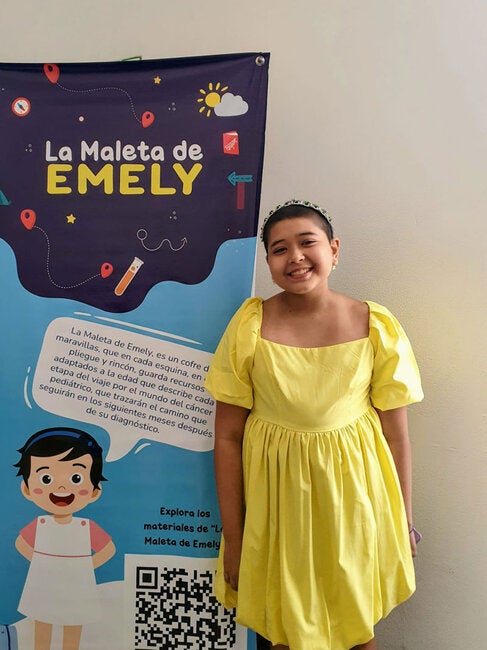
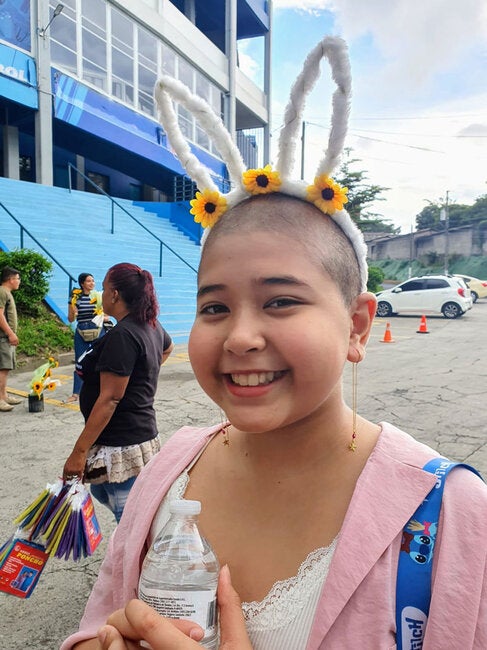
Girl going through cancer treatment


Girl going through cancer treatment


Discovering Cancer

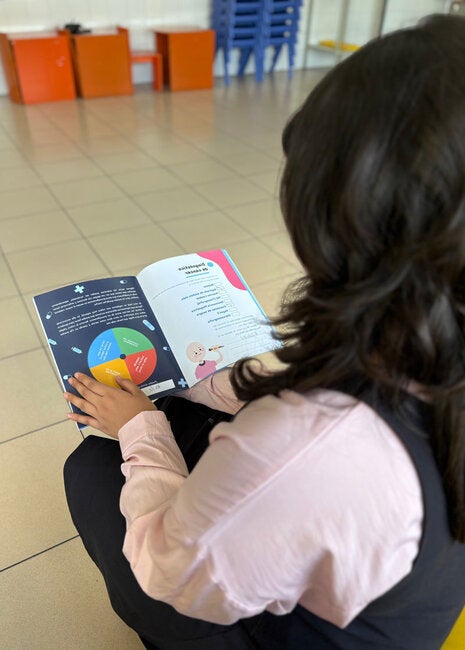
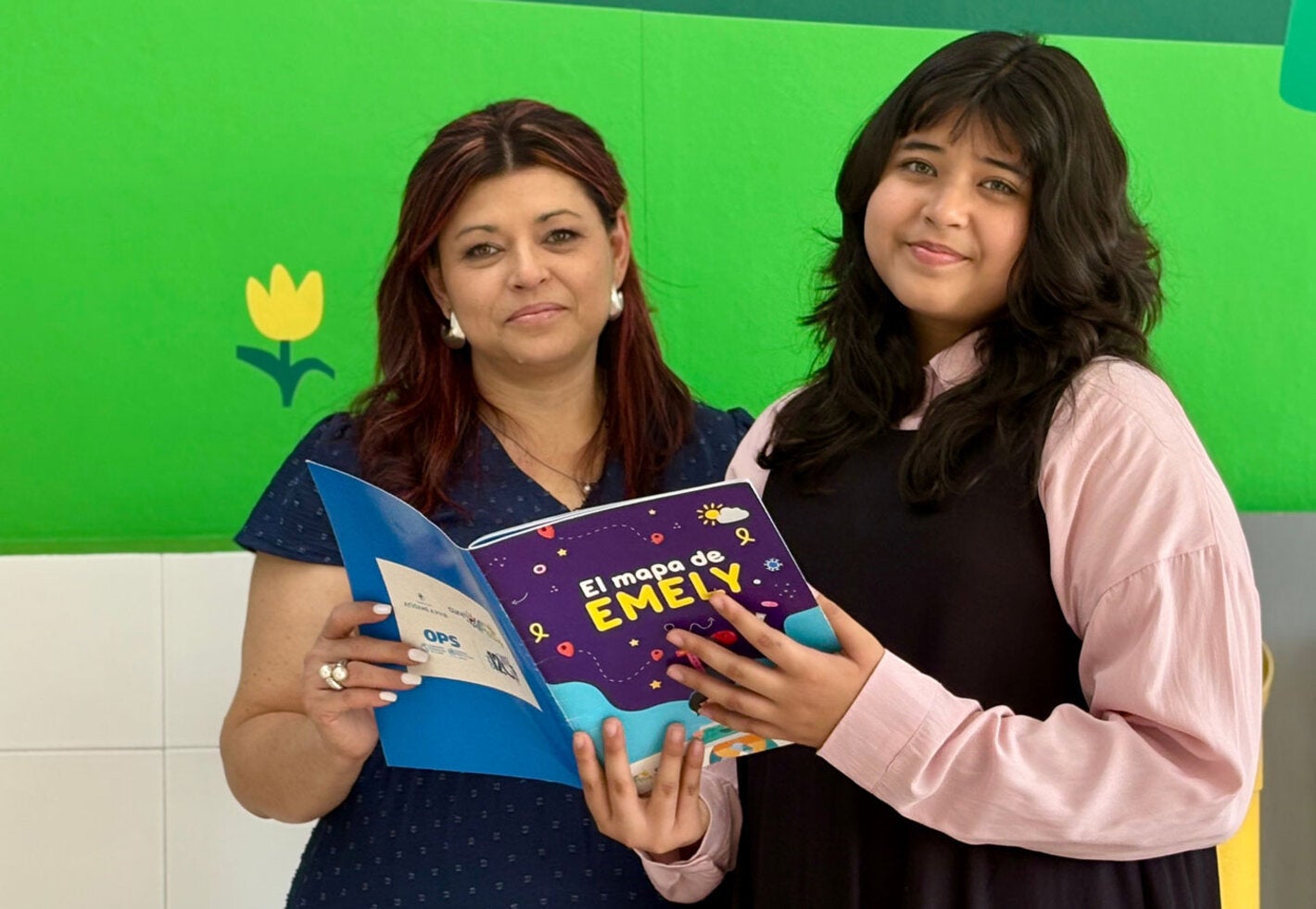
Camila leeyendo

For Camila, who has always been very curious, not understanding what was happening was distressing. That is when a tool appeared that helped her put a name to what she was experiencing: Emely’s Suitcase, a playful educational and psychoeducational resource created by the Pan American Health Organization (PAHO) together with the Ayúdame a Vivir Foundation of El Salvador to help children adhere to cancer treatment and improve understanding.

Emely’s Suitcase transforms diagnosis and treatment into a guided journey, where each stage can be explained, named, and navigated with support. The suitcase symbolizes what children and adolescents carry with them along the way: clear information, emotional tools, questions, fears, hope, and companionship.

Camila learned about it through a volunteer. “She told me about the book and showed me what it was about. The book explained the immune system, platelets, blood… I even remember the little drawings,” she says.

Through illustrations explaining what cancer is, how cells work, and what chemotherapy involves, the book invites children to draw, write, and express their feelings. Camila especially remembers one activity: “There’s one where they ask you: ‘Draw what you think your cancer looks like.’ I really liked that because I love those kinds of things.”

Other images also stayed with her. She still remembers a drawing of a piece of sushi that said, “don’t eat me.” It was a simple way of explaining that during chemotherapy, her immune defenses were low and she could not eat raw foods like sushi to avoid infections.

Emely’s Suitcase was born from a real story: that of a Salvadoran girl diagnosed with leukemia first at age 2 and then again at age 6. She faced cancer with an extraordinary ability to understand what was happening and to approach each stage with unusual serenity for her age. For her, the hospital became an extension of home.

Her journey sparked a profound question among those who cared for her: what if every child with cancer could go through treatment understanding what is happening in their body, without fear overshadowing hope?

Overcoming Fear

Camila says that understanding everything changed her relationship with fear. “I understood better what I had. The book explains it in a clearer way than sometimes a doctor can, and that helped me be less afraid of the treatments.”

For two years, Camila underwent leukemia treatment at Hospital Bloom, a national referral center for specialized pediatric care. It meant months of hospital stays, chemotherapy, and medical tests. Some days were especially difficult.

“When it was my last chemo, I was nervous because they were going to do a bone marrow aspiration and I didn’t know what the result would be. I threw up breakfast and felt nauseous from early in the morning. The symptoms lasted longer than usual, almost a week.”

In those hard moments, she found comfort in what she loves: coloring, doing crafts, and resting, and at home, with her Siamese cat, Capuchino. “He slept with me when I felt sick. He was my support.”

Her mother, Marta Eugenia de Navarrete, also learned something along the way: “That each child is unique and that each body responds to treatment differently. Knowing that helped sustain me, because the doctors and psychologists emphasized that I should not compare my daughter to other children, even if they had the same disease.”

In El Salvador, Emely’s Suitcase was integrated into the pediatric oncology care model with training for doctors, psychologists, nurses, and volunteers. The impact has been tangible: more than 500 children and adolescents have directly benefited, and treatment abandonment rates have remained below 1%—a significant achievement in contexts where fear and misinformation can disrupt continuity of care.

Today, Camila is about to turn 15 and is busy with the life of a teenager. She loves designing dresses and outfits and dreams of becoming a fashion designer. In the short term, her wish is simple and profound: “To finish school without problems, to stay well, and not relapse.”

What began in El Salvador, driven by PAHO’s country office together with Ayúdame a Vivir, is now an adaptable regional resource for countries across Latin America and the Caribbean. Thanks to this initiative, more children and adolescents, like Camila, can go through their treatment with clear information, reassurance, and support. Because understanding, drawing, and naming fear is the first step toward transforming it into hope.

Links

Emely’s Suitcase (en español) – Project to promote adherence to childhood cancer treatment

Virtual course on early diagnosis of cancer in children and adolescents