— November 2025 —
When 38-year-old Glennis Bliebe began to experience unexplained bleeding last year, she knew something wasn’t right. “As a woman, you have to notice when these things happen in your body,” she recalls.

— November 2025 —
When 38-year-old Glennis Bliebe began to experience unexplained bleeding last year, she knew something wasn’t right. “As a woman, you have to notice when these things happen in your body,” she recalls.
A week later, Glennis received the diagnosis that she feared most: cervical cancer. What made it worse, the cancer had recently moved into stage III, meaning it had spread beyond the cervix into the surrounding tissues.
“When I got those results, my first response was shock,” she says quietly. “I started questioning why me, and why I had to go through this.”
Oncologists use physical exams, biopsy, and imaging tests to assess tumor size and spread in order to determine the cancer stage. For cervical cancer, the five-year survival rate drops from 70% to 40% between stage II and stage III.
Cervical cancer usually develops slowly —typically over many years — from the small early cell changes (pre cancer) caused by the human papillomavirus (HPV) to invasive cancer cells later in life. HPV is a common virus that most people will have at some point in their lives. If not detected and treated in time, the precancerous lesions caused by the virus may lead to cervical cancer.
Regular HPV screening can find these early changes long before symptoms appear. Regular screening and the HPV vaccine, which protects against the main types of the virus that cause cervical cancer, have made the elimination of cervical cancer as a public health problem a real possibility.
For Glennis, months of chemotherapy and radiation treatment followed her diagnosis. She was often far from her home and away from family. Fortunately, she says she feels strong again and has changed her outlook on prevention.
“I would say I’m healed. My advice to all is to educate yourself, ask your doctor, take the test. Knowledge is power,” Glennis says proudly.

Glennis lives in Saint Vincent & the Grenadines (SVG), a small island nation in the eastern Caribbean, where cervical cancer screening coverage is low. In island countries where advanced health services are only available in one urban center, it is challenging for dispersed population to access essential services. The project is part of a Unitaid-funded initiative to introduce HPV testing in five countries in the Region of the Americas.
Historically, countries like SVG have relied on pap smears and colposcopy for follow up management, which require multiple visits, laboratories, and trained staff. This, combined with social barriers, lack of public awareness, and an overall fragmented health system, have made cervical cancer a leading cause of cancer-related deaths among Vincentian women.
Earlier this year, SVG’s Ministry of Health, Wellness and the Environment, with support from the Pan American Health Organization (PAHO), developed the National Cervical Cancer Elimination Strategy and Plan 2025–2030, which is aligned with the WHO global targets of 90–70–90 to be reached by 2030: vaccinate 90% of girls against HPV by age 15, screen 70% of women with a high-performance test by ages 35 and 45, and ensure 90% of women with cervical disease receive treatment.
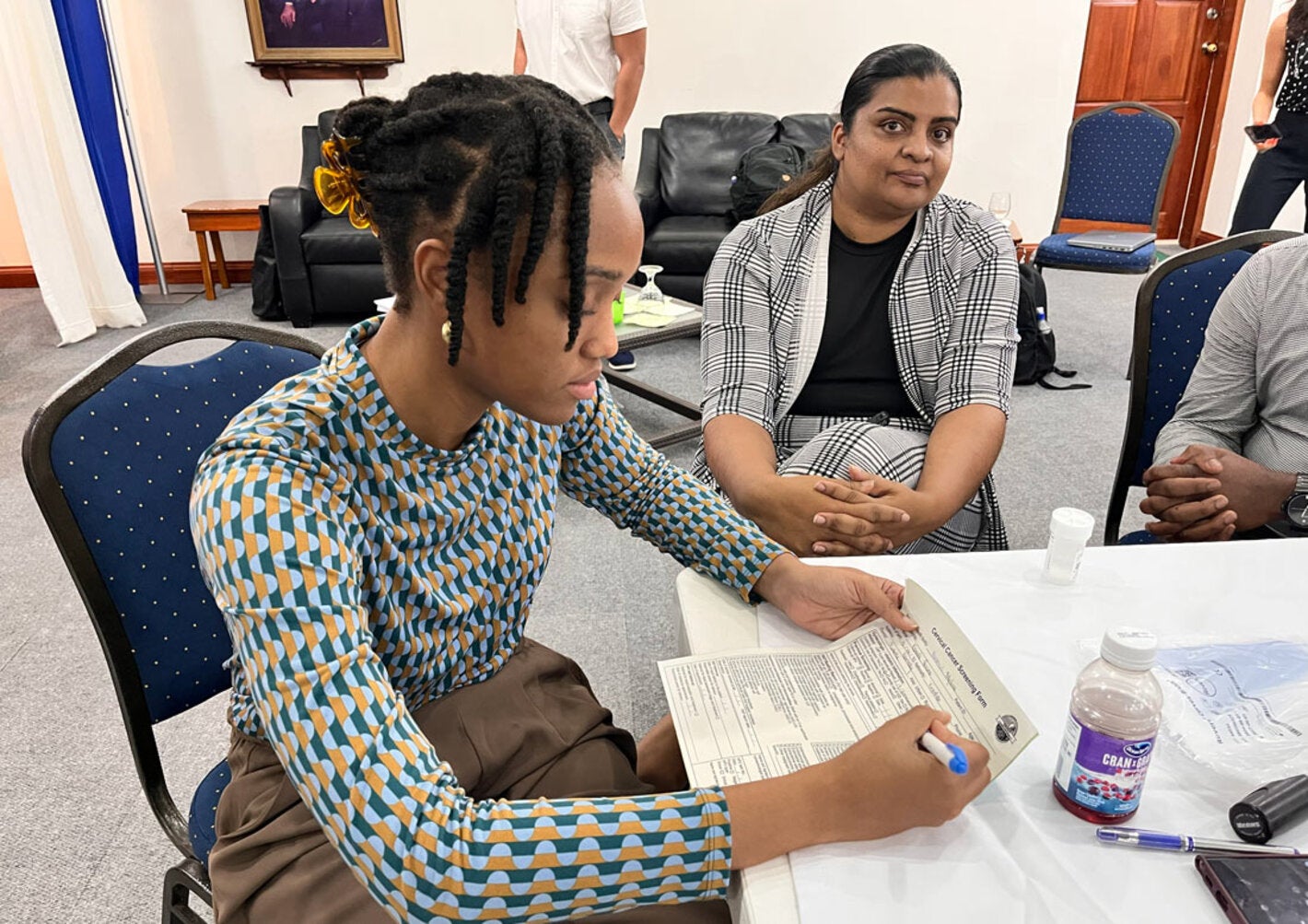
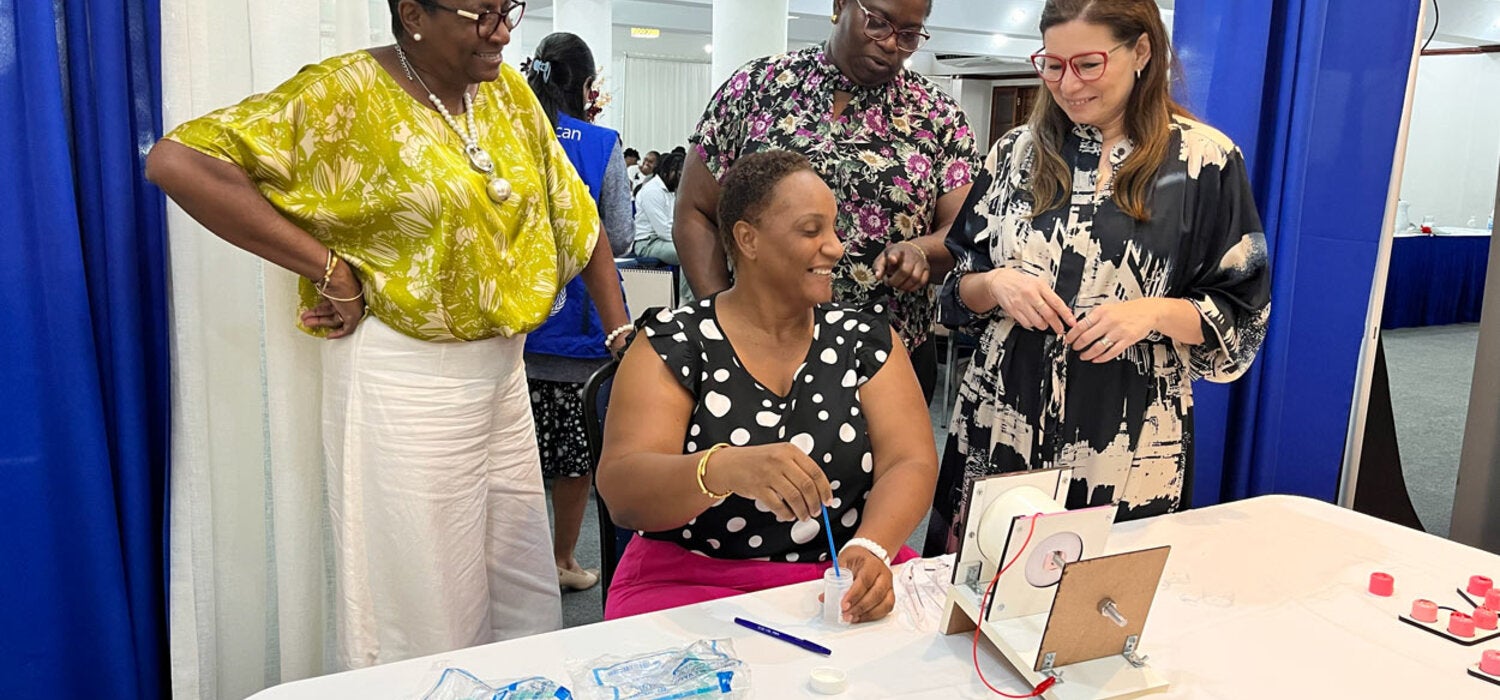
In September 2025, a PAHO-led mission, with technical experts from University of Miami (UM) and Basic Health International (BHI), a non-profit organization dedicated to preventing cervical cancer in Latin America and the Caribbean, trained more than 50 health professionals across four SVG districts—Calliaqua, Georgetown, Marriaqua, and Pembroke — as part of preparations for the country’s first HPV testing demonstration project.
The training focused on the science and logistics of HPV testing, the use of new data tools, and effective communication with patients. Participants practiced collecting cervical samples using anatomical models and learned how to record and manage data through a secure digital system.
During the training, health workers at the Milton Cato Memorial Hospital received hands-on instruction in visual evaluation, thermal ablation, and mobile colposcopy for treating precancerous lesions.
“The goal is to make screening simpler, more accurate, and treatment accessible to all women at the primary healthcare level, especially those who have never been tested before,” explained Mauricio Maza, Regional Advisor on Cancer Prevention and Control at PAHO.
The week concluded with the official launch of the national cervical cancer screening program, led by the Minister of Health, Chief Medical Officer, and representatives from PAHO, BHI, and UM. The demonstration project began in October 2025, offering HPV-based screening in primary health centers across the four districts.
By enabling women to be screened, diagnosed, and treated in one integrated system, the country is addressing one of the most persistent barriers to cervical cancer control: timely access to care.
“This is a game-changer,” noted Mauricio Maza. “And with PAHO support, we are nudging countries like St. Vincent and the Grenadines closer to the WHO’s screening and treatment targets.”
Cervical cancer is the third leading cause of cancer in women in Latin America and the Caribbean. In 2022, over 78,000 women in the Region of the Americas were diagnosed with cervical cancer. That year, more than 40,000 died from the disease. Cervical cancer death rates are three times higher in Latin America and the Caribbean than in North America, highlighting the inequities associated with this disease.
The PAHO is supporting all Member States, including countries in the Caribbean, to aim at and achieve the WHO’s global screening and vaccination targets. To date, all countries in the region except Haiti and Venezuela have introduced the HPV vaccine.
Cervical cancer elimination is also part of PAHO’s flagship initiative: Better Care for Non Communicable Diseases, aimed at expanding equitable access to integrated and comprehensive noncommunicable disease services within primary health care, and the Disease Elimination Initiative, which seeks to eliminate over 30 diseases from the Americas by 2030, including cervical cancer.
On 17 November 2025, the world marks World Cervical Cancer Elimination Day as the first official world health day dedicated to eliminating cancer. With continued commitment, countries across the region are moving closer to a future where woman like Glennis no long must face cervical cancer.