Paraguay moves closer to eliminating trachoma as a public health problem
Paraguay moves closer to eliminating trachoma as a public health problem
After ten years of research and work with Indigenous communities in Paraguay’s Chaco region, the country is preparing to submit evidence to PAHO and WHO that could confirm that trachoma is no longer a public health problem in Paraguay. Along the way, the effort has helped strengthen local health services and bring care closer to communities that have historically had limited access to it.
— October 2026 —
Around 500 kilometres from Asunción, in the department of Boquerón in the Paraguayan Chaco, access to health care is built day by day alongside those who know the territory best: the communities themselves.
For years, researchers and health workers have been monitoring trachoma in the region to understand how widely it affects communities. People like Cecilia Picanerai and Narciso Winfredo have played an important role in bringing health services closer to Indigenous communities and building the trust needed to make this work possible.
“Most Ayoreo people do not speak Spanish. Because I grew up in this community, I can help them, not only because of the language, but also because they trust me,” Cecilia explains.
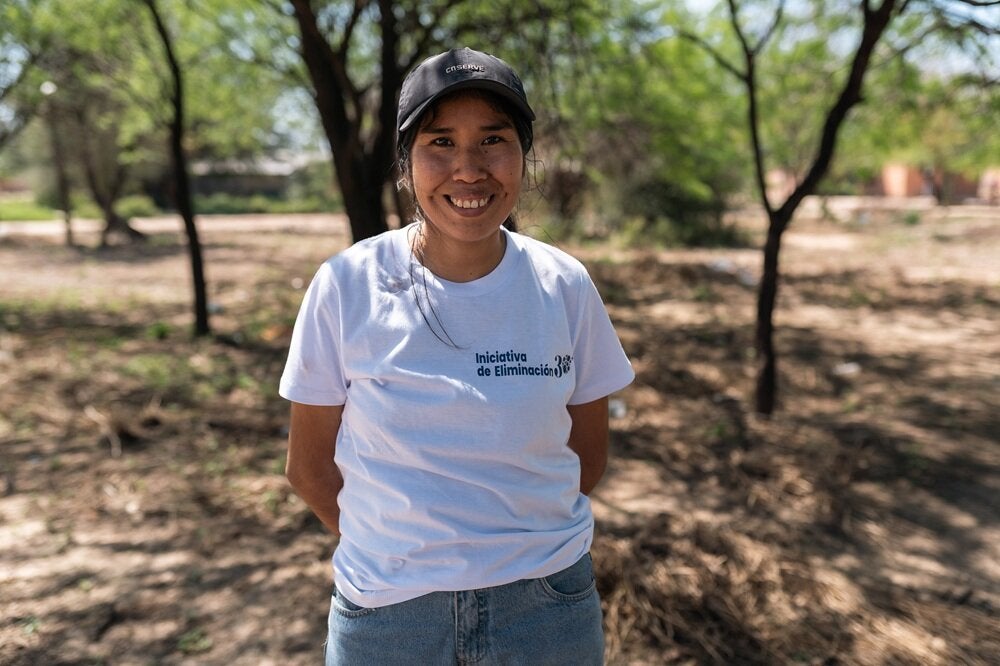
In Ebetogué, an Indigenous Ayoreo community, Cecilia combines her nursing studies with an in-depth knowledge of her community. She is currently in her fourth year of nursing school and is part of the team at the Family Health Unit in Filadelfia.
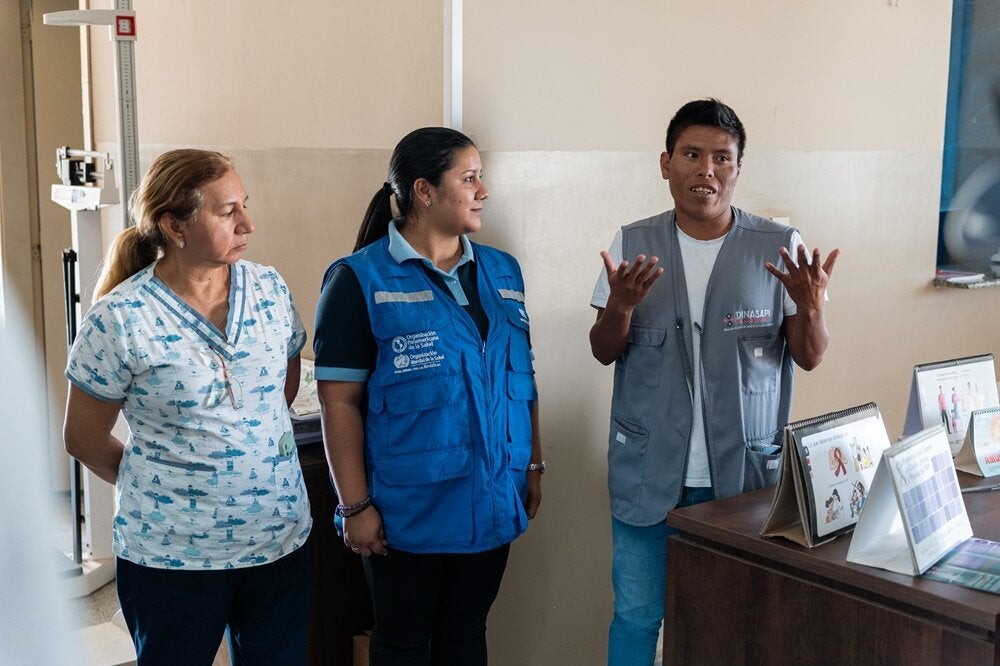
Her work helps people access health services and overcome linguistic and cultural barriers through one essential element: trust. Narciso, an Indigenous health promoter from the Nivaclé community of Jotoichá, plays a similar role. Working from the Family Health Unit in Campo Loa, he supports families, identifies health needs and helps connect them with services, while facilitating dialogue between the community and health teams.
Their experiences show that bringing health care closer to communities requires much more than making personnel and facilities available. It also means understanding cultural contexts, strengthening local capacities and building relationships of trust that allow health services to respond to the needs of each community.
This same approach has been essential to Paraguay's progress towards eliminating trachoma as a public health problem.
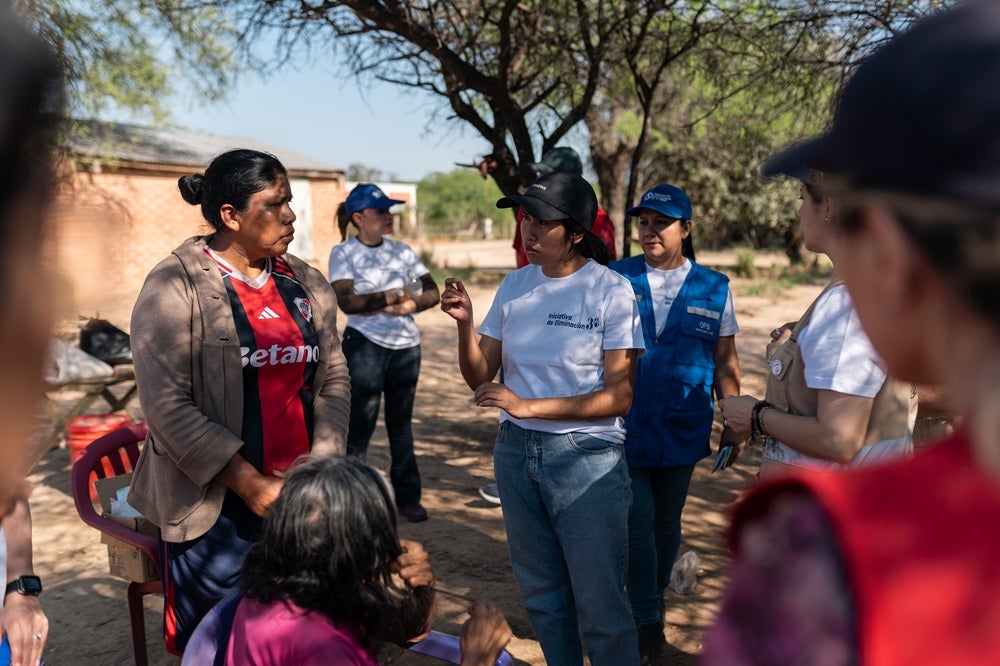
Cecilia Picanerai is a nursing student. She is from the Ayoreo indigenous people and her Community is Ebetogué. On the right, Narciso Winfredo, is an indigenous health promoter from the Jotoichá community, from the Nivaclé town.
What is trachoma, and why is epidemiological surveillance important?
Trachoma is a neglected tropical disease caused by the bacterium Chlamydia trachomatis and remains the world's leading infectious cause of blindness. Its transmission is associated, among other factors, with limited access to safe water, sanitation, hygiene and health services. If it is not detected and treated in time, it can cause visual impairment and blindness.
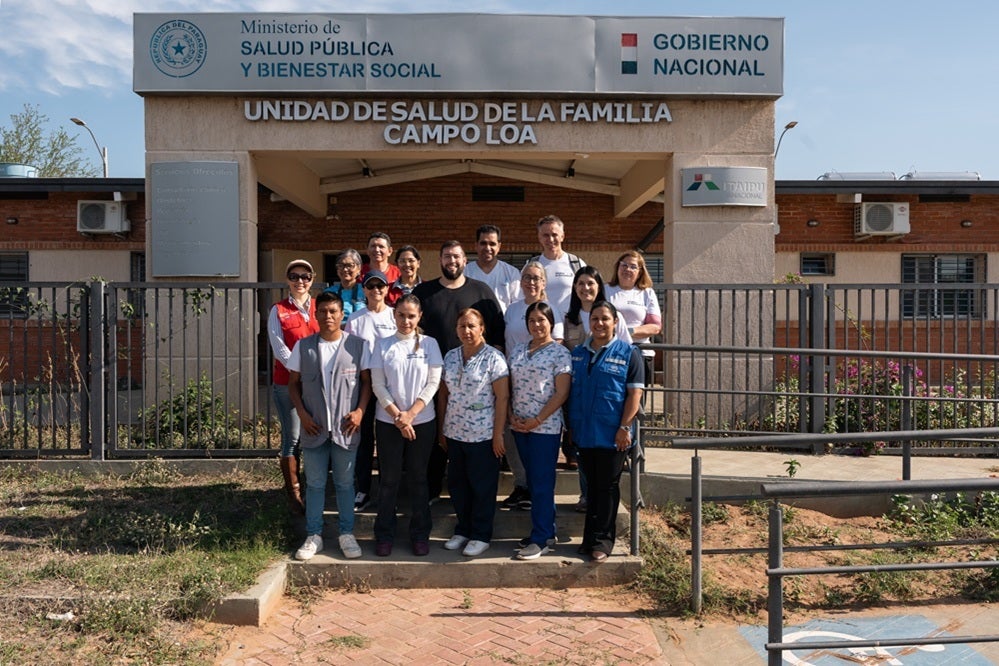
The PAHO/WHO–MSPBS technical mission arrived at the Campo Loa Family Health Unit (USF), located within the Jotoicha Indigenous community in the Mariscal José Félix Estigarribia district, in the Boquerón department of the Paraguayan Chaco.
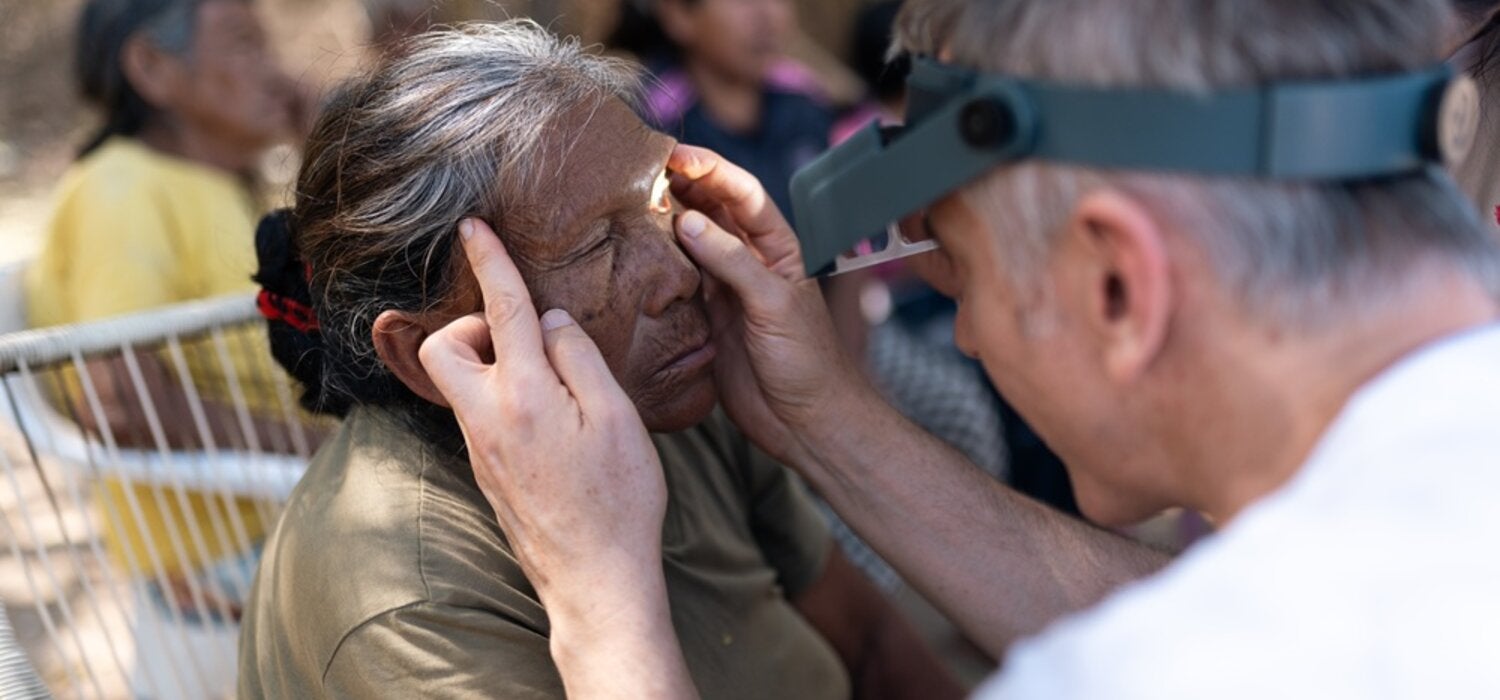
Over the past decade, Paraguay has carried out field studies, health surveillance and eye examinations to determine whether trachoma remains a public health problem. Much of this work has taken place in the Chaco, involving close collaboration with Indigenous communities to gather the evidence needed by the Pan American Health Organization (PAHO) and the World Health Organization (WHO) to assess the country’s progress.
In 2018, the Ministry of Public Health and Social Welfare (MSPBS) National Eye Health Programme conducted assessments in Indigenous communities and peri-urban settlements in the country's Eastern and Western regions, including the Chaco. The epidemiological and community-based evidence gathered through these processes helped consolidate the national dossier for elimination.
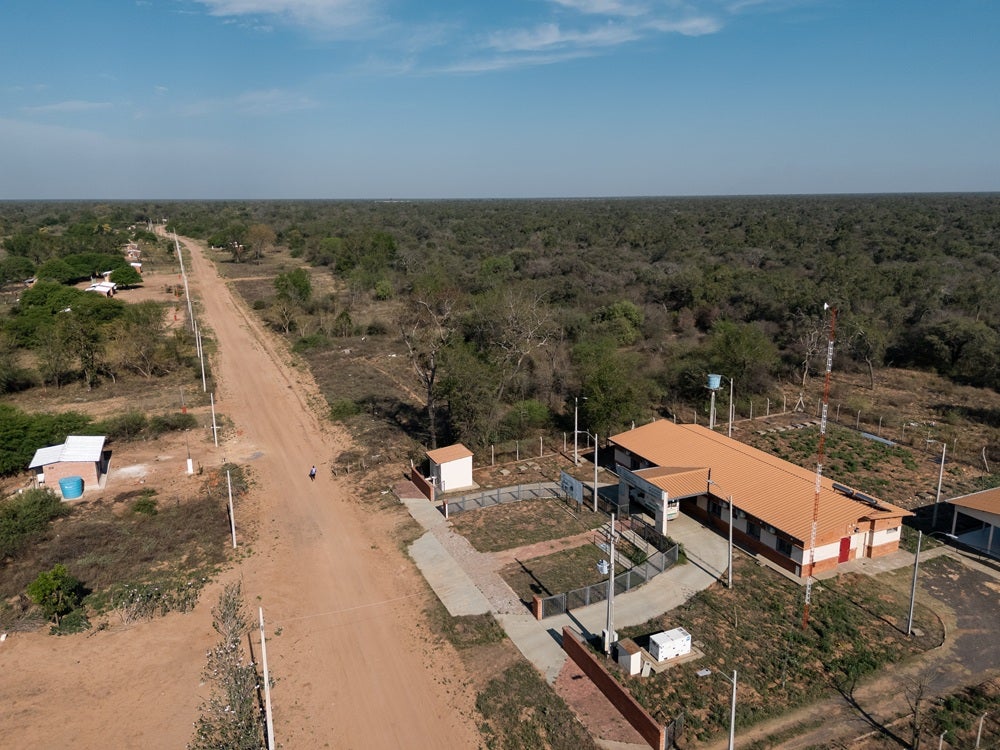
Aerial view of the USF (Family Health Unit) in Campo Loa. In the Paraguayan Chaco, the characteristics of the terrain, vast distances, and the dispersed nature of communities present unique challenges for accessing healthcare services and conducting disease surveillance. Rapid assessments for trachoma are part of efforts to understand the situation on the ground and guide actions toward its elimination.
With technical support from PAHO and WHO, Paraguay has strengthened its disease surveillance and advanced work on the national dossier, which will be submitted for international review.
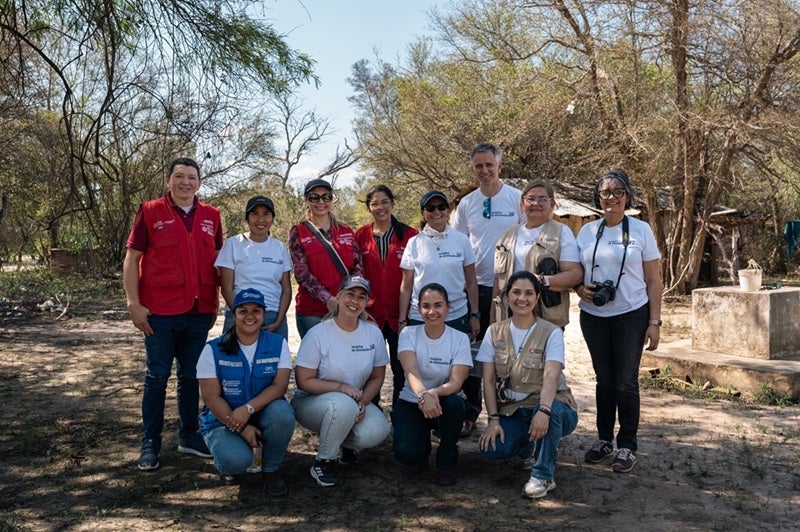
The field mission brought together experts from PAHO, WHO and the MSPBS. Participants included representatives of the 16th Regional Health Directorate in Boquerón, the Directorate-General for Primary Health Care, the National Directorate for the Health of Indigenous Peoples (DINASAPI) and the National Eye Health Programme.
The Technical Mission team that carried out the fieldwork consisted of professionals from PAHO, the WHO, and the Ministry of Public Health and Social Welfare (MSPBS)—specifically through the XVI Health Region (Boquerón), the General Directorate of Primary Health Care (APS), the National Directorate for the Health of Indigenous Peoples (DINASAPI), and the National Eye Health Program.
A decade of investigation and evidence
The process began in 2016, when Paraguay was advised to conduct rapid assessments in areas where conditions favored the spread of trachoma. The work focused on Indigenous communities and peri-urban settlements in the Eastern and Western regions, including the Paraguayan Chaco.
In 2018, health professionals were trained to conduct eye examinations for trachoma. Between 2018 and 2019, rapid assessments were carried out in 22 communities in the Chaco, in the Western Region. The Ministry of Public Health and Social Welfare’s (MSPBS) National Eye Health Programme later expanded the assessments to Indigenous communities and peri-urban settlements in the Eastern Region. The epidemiological data and evidence gathered through work with communities helped build the national dossier supporting Paraguay’s progress towards trachoma elimination.
“In 2019, a surveillance survey was added, and serological evidence was subsequently incorporated,” recalls Ana Segovia, a specialist with the Eye Health Programme.
“Paraguay has been working for ten years to collect data to validate the elimination of trachoma as a public health problem in the country,” explains Dr Sofía Maldonado, director of the National Eye Health Programme at the Ministry of Public Health and Social Welfare. The dossier was not based solely on recent information. A review of historical records uncovered documentation of decades of public health work, helping reconstruct the country's history of surveillance and response to the disease.
Evidence is also built in the field
In August 2026, a technical mission comprising PAHO/WHO and the Ministry of Health returned to the Paraguayan Chaco to review progress towards validating the elimination of trachoma as a public health problem.
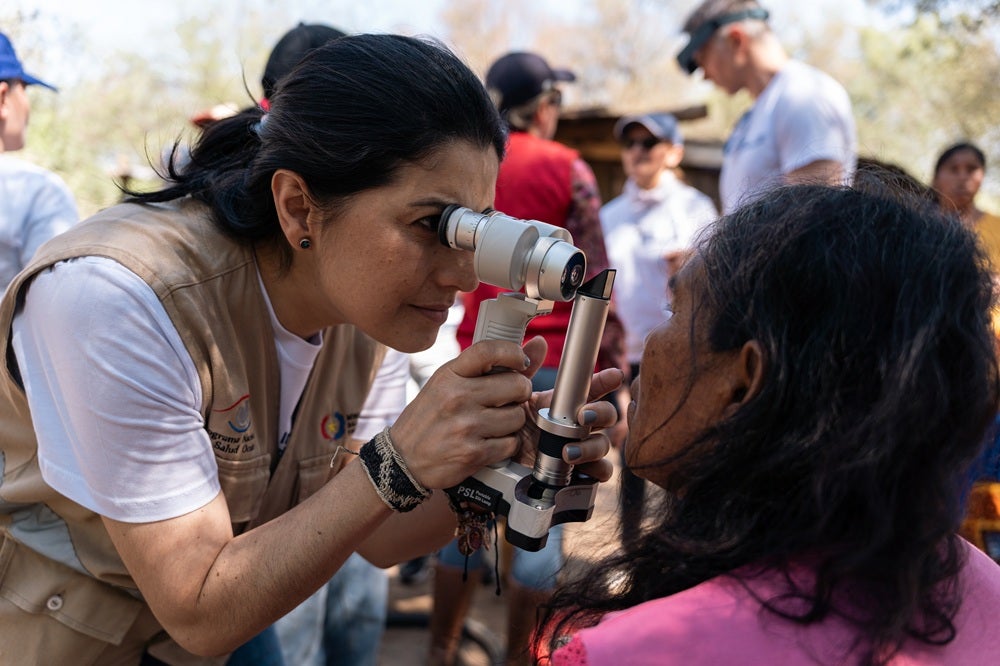
Over four days, the teams analyzed information collected over the preceding years. They then travelled to the field and visited Nivaclé and Ayoreo communities where epidemiological studies and surveillance activities had previously been conducted.
The visit made it possible to cross-reference documented information with the reality on the ground in the communities, engage in dialogue with local leaders and health teams, and identify strengths and opportunities to enrich the national record.
The visit allowed the teams to compare the documented information with conditions in the communities, engage in dialogue with local leaders and health teams, and identify strengths and opportunities to improve the national dossier.
“Working with Indigenous communities requires adapting health interventions to the cultural and organizational characteristics of each people. In Paraguay, these processes are carried out through consultation and dialogue with the communities themselves, allowing health interventions to be implemented in a participatory manner and in ways that are appropriate to each context,” says Dr Dalila Oviedo, director of the National Directorate for the Health of Indigenous Peoples (DINASAPI) at Paraguay's Ministry of Public Health and Social Welfare.
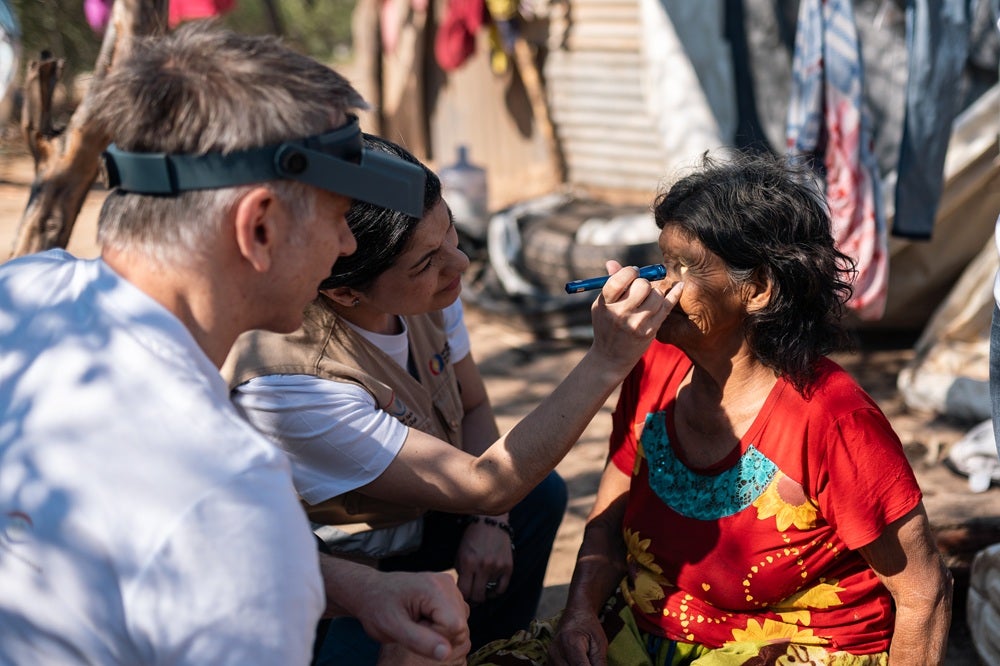
Dialogue with the Ayoreo communities revealed that the absence of eyebrows and eyelashes was a cultural practice, rather than a consequence of trachoma. This experience highlights the importance of incorporating respect for customs and community knowledge into health assessments.
This understanding of local cultural practices proved particularly important during assessments in Ayoreo communities. Health teams found that many people had no eyebrows or eyelashes, initially raising concerns because eyelash loss can be a sign of trachoma-related damage.
Through dialogue with the communities, the teams established that the absence of eyebrows and eyelashes was a cultural practice, not a consequence of trachoma. The experience underscored the importance of working closely with Indigenous communities and taking local customs and knowledge into account when assessing health conditions.
Conversations with community members, including older people, helped clarify that the practice was linked to aesthetic reasons.
Dr Anthony Solomon, a medical officer in WHO's Malaria and Neglected Tropical Diseases Department, explained that, after reviewing the evidence, the condition in this case did not appear to be trachomatous trichiasis but rather a cultural practice. “People do things for reasons that only they themselves know best, and our job is simply to make sure their health is protected.”
This exchange helped prevent misinterpretations and demonstrated that rigorous health surveillance must combine scientific evidence with knowledge and understanding of local cultures.
Much more than a dossier
All the information gathered is brought together in a national dossier containing the results of epidemiological assessments, surveillance activities, eye care services and intercultural work in communities. However, the process has achieved results beyond compiling the documentation needed to request international validation. It has also strengthened the capacities of national and local teams, improved coordination between health programmes and reinforced links between communities and health services.
For Cecilia Picanerai, the impact is clear in her daily work. “I can do almost everything now, from rapid tests to giving injections when the doctor instructs me. But I can also help in a different way because I understand our culture, our customs and our language.”
264
Cecilia’s story illustrates how training individuals from within their own communities can reduce linguistic and cultural barriers, facilitate access to services, and help address local needs from an intercultural perspective.
Cecilia's story shows how training people from within their own communities can reduce linguistic and cultural barriers, facilitate access to services and help address local needs through an intercultural approach.
The next step will be to formally submit the dossier to PAHO and WHO for international technical review.
Another step towards eliminating diseases
In 2025, Paraguay joined the Initiative for the Elimination of Trachoma as a Public Health Problem, launched through a partnership between PAHO and the Government of Canada. The initiative strengthened technical cooperation to consolidate the dossier and support the country in progressing towards validation.
This work is part of a broader effort by Paraguay to accelerate and sustain the elimination of communicable diseases.
This work forms part of Paraguay's broader efforts to accelerate and sustain the elimination of communicable diseases.
Under PAHO's Disease Elimination Initiative, Paraguay is working on a roadmap covering 29 diseases and related conditions. The roadmap aims to identify common bottlenecks that could delay progress towards elimination targets.
“There are four main areas through which Paraguay's Ministry of Health is proposing to accelerate efforts to eliminate many communicable diseases: integration of health services; stronger information and surveillance systems; addressing social and environmental determinants; and strengthening governance, stewardship and financing,” explains Dr Martha Saboyá, senior adviser to PAHO's Disease Elimination Initiative.
Beyond the outcome, the process strengthened the capacities of both the community and health services, resulting in better-prepared community health workers and enhanced tools for detecting and responding to health challenges.
Trachoma is among the diseases for which Paraguay is close to achieving the elimination target. Validation will now depend on the international review of the evidence gathered by the country.
Regardless of the outcome, the process has already strengthened community capacities and health services, leaving health promoters better prepared and providing them with greater tools to detect and respond to health challenges.
In the communities where the evidence was gathered, the legacy is already visible: better-equipped health promoters, better-prepared teams and an enhanced capacity to detect and respond to health challenges.
The evidence bringing Paraguay closer to eliminating trachoma has also strengthened the country's capacity to protect its population.
And it is precisely there—in communities and through joint work with health services—that every lasting advance in public health begins.