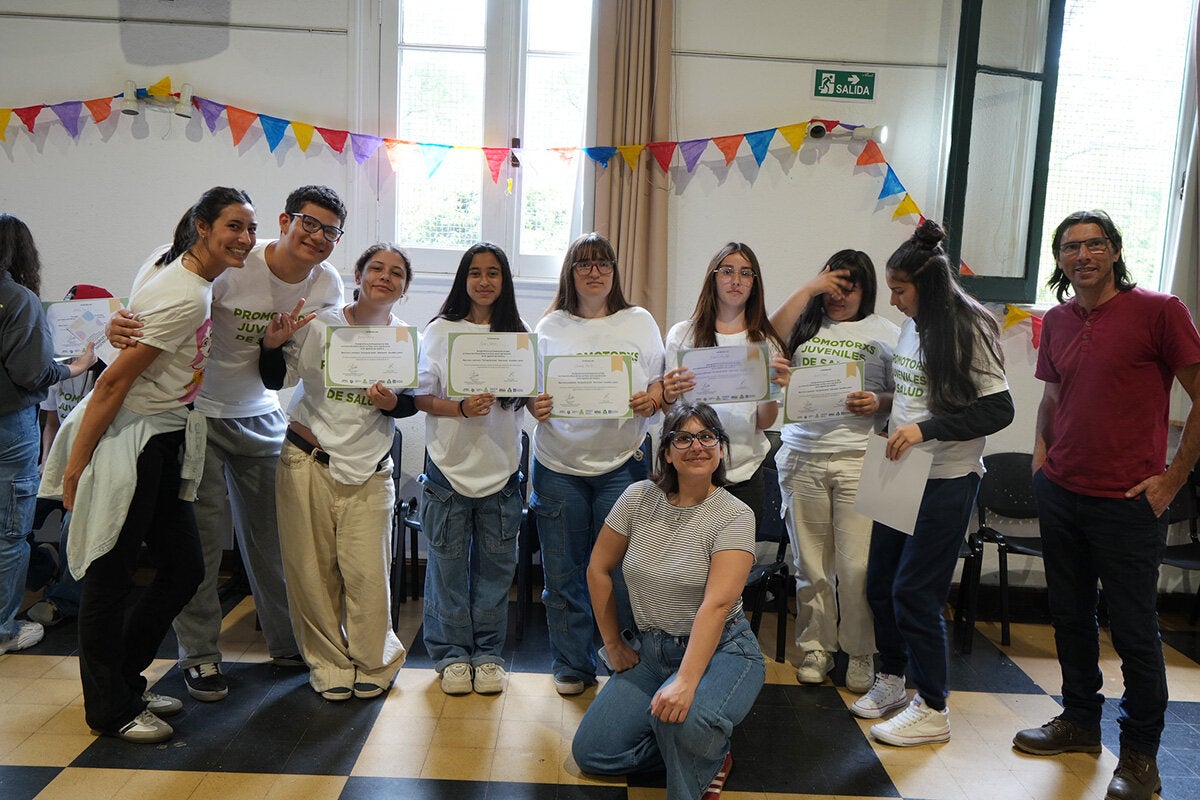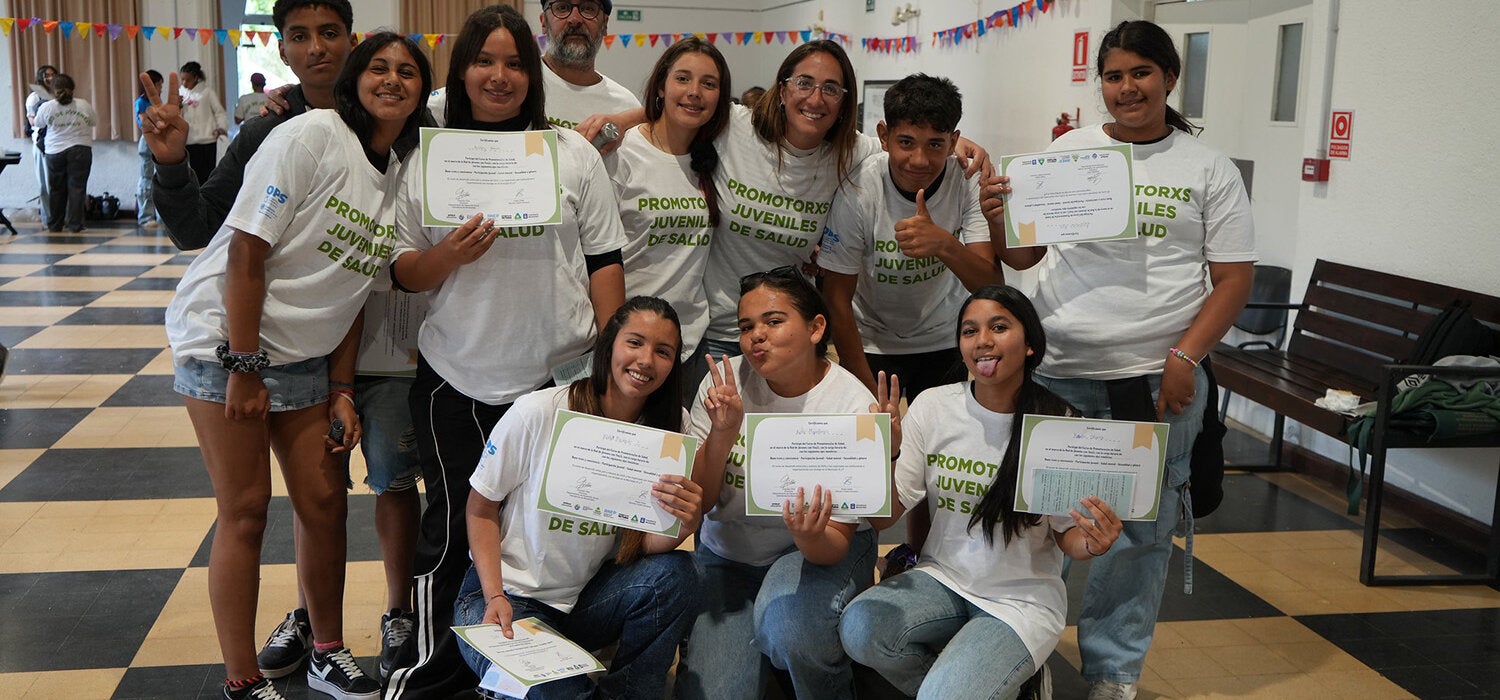
• Young participants group photo holding up certificates
    PAHO/WHO
    Credit

Uruguay: when young people lead the conversation on health

With support from the Pan American Health Organization (PAHO), Uruguay is training young health promoters who are creating safe spaces to talk about mental health, wellbeing, and issues affecting adolescents and young people.

— May 2026 —

In Uruguay, talking about health with adolescents is no longer just the job of experts. Through the youth health promoters initiative, young people are leading these conversations themselves and creating safe spaces to address topics that are often still difficult to discuss.

The youth health promoters initiative, led by the Healthy Municipalities and Communities Network with support from the Pan American Health Organization (PAHO), began in 2024 in several neighborhoods of Montevideo with a simple but transformative goal: to help young people become active agents of change within their communities, capable of engaging others in conversations about mental health, relationships, self-care, and emotional wellbeing through language that is relatable, empathetic, and free of judgment.

In 2025, the initiative expanded significantly, reaching new communities across the country. More than 300 adolescents participated in the training process, which concluded with three camps attended by over 100 young people each.
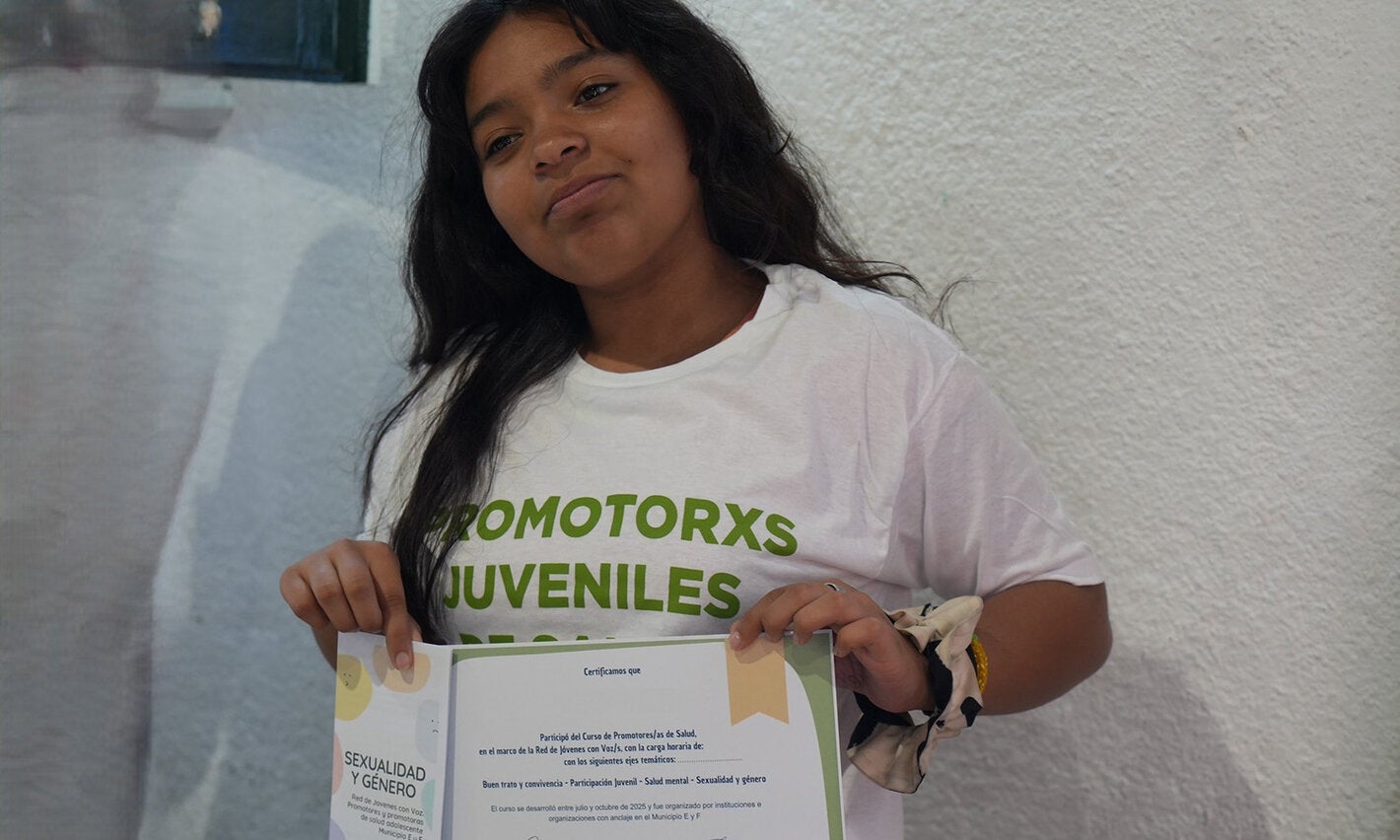
Seventeen-year-old Milagros Rebollo is one of those voices. She participated as a promoter in 2024 and took on a more active role in designing workshops in 2025. For her, the key is understanding how to connect with other young people.

“We thought about how to communicate and how to keep the attention of teenagers like us. If something felt boring to us, we changed it, and that has worked,” she says.

Through participatory workshops and a final camp, adolescents receive information and are encouraged to reinterpret it, adapt it, and share it with their peers. The result is more effective communication that breaks down barriers and opens conversations around topics often considered taboo.

“We talk about things that normally aren’t discussed: teenage pregnancy, unprotected sex, diseases, gender identity,” Milagros explains. But what she values most is the human aspect: “It’s not like the internet, where sometimes you get misinformation. Here there are people who listen to you and make you feel less judged.”

The program is based on a popular education approach and the principles of Primary Health Care, promoting meaningful youth participation as a central pillar. The initiative also aligns with PAHO/WHO’s call to strengthen youth participation as a fundamental component of more inclusive, community-centered health systems. The program encourages young people to reflect on their realities and develop collective solutions.

The mental health workshop had the greatest impact on Milagros. “It doesn’t stop at just talking, it also gives you tools,” she explains. A close friend has opened up to her, and although supporting him has not been easy, she feels she now has more resources to help.

“I’ve been able to guide him and suggest professional help… he hasn’t gone yet, but at least he’s started thinking more about his mental health,” she says.

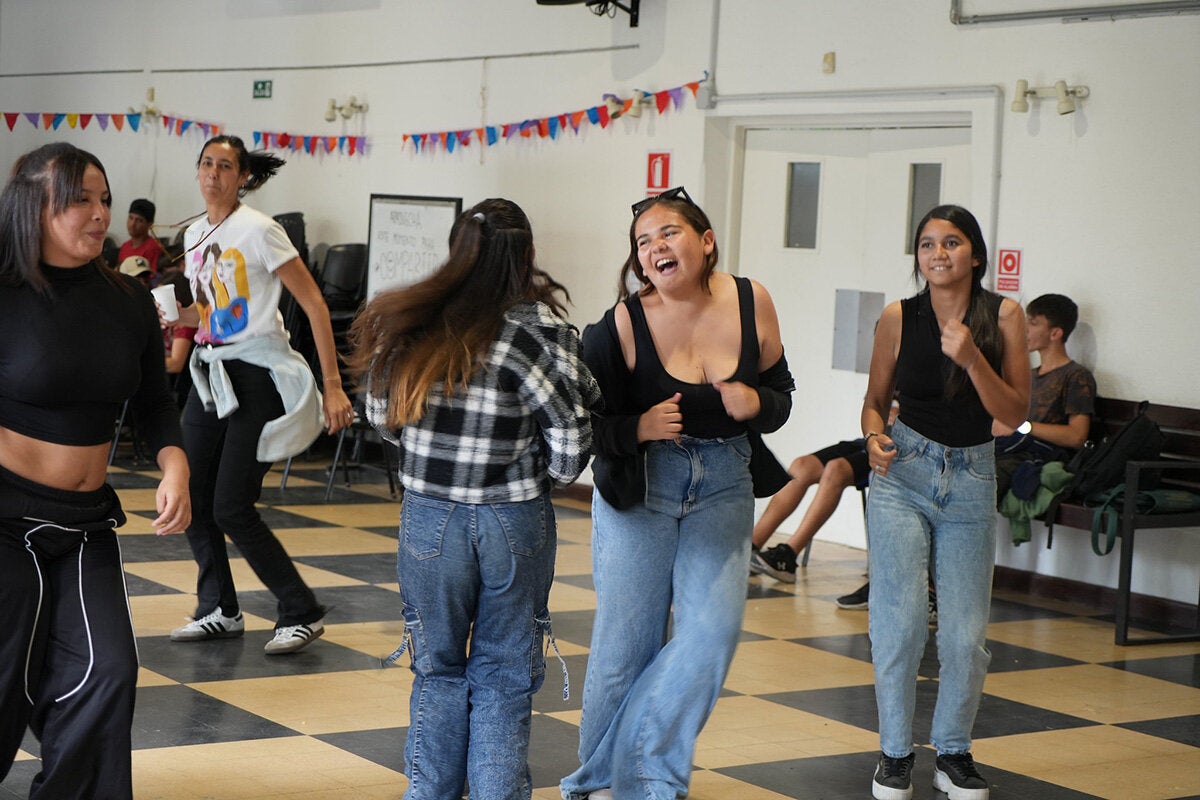
students danding
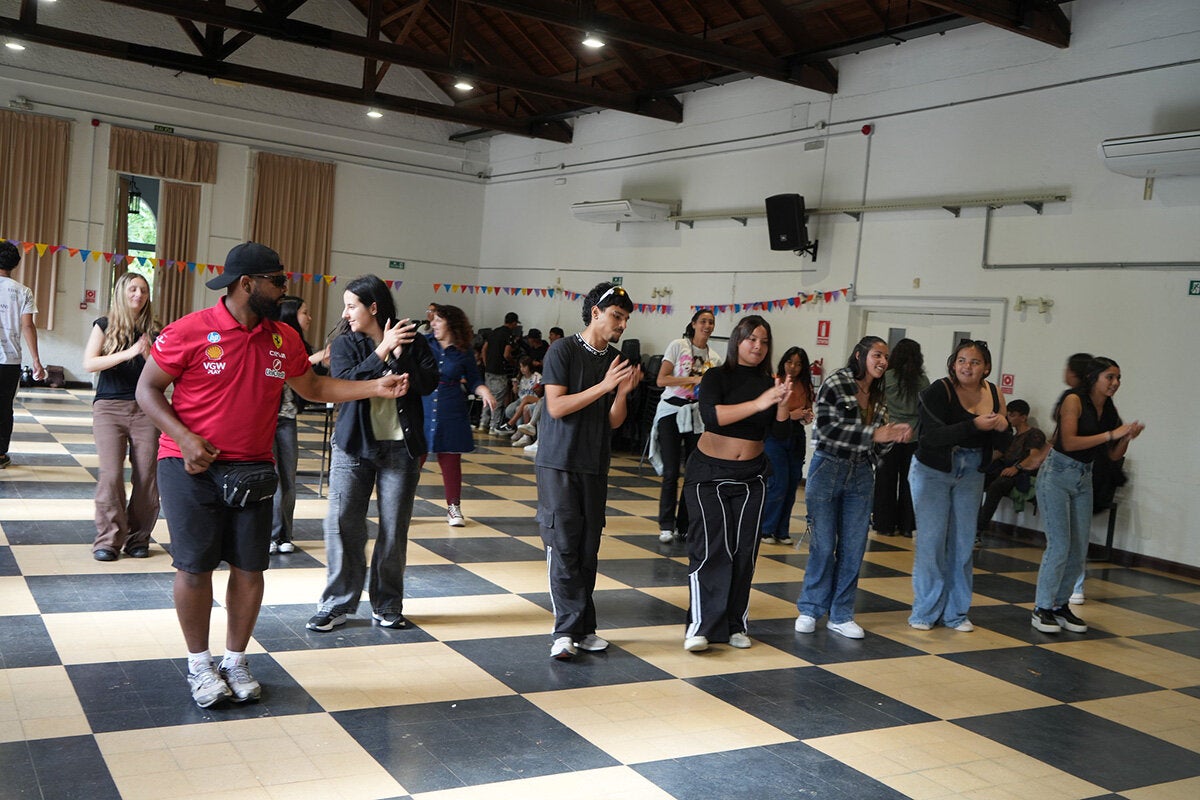
students line dancing
The risk of silence

Milagros’ story reflects a troubling reality in Uruguay. The country has one of the highest suicide rates in Latin America, with figures in recent years exceeding 20 deaths per 100,000 people, according to the Ministry of Health. Around 75% of suicide deaths are among men, highlighting the need for approaches that address stigma, masculinity, and barriers to seeking help.

Among adolescents and young people, suicide is one of the leading causes of death, underlining the need for creating spaces for prevention and open dialogue. In this context, initiatives such as the training of youth promoters do not replace health services, but they can serve as an important first point of contact where talking about mental health stops being taboo.

students
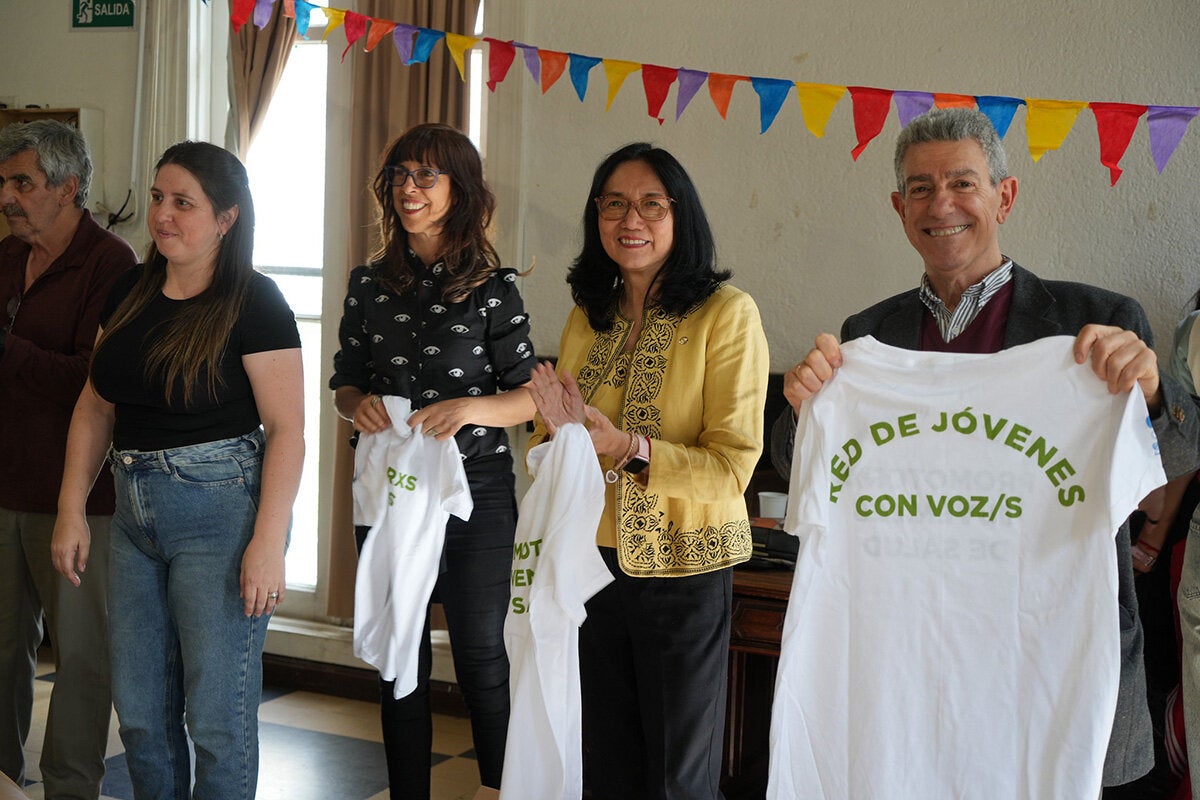
sponsors
From training to action

Those who participate gain knowledge as well as a sense of responsibility. In some neighborhoods of Montevideo, youth health promoters are already bringing what they learned back to their communities. In Pajas Blancas, for example, they have begun organizing activities in schools and community spaces, including gatherings with older adults. These initiatives emerged directly from the participants and from their connection with the spaces where they were trained.

“Young people have the power to multiply these messages, both among their peers and with adults,” explains Gerardo Falco, a physician and project lead, highlighting how these initiatives expand the reach of health messages and create new forms of dialogue within communities.

More than a defined role, being a health promoter is an ongoing process. “Their heads came back boiling with ideas, suggestions, and plans for what to do next,” says Priscila Trindade, one of the activity coordinators, describing how adolescents return with proposals, questions, and motivation to keep going.

PAHO/WHO Representative in Uruguay, Caroline Chang, highlighted the value of the initiative and emphasized the importance of youth participation in building more inclusive health systems.

“This training demonstrates the value of intersectoral action and places social participation in health at the center, which is a fundamental pillar of people-centered models of care,” says Chang.

The experience has created a different kind of space—one where young people can listen, guide, and support one another. Sometimes, that is what makes the difference between staying silent and taking the first step toward asking for help.