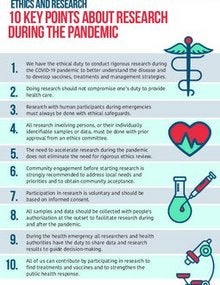
Bioethics is the discipline that examines the ethical issues arising in different areas of health, including public health, health care, and health research. Its purpose is to guide health decision-making through rigorous ethical analysis that makes ethical criteria explicit. In the Region of the Americas, PAHO promotes the systematic integration of ethics analysis in all areas of work in health.
- Public health, the delivery of health care, and health research present us with numerous ethical challenges.
- Emergencies and novel technologies enhance the demand for ethical guidance.
- Bioethics is the discipline that seeks to elucidate the ethical problems that arise in relation to health.
- Bioethics examines what ought to be done in health-related situations, beyond what is legally required.
- It provides ethical frameworks for public health decision-making, which are necessary to prioritize resources, especially in contexts of scarcity.
- Integrating ethics in health decisions strengthens transparency and trust.
Through its Regional Bioethics Program, PAHO supports Member States in integrating ethics into all health-related activities. The Program promotes a demand-driven, translational bioethics approach, with a focus on research ethics and public health ethics.
With the goal of ensuring health research is always conducted ethically, PAHO works closely with Member States strengthening research ethics systems and advancing ethical research that meets the needs of the people in the Americas. With the goal of systematically integrating ethics in public health, PAHO builds capacity to include ethical deliberations in decision-making processes and to assess the value judgments that are embedded in health policies and public health interventions.
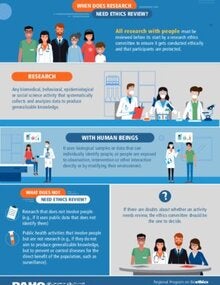
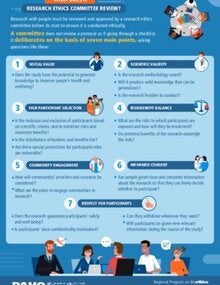
PAHO ’s actions include the development of technical guidance, the strengthening of institutional capacities, the promotion of regional networks, and the development of practical tools to advance ethics review of research and ethical deliberation for public health decision-making.