
• Food Safety

Foodborne diseases caused by contaminated foods are a serious public health problem. Every day, cases are reported of people who become ill due to the consumption of foods contaminated with microorganisms and/or toxic chemical substances, which can even lead to death. These diseases pose a serious threat to health, primarily affecting children under 5 years of age, pregnant women, immunocompromised individuals, and older adults.

The Pan American Foot-and-Mouth Disease and Veterinary Public Health Center (PANAFTOSA/VPH) is a specialized center of the Pan American Health Organization/World Health Organization (PAHO/WHO), affiliated with the Department of Prevention, Control and Elimination of Communicable Diseases (CDE).

PANAFTOSA is responsible for coordinating the Veterinary Public Health Program, providing technical cooperation in the prevention, surveillance, control, and elimination of zoonotic diseases; promoting initiatives to strengthen food safety systems; and supporting the eradication of foot-and-mouth disease, with the goal of advancing public health and regional socioeconomic development.

Más información

The Pan American Foot-and-Mouth Disease and Veterinary Public Health Center (PANAFTOSA/VPH–PAHO/WHO) of PAHO supports countries in the Americas and the Caribbean in strengthening their food control systems through technical and scientific cooperation based on international food standards, including the Codex Alimentarius and the International Health Regulations (IHR). PANAFTOSA/VPH–PAHO/WHO promotes the exchange of experiences and information among countries in the Region to improve foodborne disease surveillance systems and to encourage integrated work among the various stakeholders involved in the food production chain, including Ministries of Health, Agriculture, and Trade, as well as the private sector.

Our mission is to provide technical cooperation to all countries in the Americas and the Caribbean to strengthen food safety systems, prevent food hazards throughout the food production chain, and reduce foodborne diseases.

Our vision is to be a reference center for solving food safety and quality challenges faced by countries, through innovative technical cooperation and a high level of expertise, guided by the values of commitment, ethics, and innovation.


Areas of action
Sistemas Nacionales de Inocuidad de Alimentos

The existence of well-structured, intersectoral national food safety systems is essential for protecting consumer health. National food safety systems should be based on five pillars:
1. Food safety laws, regulations, and policies;
2. Competent authorities;
3. Surveillance and control;
4. Inspection;
5. Education.

Technical cooperation in food safety across countries in the Region aims to strengthen their national food safety systems by integrating the various ministries and agencies involved in the sector and focusing resources on foods that pose the greatest risk and have the greatest impact on public health. 


Análisis de riesgo en inocuidad de alimentos

The Food Safety Risk Analysis Network (FSRisk) is an international strategic alliance created in response to the need to strengthen food safety risk analysis systems in Latin America and the Caribbean. The network was established in 2016 through the participation of leading higher education institutions from the United States, Latin America, and Canada, as well as national governments and international organizations working throughout the Americas. The objective of the network is to establish robust food safety systems in Latin America and the Caribbean in order to improve public health, promote international trade, and foster the sustainability of food systems. The network encourages South-South cooperation through the exchange of knowledge and experiences in risk analysis among countries.

FSRisk

RILAA

The  Inter-American Network of Food Analysis Laboratories (RILAA) is a South-South cooperation mechanism among food analysis laboratories in Latin America and the Caribbean, aimed at strengthening their technical capacity within national food safety frameworks. The network was established in 1997 with the support of national governments and international organizations working in the Americas. To date, the network includes more than 200 laboratories from 31 countries across the Americas, which regularly meet through web platforms, seminars, workshops, assemblies, and other activities promoted by RILAA.. 

RILAA

Codex Alimentarius

The Codex Alimentarius Commission, managed by the FAO and the WHO, establishes science-based food standards, guidelines, and codes of practice that ensure food safety and quality by addressing contaminants, hygiene practices, labeling, additives, inspection and certification, nutrition, and residues of veterinary drugs and pesticides. With more than 600 million inhabitants, the Latin America and the Caribbean Region is one of the most biologically diverse areas in the world and one of the regions whose economies are largely based on agriculture. For this reason, the FAO/WHO Coordinating Committee for Latin America and the Caribbean (CCLAC) was created to identify the region’s problems and needs regarding food standards and food control. By working collectively at the regional level, countries are able to raise regulatory issues and address challenges in food control with the aim of strengthening food control infrastructure.

Codex Alimentarius

Actividades inter programáticas

Antimicrobial Resistance
The discovery of penicillin in 1928 by Alexander Fleming was a major breakthrough for human health, saving countless lives from infections that were fatal at the time. However, Fleming also warned about the risk of microorganisms developing resistance to antimicrobials. Today, antimicrobial resistance is one of the greatest public health challenges worldwide. Every year, thousands of people die from diseases caused by multidrug-resistant bacteria. In addition, the use of antimicrobials in food-producing animals contributes to antimicrobial resistance in humans and poses a potential risk to public health. By 2050, it is estimated that the number of deaths could reach 10 million per year. The Tripartite Alliance, composed of the World Health Organization (WHO), the Food and Agriculture Organization of the United Nations (FAO), and the World Organisation for Animal Health (WOAH), has endorsed the Global Action Plan on Antimicrobial Resistance (AMR), emphasizing the responsibilities of stakeholders across all sectors in addressing this global problem through the One Health approach. The fight against this threat is a public health priority and a multisectoral, global challenge.

Working together to combat antimicrobial resistance

Antimicrobial Resistance in Animal Production

There is no food security without food safety. If it is not safe, it is not food. Food security is achieved when all people, at all times, have physical and economic access to food that meets their dietary needs for an active and healthy life. In fact, food safety is a fundamental component of the utilization dimension of the four pillars of food security: availability, access, utilization, and stability.

Nutrición

Meeting

The Pan American Commission for Food Safety (COPAIA) was created in 2001 from a proposal submitted by the delegation of Brazil and approved by the Ministers of Health and Agriculture of the Americas at the 12ª Inter American Ministerial Meeting on Health and Agriculture (RIMSA 12). 

Its purpose is to improve food safety throughout the food chain through the maintenance of the political will of the countries of the Region for the organization of food safety programs and the promotion of coordination and integration with producers and consumers.

The importance of laboratory networking was recognized back in 1997, when representatives from 24 countries in the Americas and six international agencies, unanimously approved the establishment of the Interamerican Network of Food Analysis Laboratories (INFAL).

The INFAL was created as an interaction mechanism among food analysis laboratories the Americas in to strength their analytical capabilities to ensure food safety, protect consumer’s health and promote international trade.

To date, there are more than 250 laboratories from 31 countries in the Americas members of the INFAL that regularly meet via web-based platforms, seminars, workshops, assemblies or through other activities promoted by the INFAL.


RILAA
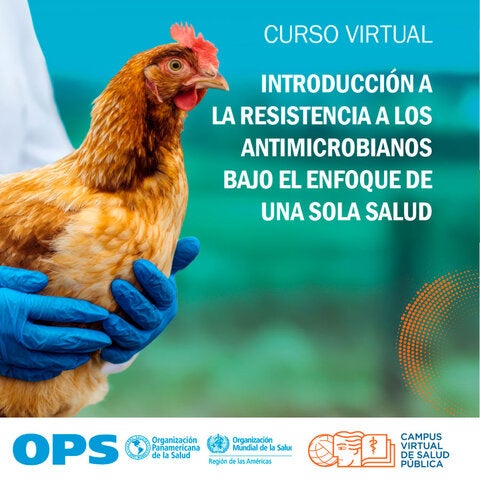
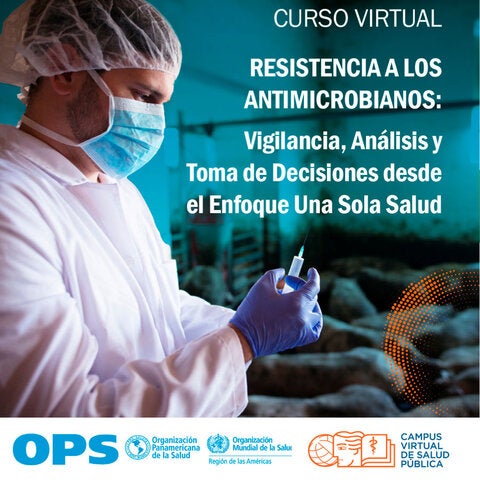
Online Course on Antimicrobial Resistance (AMR) (Spanhish)

Documents

All

Communication Materials

All

Epidemiological Updates and Alerts

All

Mandates and Strategies

All