Obesity and overweight are defined as an abnormal or excessive accumulation of fat that can be detrimental to health.
Obesity is a chronic disease resulting from complex interactions among genetic, environmental, social, socioeconomic, commercial, and behavioral factors, as well as access to healthy food, market forces, industrialized food systems, and the characteristics of the food environment. In the Region of the Americas, obesity has steadily increased in recent decades, mainly as a consequence of changes in dietary patterns driven by the high availability and accessibility of ultra-processed and processed products, and by aggressive marketing aimed at children, which has contributed to the displacement of healthy eating.
Obesity is also one of the main risk factors for many non-communicable diseases (NCDs), including diabetes, cardiovascular diseases, hypertension, and stroke, as well as several types of cancer. NCDs are the leading cause of death in the Region of the Americas. Likewise, children and adolescents who are overweight have a greater risk of becoming overweight or obese in adulthood.
A commonly used index for diagnosing and classifying overweight and obesity in adults is the body mass index (BMI). It is calculated by dividing a person's weight in kilograms by the square of their height in meters. A BMI of 30 or higher is considered obese, and a BMI of 25 or higher is considered overweight. BMI provides the most useful population-level measure of overweight and obesity, as it is the same for both sexes and for adults of all ages. However, it should be considered an approximate guide because it may not reflect the same degree of fat in different individuals, as this index is an indirect marker of body fat.
In the case of children, it is necessary to consider age when defining overweight and obesity.
For children under 5 years of age:
- Overweight is defined as a weight-for-height greater than 2 standard deviations above the median of the WHO Child Growth Standards; and
- Obesity is defined as a weight-for-height greater than 3 standard deviations above the median of the WHO Child Growth Standards.
For children between 5 and 19 years of age:
- Overweight is defined as a BMI-for-age greater than 1 standard deviation above the median of the WHO Child Growth Standards; and
- Obesity is defined as a BMI-for-age greater than 2 standard deviations above the median of the WHO Child Growth Standards.
Obesity and overweight have reached epidemic proportions. From 1990 to 2022, the prevalence of overweight and obesity in adults worldwide increased by 52%, from 44.4% to 65.5%, and in the case of children and adolescents, the prevalence increased from 18.6% to 37.6%.
The Region of the Americas has the highest prevalence of all World Health Organization Regions. In 2022, the prevalence of overweight and obesity in adults was 67.5% (67.3% of men and 67.6% of women). Focusing solely on obesity, it is estimated to affect 33.8% of the adult population (31% of men and 36.5% of women).
This epidemic is also affecting children and adolescents. At the regional level, in the 5-19 age group, 37.6% of children and adolescents are overweight or obese, and according to the latest estimates from UNICEF, WHO, and the World Bank, 8% of children under five are affected.
If effective interventions and policies are not implemented to curb this increase in overweight and obesity, the prevalence in adults could reach 73.2% for both sexes (73.8% for women and 71.1% for men) by 2030, and 42.3% for children and adolescents.
Explore the data interactively in the ENLACE data portal:
To address and halt the rise in obesity rates, PAHO promotes and supports policies that enable people in the Region of the Americas to access healthy food, engage in physical activity, and enjoy better health.
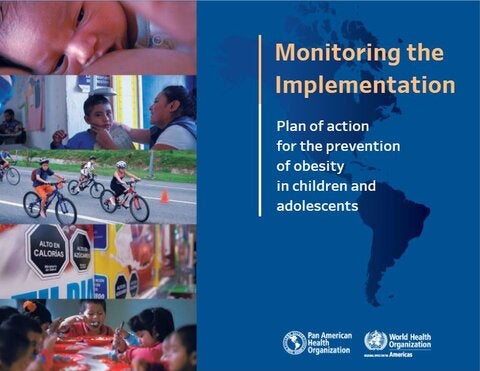
In 2014, PAHO welcomed the unanimous adoption of the Plan of Action for the Prevention of Obesity in Children and Adolescents. This plan aims to implement a set of effective policies, laws, regulations, and interventions that will take into account the priorities and context of Member States in the following strategic areas of action:
a) primary health care and promotion of breastfeeding and healthy eating;
b) improvement of school environments for food and physical activity;
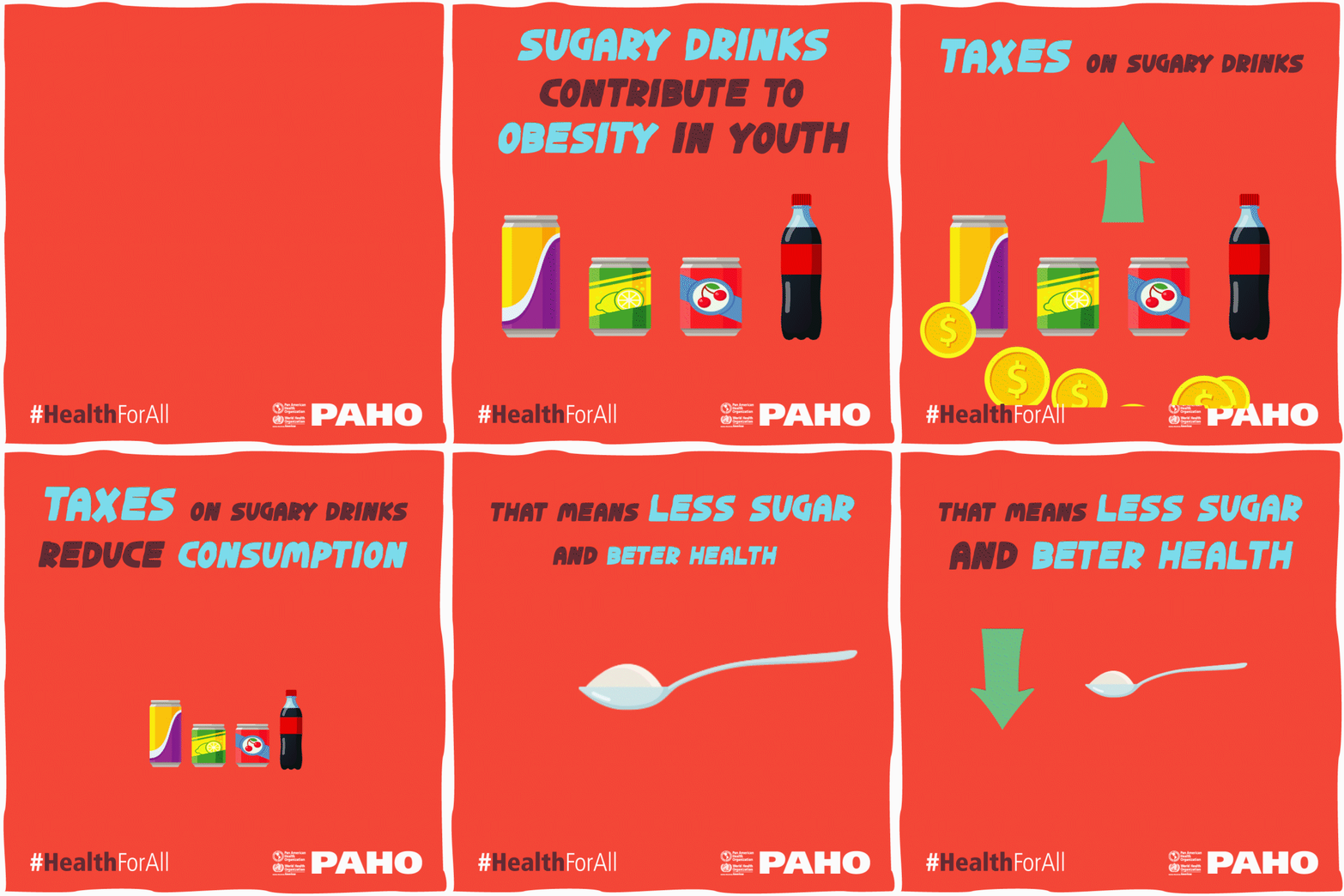
c) fiscal policies and regulation of food marketing and labeling;
d) other multisectoral actions;
e) surveillance, research, and evaluation.
PAHO also supports the use of WHO-recommended interventions to reduce the obesity epidemic, including the WHO's "best buys" related to obesity prevention, the WHO Global Strategy on Diet, Physical Activity and Health, and the Global Action Plan on Physical Activity 2018–2030: More Active People for a Healthier World.
To support countries in the Region, PAHO continues to provide technical guidance and cooperation on programs and policies and facilitate collaboration among countries.
PAHO is also working with 9 countries in the Americas on implementing the World Health Organization's (WHO) Acceleration Plan to Stop Obesity, adopted at the 75th World Health Assembly in 2022. The plan aims to accelerate progress toward reducing obesity, with a focus on countries with a high burden of obesity.
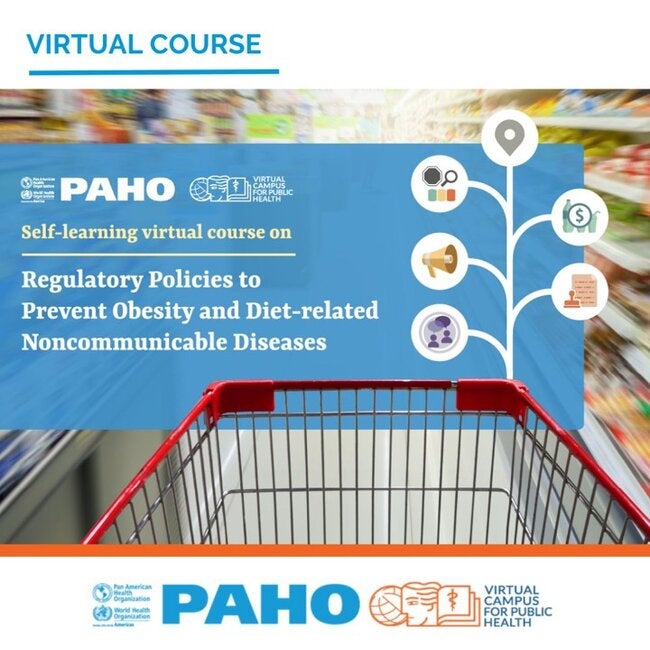
In addition, PAHO offers a multi-module online course designed to strengthen capacities in the design and promotion of regulatory policies that reduce the demand for and supply of processed and ultra-processed products and can halt the rise in obesity and diet-related non-communicable diseases (NCDs). The course includes five modules on different types of regulation, as well as a final module dedicated to the prevention and management of conflicts of interest.
We're committed to improving obesity prevention and care through the Better Care for NCDs initiative. Discover how we're transforming the approach to NCDs in primary health care.