
Public Health Situation Analysis of Venezuela (Bolivarian Republic of). As of July 10, 2026
|
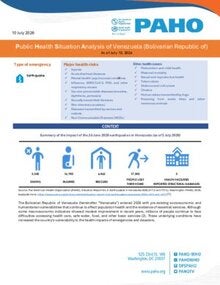
The Bolivarian Republic of Venezuela (hereinafter “Venezuela”) entered 2026 with pre-existing socioeconomic and humanitarian vulnerabilities that continue to affect population health and the resilience of essential services. Although some macroeconomic indicators showed modest improvement in recent years, millions of people continue to face difficulties accessing health care, safe water, food, and other basic services. These underlying conditions have increased the country's vulnerability to the health impacts of emergencies and disasters. On 24 June 2026, two powerful earthquakes of magnitude 7.2 and 7.5 struck northern Venezuela within less than one minute of each other, with epicentres located west of Caracas near the states of Yaracuy andCarabobo. The earthquakes generated very strong to violent ground shaking across a densely populated corridor, causing widespread damage to homes, health facilities, transport infrastructure, and essential services. As of 5 July 2026, official reports indicate more than 3,300 deaths, over 16,700 injuries, approximately 17,300 people displaced after losing their homes, and more than 6,400 people rescued. Three health facilities have been reported as damaged, while damage assessments continue in the affected areas. Numerous aftershocks followed the main event, further complicating emergency response and recovery efforts. This document provides a comprehensive assessment of the public health situation in Venezuela following the earthquakes of June 2026. It covers the context of the emergency, the impact on the population and health services, and an analysis of key health risks and priority actions for the humanitarian response. |