
Organization
Pan American Health Organization (PAHO) and Organization of American States (OAS).
Context
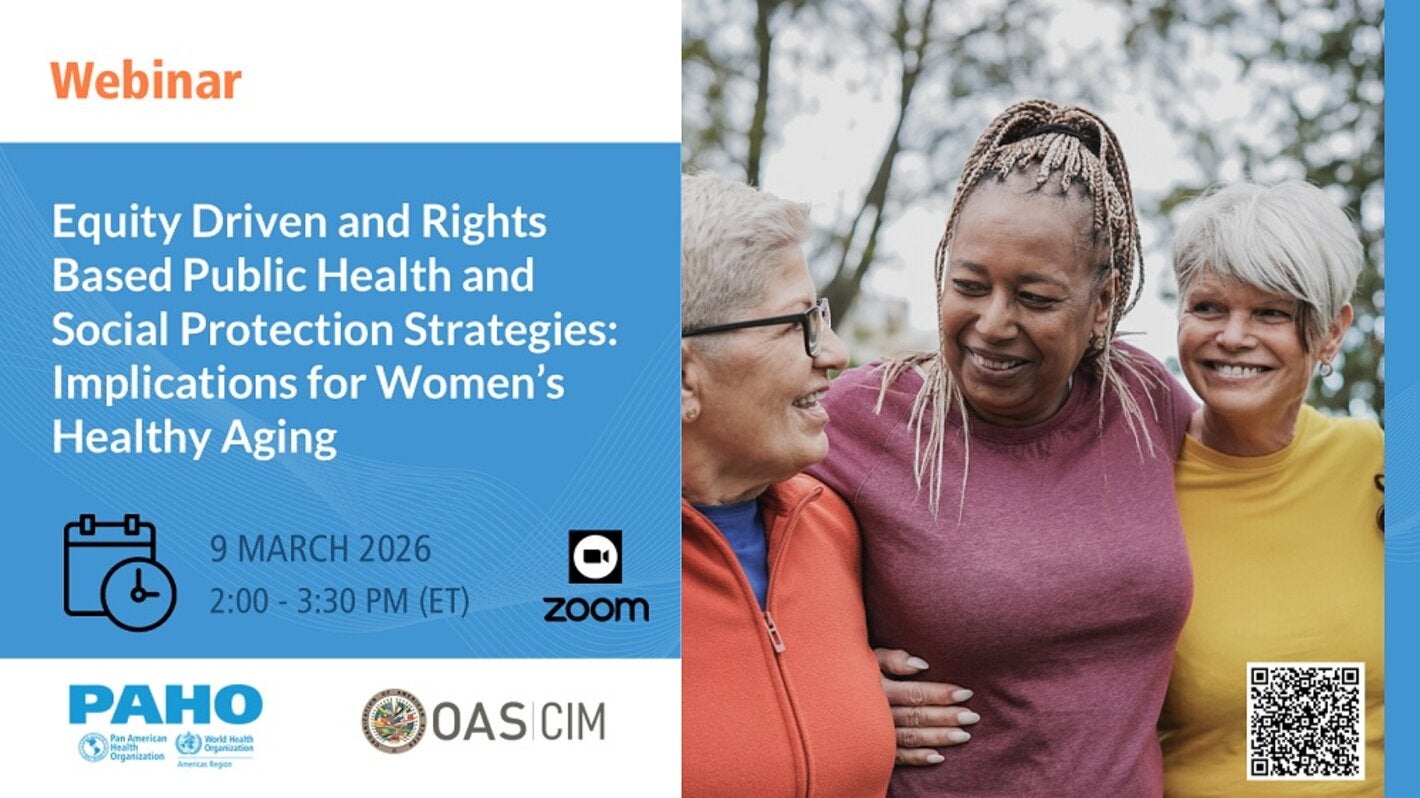
International Women’s Day is celebrated on March 8 under the theme Rights. Justice. Action. For ALL women and girls. This slogan issues a call to action to dismantle all barriers that hinder equality in access to justice: discriminatory laws, weak legal protections, and harmful social practices and norms that erode the rights of women and girls. The Region of the Americas is undergoing a rapid demographic transition marked by population aging and the feminization of older age. Women live longer than men but experience poorer health across a larger portion of their lives, spending an estimated 25% more of their lifespan in poor health. This disparity reflects higher levels of chronic disease and functional dependence, compounded by structural inequities such as limited access to social protection and pensions, persistent gaps in education and employment, and the unequal distribution of unpaid care work.
These trends challenge PAHO’s commitments to reducing health inequities, advancing universal health coverage, and strengthening people-centered, integrated health services across the life course. Yet health policies in the Region largely focus on women’s reproductive years, leaving the needs of women in midlife and older age insufficiently addressed. This gap is particularly critical during perimenopause and menopause—phases that may extend over a decade and significantly influence women’s long-term health trajectories.
Globally, more than 450 million women experience these transitions at any given time. When unmet, menopausal symptoms and their long-term consequences increase the risk of noncommunicable diseases, including cardiovascular disease, neurological disorders, osteoporosis, type 2 diabetes, and gynecological conditions. These outcomes align closely with PAHO priorities on NCD prevention, mental health, and healthy aging. The burden is substantial, with an estimated 2.4 million disability-adjusted life years lost and USD 120 billion in annual GDP losses, highlighting both health and economic implications.
Topics
Aging encompasses profound social and cultural dimensions, with women’s experiences shaped by societal norms, expectations, and stigma around aging and reproductive changes. Limited awareness and understanding can hinder adaptation, while gaps in support from families, workplaces, and communities can increase isolation and feelings of inadequacy. Strengthening education, promoting societal acceptance, and creating supportive environments can empower women to navigate these transitions with dignity and resilience—improving well-being, fostering inclusion, and enhancing quality of life.
Addressing women’s health and well-being beyond the reproductive years offers a strategic opportunity to advance PAHO’s objectives on health equity, gender equality, and integrated service delivery, while supporting healthier aging and more sustainable health systems. A comprehensive, life-course approach—integrating physical, mental, and social well-being; strengthening primary health care and referral networks; and safeguarding women’s rights and autonomy—is critical to achieving PAHO Strategic Plan outcomes and ensuring no woman is left behind.
By prioritizing structural solutions—policies, programs, and social supports that address systemic disadvantages—PAHO can help ensure that women not only live longer but live healthier, more autonomous, and socially supported lives. Investing in women’s healthy aging strengthens health systems, promotes equity, and advances sustainable development across the Region.
Participation
- DATE: Monday, March 9, 2026
- LANGUAGE: Spanish
- TIME: 2:00 pm - 3:30 pm (ET, Washington)
- PLATFORM: ZOOM (with register)

Agenda
Topic
Mercedes García Escalante. PAHO youth network representative
Welcome remarks
Mary Lou Valdez. Deputy Director, Pan American Health Organization (PAHO)
Alejandra Mora Mora. Executive Secretary, Inter-American Commission of Women, Organization of American States (OAS)
Women with lived experiences from diverse communities
Juana Collado. Union of Domestic Workers, Chile
Angelina Sacbajá. Vice president, National Movement of Midwives Nim Alaxik, Guatemala
Lucciola Gonzales. Representative of Afroamérica XXI and National Coordinator of Black Women, Ecuador
Unmet Health Needs, Inequities, and Barriers Undermining Older Women’s Health and Wellbeing
Suzanne Serruya. Unit Chief, Life Course, Women’s and Children’s Health, PAHO
Social Protection Gaps Shaping Women's Health Trajectories and Wellbeing
Larraitz Lexarta. Technical Officer, Inclusive Labor Market Institutions, International Labor Organization (ILO)
Women's Healthy Aging and Human Rights: Addressing Structural Inequalities, Discrimination, and Violence
Ivonne Garza. Senior Associate of the Center for Health and Human Rights at the O'Neill Institute for National and Global Health Law, George Washington University, Washington, United States
Commentary: Women's Leadership in Addressing Structural Barriers to Healthy Aging
Dina González Alfaro. Mayor of Calle Larga, Chile, and President of the Executive Committee of the Healthy Municipalities, Cities and Communities (HMCC) Movement
Closing remarks
Gerry Eijkemans. Director, Department of Social and Environmental Determinants for Health Equity, PAHO