
Introduction
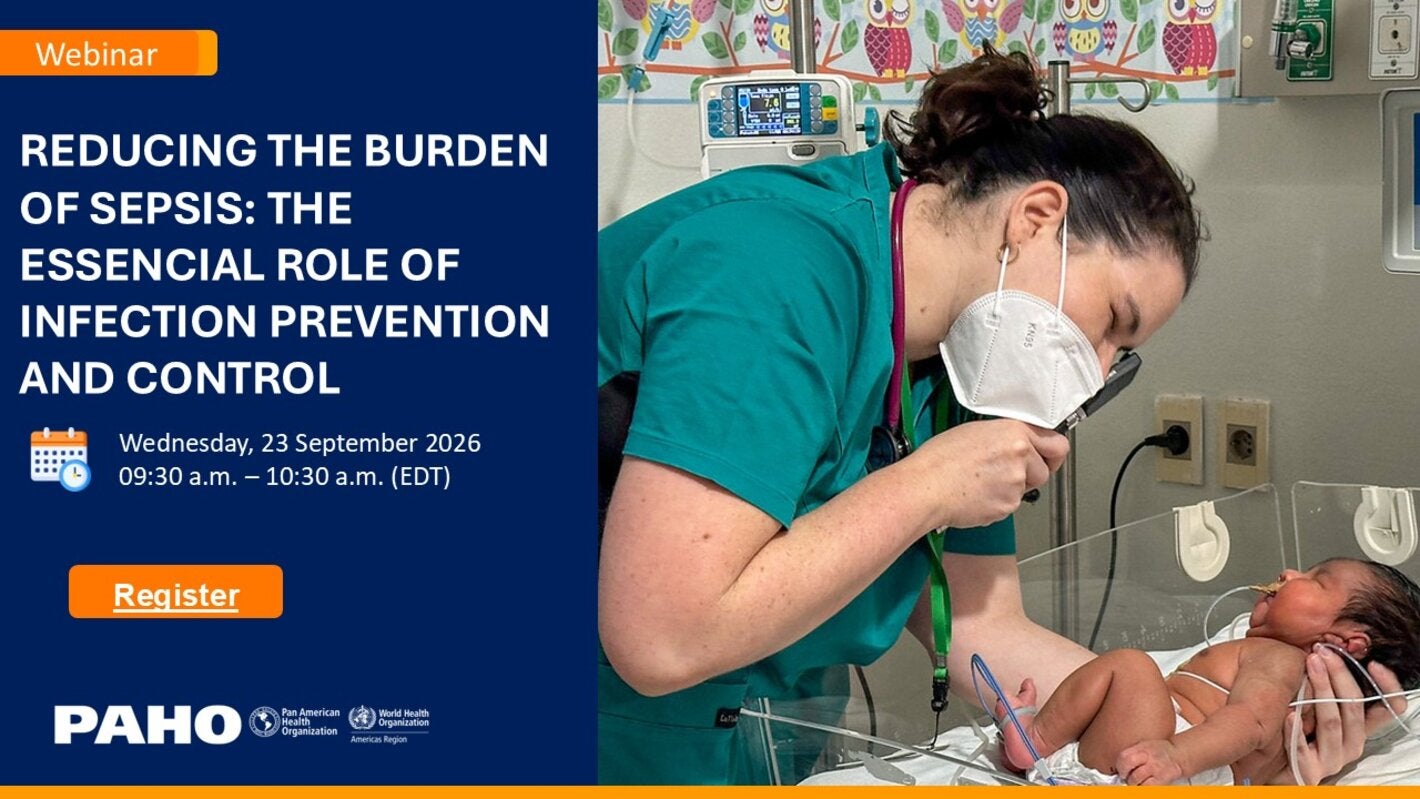
Sepsis remains a major public health concern due to its impact on morbidity, mortality, healthcare systems, and communities. Effective implementation of Infection Prevention and Control (IPC) programs is a fundamental strategy for preventing avoidable infections and reducing sepsis risk.
Sepsis is a complex syndrome with significant clinical, social, and economic repercussions worldwide. It is defined as a life-threatening organ dysfunction caused by a dysregulated host response to infection. Although it is commonly associated with bacterial infections, it may result from any etiology, including viral, fungal, and parasitic infections.
In the Region of the Americas, sepsis represents a significant burden. The Global Sepsis Report estimates an incidence of 124 cases per 100,000 population and a mortality rate of 30.1 deaths per 100,000 population. These data reinforce the need to prioritize preventive interventions, including Infection Prevention and Control (IPC), as part of an integrated regional response.
Context
Reducing the burden of sepsis requires action before infection progresses to life-threatening organ dysfunction. Therefore, IPC is central to the response, as it reduces pathogen transmission, prevents healthcare-associated infections, protects patients and healthcare workers, and decreases infectious events that may trigger sepsis. The World Health Organization (WHO) recognizes IPC as a practical, evidence-based, and essential approach for patient safety and quality of care, applicable in every interaction between healthcare personnel and individuals receiving health services.
The evidence reinforces this connection. WHO has indicated that through good hand hygiene practices and other effective IPC interventions, up to 70% of healthcare-associated infections can be prevented. Furthermore, approximately one in four cases of sepsis treated in hospitals and nearly half of the sepsis cases with organ dysfunction managed in intensive care units are associated with healthcare delivery. In the Region of the Americas, the Pan American Health Organization (PAHO) highlights healthcare-associated infections as a particular challenge due to their frequent association with antimicrobial resistance, poorer clinical outcomes, and increased costs for health systems.
Date: Wednesday, 23 September 2026
Time: 09:30 a.m. - 10:30 a.m. (Eastern Time)
Language: Interpretation available in English, Portuguese, and Spanish.
Meeting Recording
Agenda
09:30 a.m. - 09:35 a.m.
Opening and General Instructions
09:35 a.m. - 09:45 a.m.
Welcome Remarks
09:45 a.m. - 09:55 a.m.
Voices Against Sepsis: Stories of Commitment
09:55 a.m. - 10:20 a.m.
Infection Prevention and Control: A Key Intervention to Reduce the Burden of Sepsis
10:20 a.m. - 10:25 a.m.
Question and Answer Session
10:25 a.m. - 10:30 a.m.
Closing Remarks
Links of interests
- World Health Organization (WHO) – Sepsis
- Latin American Association for Infection Control (ASLACI as per its acronym in Spanish)
- Pan-American and Iberian Federation of Critical Care Medicine and Intensive Therapy (FEPIMCTI as per its acronym in Spanish)