
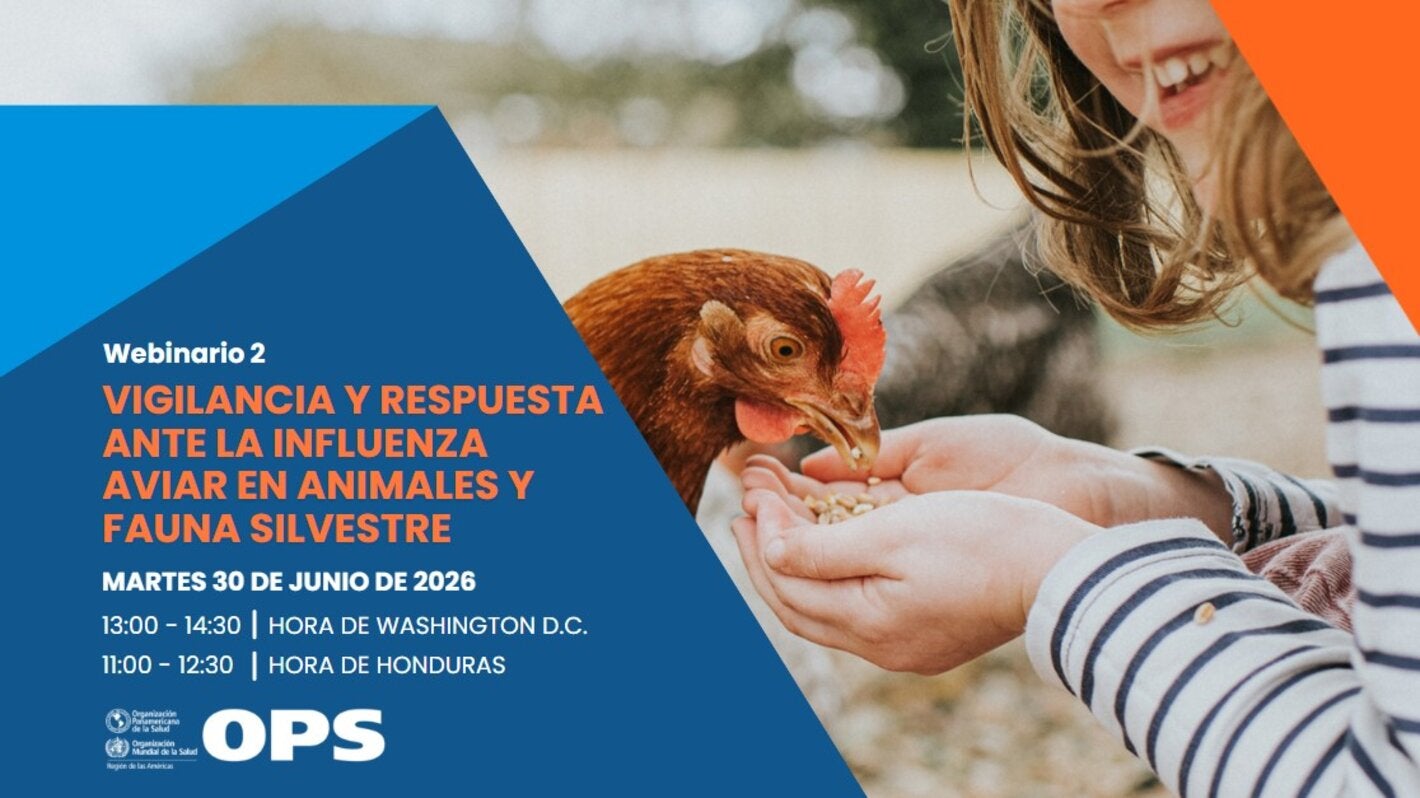
Washington, D.C., June 30, 2026 (PAHO) – The Pan American Health Organization (PAHO) in collaboration with the Pan American Center for Foot-and-Mouth Disease and Veterinary Public Health (PANAFTOSA), conducted a virtual seminar on surveillance and response to avian influenza in animals and wildlife in Honduras. The event was organized in coordination with the National Service for Agrifood Health and Safety (SENASA), the Ministry of Agriculture, and the Ministry of Health (SESAL) of Honduras.
The webinar forms part of a series of sessions on the intersectoral response to avian influenza A(H5) events, organized following the detection of outbreaks of highly pathogenic avian influenza in wild and domestic birds in Honduras. The objective was to strengthen the technical capabilities of national teams in outbreak containment, carcass disposal, cleaning and disinfection procedures, and intersectoral coordination under the One Health approach.
The session included a technical presentation by Dr. Gary Flory, founder of Global Outbreak Solutions and technical partner of PANAFTOSA, who has extensive experience in outbreak management across multiple countries and is the author of guidelines for the FAO and the U.S. Department of Agriculture. The session addressed the various methods available for culling birds, their advantages and limitations, as well as carcass disposal techniques such as shallow burial with carbon and composting, which promote virus inactivation in an environmentally sustainable manner.
PANAFTOSA also presented an overview of the epidemiological situation of avian influenza in the Americas. Between 2022 and 2026 a total of 21 countries and territories reported outbreaks among birds and mammals. During the same period 75 human cases have been detected in five countries, with the majority in the United States, and these cases were associated with occupational exposure to infected animals, with no evidence of sustained human-to-human transmission. It was emphasized that the sustained circulation of the virus in wildlife and mammals increases the risk of viral adaptation and poses a threat to public health, animal health, and poultry production.
For its part, SENASA presented the surveillance and response measures implemented in Honduras, including active epidemiological surveillance in communities and commercial farms, recommended biosecurity measures for poultry facilities and backyard flocks, and the risk communication campaign targeting producers and the general public. Human health authorities reiterated the importance of intersectoral coordination for monitoring exposed individuals in affected areas, noting that there have been no confirmed human cases in the country to date.
During the discussion, participants addressed topics including biosecurity measures for commercial farms, quarantine and restocking procedures following an outbreak, depopulation strategies according to flock type and size, and technical considerations regarding avian vaccination, emphasizing the need for robust surveillance systems and a careful cost-benefit assessments before implementation.
This activity is part of a series of seminars organized by PAHO to support Honduras in its preparedness and response to the circulation of highly pathogenic avian influenza. The first session, focused on enhanced surveillance in humans, is available at the following link: https://www.paho.org/en/events/enhanced-surveillance-humans-following-avian-influenza-outbreaks