
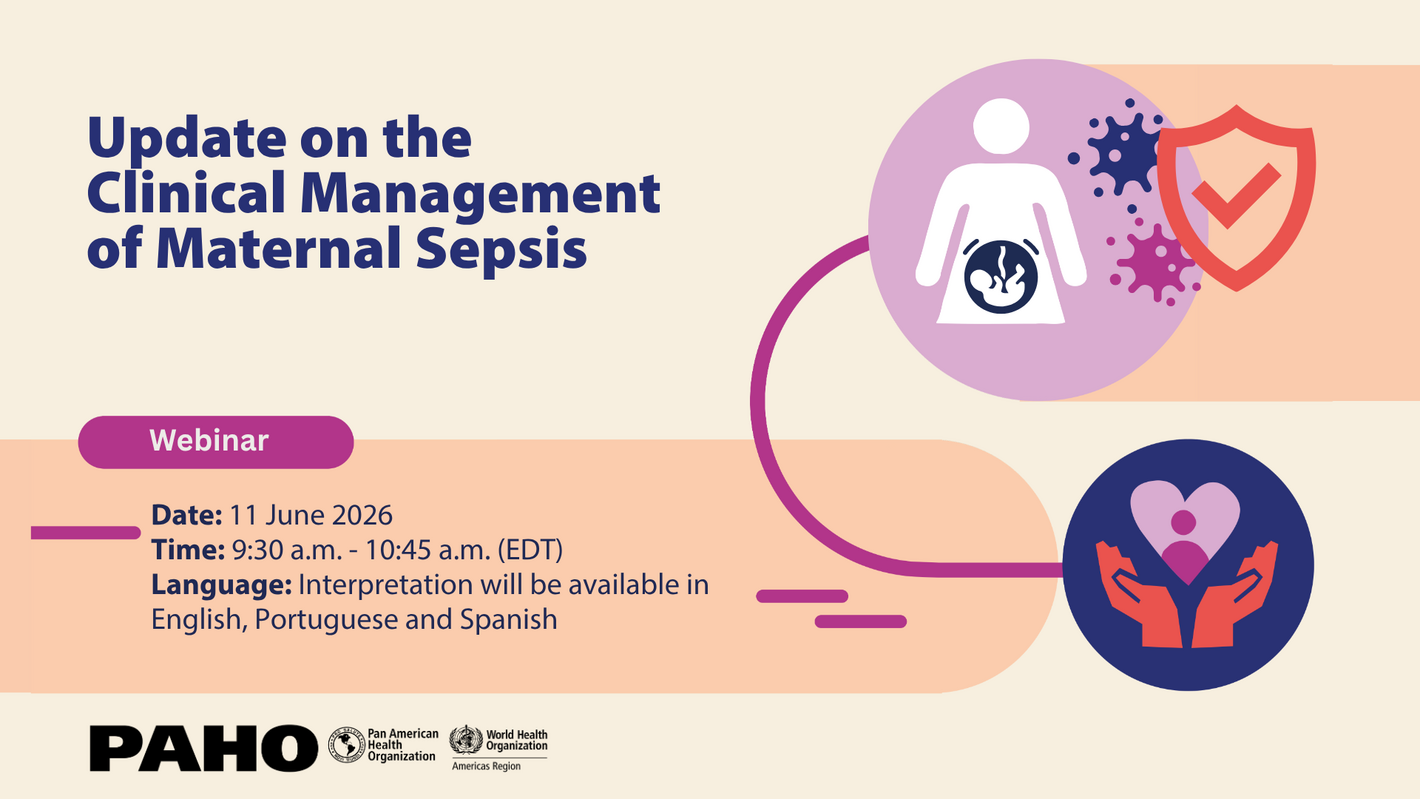
Date: Thursday June 11, 2026
Time: 9:30 a.m. - 10:45 a.m. (EDT)
Languages: Interpretation will be available in English, Portuguese and Spanish
Recording
Context
Maternal sepsis remains one of the leading causes of maternal morbidity and mortality globally and in the Region, and addressing it is a priority within the framework of international commitments aimed at reducing maternal mortality. The World Health Organization has identified maternal sepsis as a critical condition within its global initiatives to improve the quality of maternal care, including the call to action arising from World Sepsis Day and the recognition of sepsis as a public health priority.
At the regional level, the Pan American Health Organization, through the regional strategy for the accelerated reduction of maternal mortality in the Americas and the Call to Action: Zero Preventable Maternal Deaths in the Region by 2024, has prioritized the reduction of preventable maternal mortality through strengthening the quality of care, timely response to obstetric emergencies, and the integration of health service delivery networks.
Evidence also supports that the implementation of key interventions within the so-called “first hour” following the suspicion of sepsis is critical to improving clinical outcomes. This approach is aligned with international recommendations for sepsis management and with PAHO strategies aimed at strengthening the response capacity of health services at all levels of care. Within this context, strengthening the competencies of health personnel for the early detection and timely initial management of maternal sepsis is essential to contribute to the reduction of maternal morbidity and mortality and to the fulfillment of regional and international commitments in maternal health.
Objectives
• Analyze the clinical particularities of sepsis during pregnancy and the postpartum period.
• Review the different tools and early warning systems for the identification of early maternal sepsis.
• Describe the critical interventions to be implemented during the first hour following the suspicion of maternal sepsis at different levels of care.
Target Audience
• The webinar is aimed at health professionals involved in the care of pregnant women, women in labor, and the postpartum period (general practitioners, family physicians, nursing staff, midwives and certified obstetric nurses, and specialists in gynecology and obstetrics).
Agenda
9:30 - 9:35
Opening Remarks
Master of ceremonies: Dr. Rodolfo Gómez-Ponce de León, Regional Advisor on Maternal, Sexual and Reproductive Health, HL/HSS
9:35 - 9:40
Welcoming Remarks and Introduction to the topic
Dr. Suzanne Serruya Unit Chief, Life Course, Women's and Children's Health (HL)
9:40 - 10:00
Multicomponent intervention to improve outcomes in maternal sepsis – (Active Prevention and Treatment of Maternal Sepsis – APT Sepsis Program)
Dr. João Paulo De Souza, Director of the Latin American and Caribbean Center on Health Sciences Information
10:00 – 10:35
Panel: Challenges in health services for the diagnosis and management of maternal sepsis in the first hour
Conversation moderated by: Dr. Claudio Sosa, International Consultant, Life Course, Women's and Children's Health Unit, HL/HSS
Panelists:
Dr. José Antonio Rojas Suárez, Professor of the postgraduate program in Critical Care Medicine at the University of Cartagena and Director of the Intensive Care Unit at Clínica Gestión Salud, ESE Clínica de Maternidad Rafael Calvo, Cartagena.
Dr. Mauricio Vasco Ramirez, Coordinator of the Obstetric Anesthesia Committee of the Latin American Confederation of Obstetric Anesthesia. CLASS. Professor at the Faculty of Medicine of CES University, Medellín, Colombia
10:35 – 10:45
Questions and discussion
Conversation moderated by: Dr. Rodolfo Gómez-Ponce de León, Regional Advisor on Maternal, Sexual and Reproductive Health, HL/HSS
10:45
Closing Remarks
Dr. Suzanne Serruya Unit Chief, Life Course, Women's and Children's Health (HL)