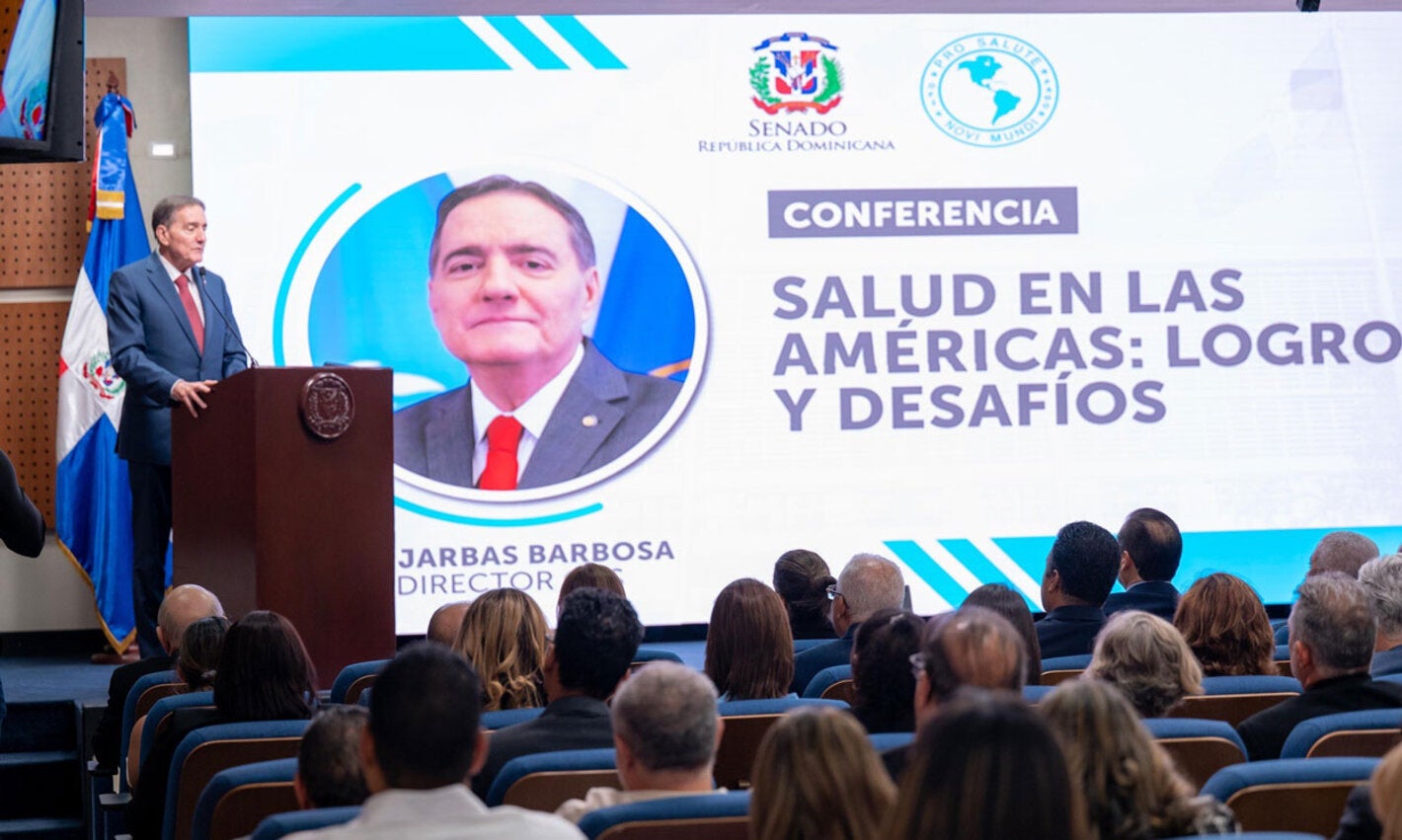
Santo Domingo, Dominican Republic, December 1, 2025 (PAHO) – The Director of the Pan American Health Organization (PAHO/WHO), Dr. Jarbas Barbosa, today urged countries in the region to strengthen health legislation and reinforce primary health care, key pillars for more equitable, resilient, and sustainable health systems.
During his official visit to the Dominican Republic, Dr. Barbosa presented an overview of health progress and challenges in the Americas to legislators, national authorities, and public health experts during a keynote address at the Dominican Senate on the state of health in the region.
“Health legislation does more than regulate policies; it shapes lives, determines futures, and strengthens a country’s ability to guarantee the right to health,” said the PAHO Director.
Dr. Barbosa highlighted that the region faces both long-standing and emerging challenges that test the resilience of health systems. These include inequalities in access to services, uneven distribution of health personnel, gaps in continuity of care, poverty, social exclusion, and geographic and economic barriers. “These gaps have been worsened by economic crises, climate events, natural disasters, and rapid demographic transitions,” he emphasized.
With more than 190 million people over the age of 60 in the region, there is a growing urgency to strengthen primary care, expand long-term care services, and adapt social protection systems. Among emerging health threats, Dr. Barbosa mentioned outbreaks of diseases such as Oropouche and chikungunya, the re-emergence of preventable diseases such as measles, and zoonotic risks such as avian influenza A(H5N1). He also warned of the alarming increase in antimicrobial resistance, which is responsible for over half a million deaths annually in the region.
Dr. Barbosa stressed the importance of adequate and sustainable public financing. “Over recent decades, countries in the Americas have increased public health spending to an average of 4.5% of GDP. This increase has helped reduce out-of-pocket payments to 30% of total health expenditure, which is critical to prevent families from falling into poverty when seeking care. However, this level remains insufficient to ensure universal access and financial protection.”
PAHO therefore recommends increasing public health spending to at least 6% of GDP, prioritizing financing for primary health care, and removing access barriers that still affect millions of people.
Eight strategic regional priorities
The PAHO Director outlined eight strategic priorities for regional cooperation:
- Health system reform based on stronger primary care, to integrate health services and public health programs, reduce access barriers, and promote community participation.
- Strengthening governance and essential public health functions, to ensure stewardship, surveillance, and workforce competencies at all levels.
- Disease elimination, through vaccination, surveillance, access to diagnostics and treatment, sustained investment, and intersectoral coordination.
- Improved care for noncommunicable diseases, promoting early detection, integrated risk factor management, and continuous availability of essential medicines.
- Zero maternal deaths, through prenatal care, primary-level strengthening, and health workforce training.
- Regional Revolving Funds, to ensure rapid and equitable access to vaccines, essential medicines, and high-quality health technologies.
- Digital transformation for universal health, through national digital agendas, telehealth, interoperability, artificial intelligence, and cybersecurity.
- Health emergency preparedness, to strengthen resilient infrastructure, interagency coordination, access to safe water, vector control, and epidemiological surveillance.
Signing of agreements
Accompanied by PAHO/WHO Representative Alba María Ropero, Dr. Barbosa signed a Technical Cooperation Framework Agreement between PAHO and the Dominican Senate. The agreement is the first of its kind in the region and aims to strengthen the legislative health agenda through information sharing, joint research, and training, including participation of PAHO specialists in the Dominican Parliamentary Innovation Hub.
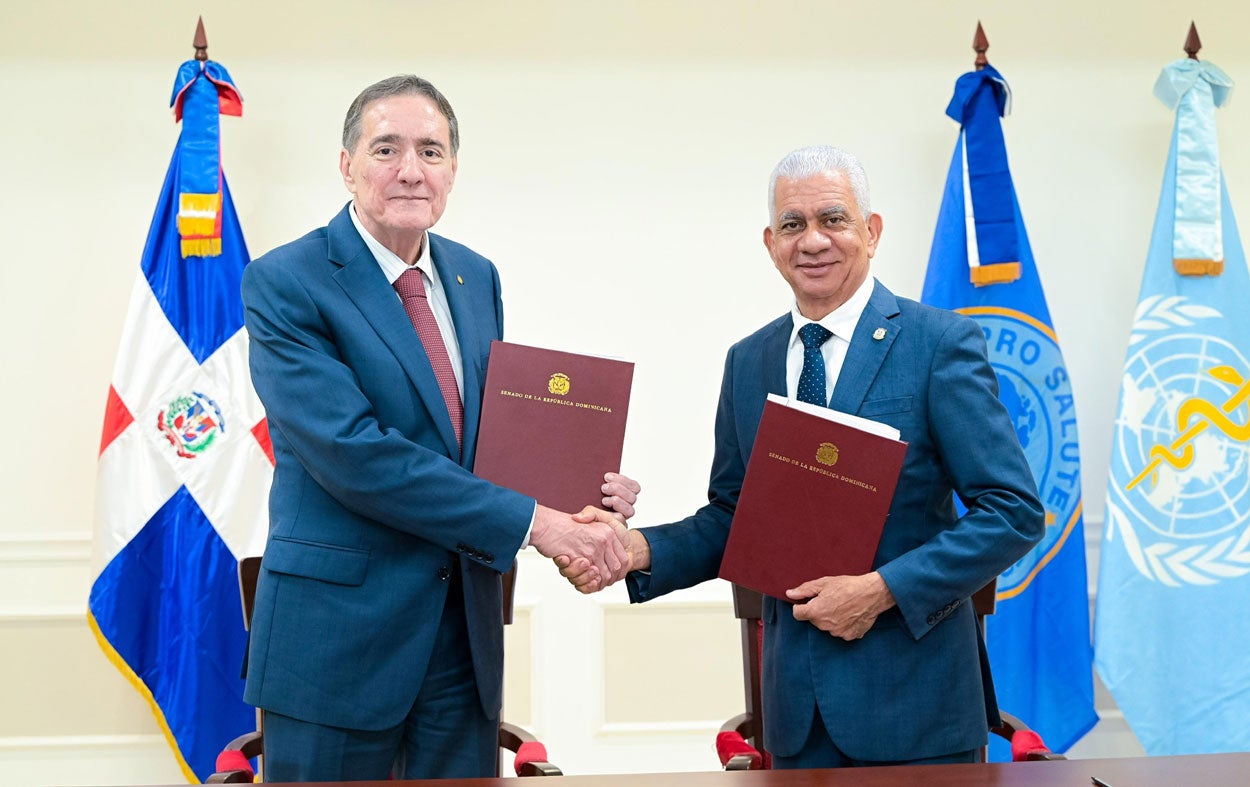
“The laws you pass guarantee rights, organize systems, strengthen institutions, promote transparency, and ensure no one is excluded from the right to health,” said Dr. Barbosa. “This is the first agreement of its kind in the region and will set a new standard for parliamentary health cooperation in the Americas.”
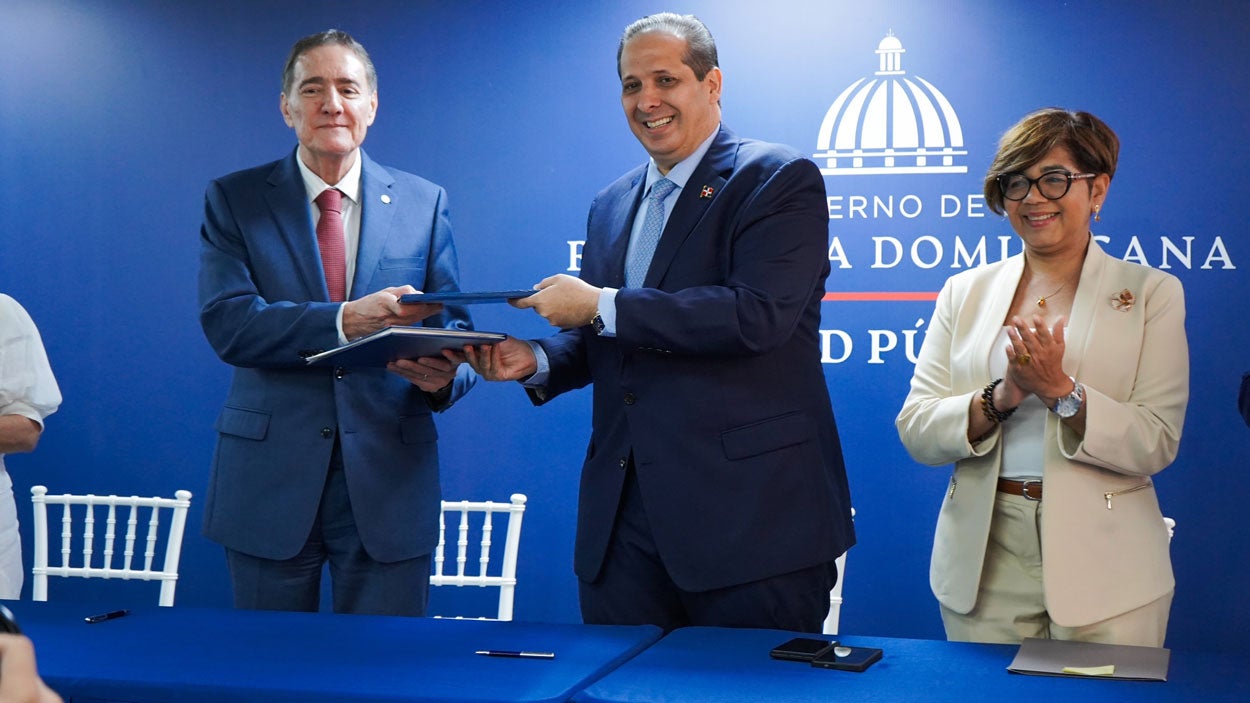
Earlier, at the Ministry of Public Health, Dr. Barbosa and the Minister of Public Health, Dr. Víctor Atallah, signed the Country Cooperation Strategy (CCS) 2026-2031, which will guide PAHO’s technical cooperation with the Dominican Republic over the next six years, aligned with the National Health Strategic Plan 2030 and the National Development Strategy. The Minister of the Presidency, José Ignacio Paliza Nouel, will also endorse the strategy at a later date.
During his three-day visit, from December 1 to 3, Dr. Barbosa will meet with other senior national authorities and representatives of multilateral organizations, as well as visit primary health care service networks.