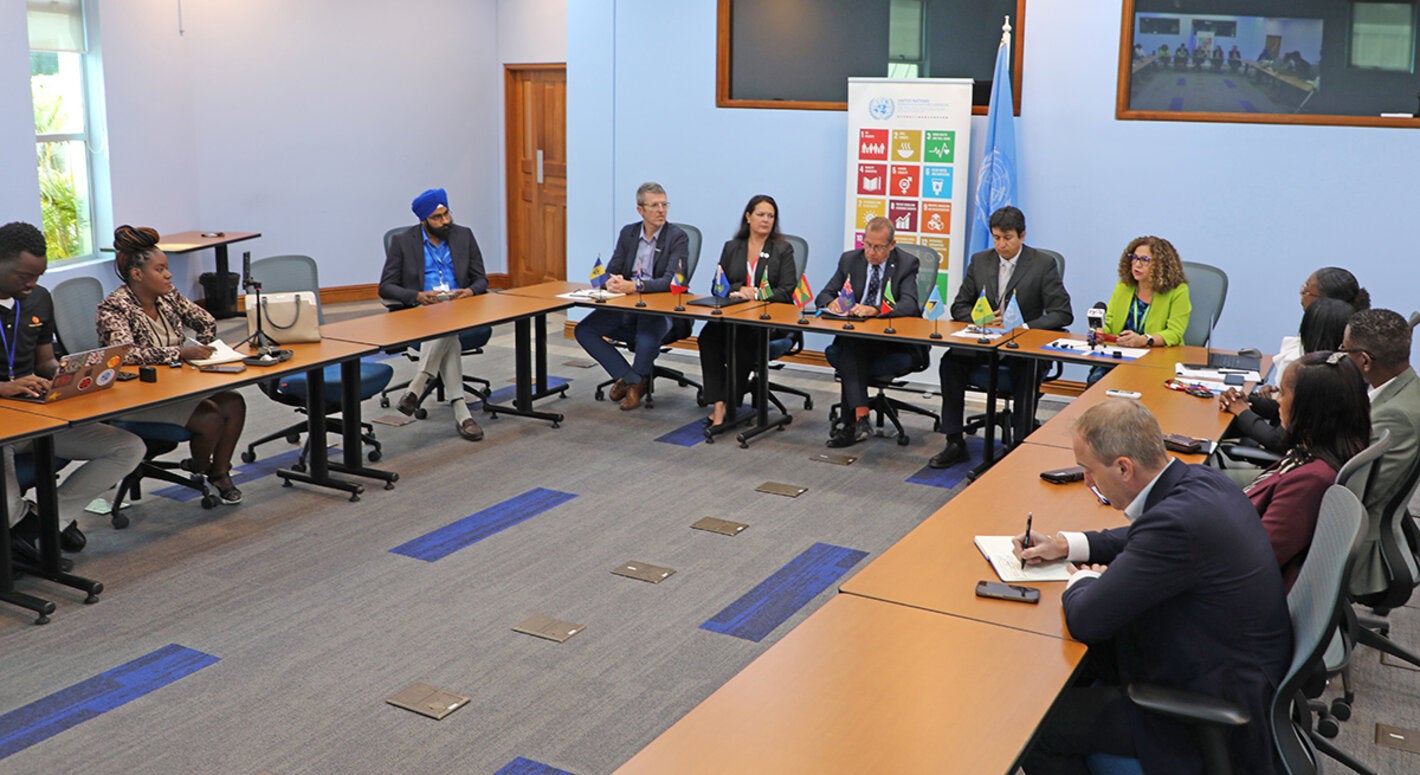
Bridgetown, Barbados, 12 May 2026 (PAHO) – The United Nations (UN) system for Barbados and the Eastern Caribbean has launched its Annual Results Report for 2025, highlighting how joint UN support is making a real difference in people’s lives across the region. In 2025, the UN system supported national priorities, helping countries tackle growing climate, economic, and social pressures while building stronger, more resilient communities.
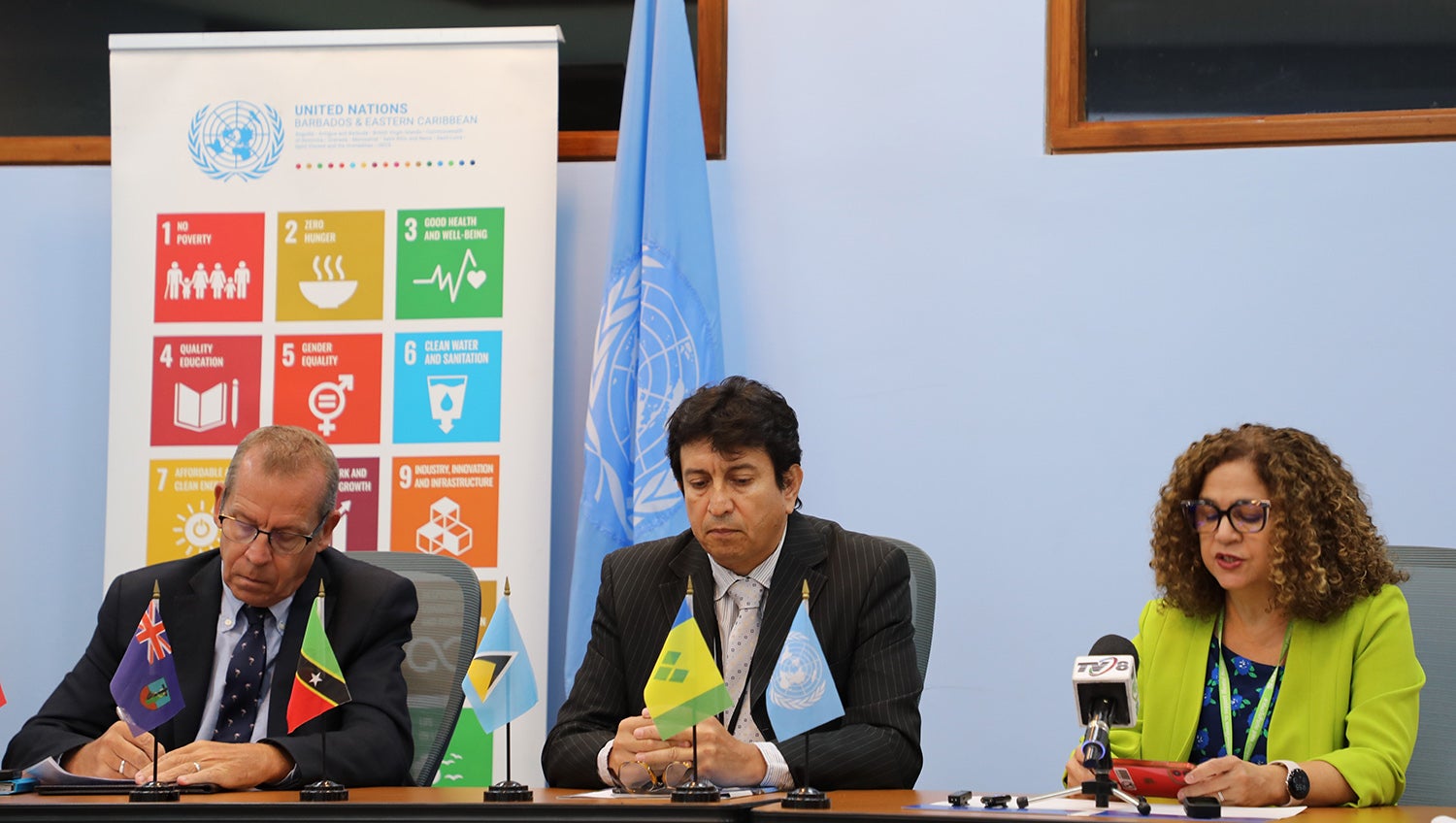
The report was introduced at a high-level press briefing with senior UN leaders and CARICOM Chair and Prime Minister of Saint Kitts and Nevis, Hon. Dr. Terrance Drew, who joined in reaffirming the UN’s ongoing partnership with Caribbean Small Island Developing States (SIDS).
A key highlight of the launch was the presentations by UN leaders including Dr. Amalia Del Riego, PAHO/WHO Representative for Barbados and the Eastern Caribbean Countries, who spoke on the strategic priority area of Equality, Well-being, and Leaving No One Behind.
Dr. Del Riego emphasized that the UN’s work in 2025 was grounded in a commitment to ensure development benefits reach everyone, particularly the most vulnerable. She noted significant gains in strengthening inclusive health systems across the Eastern Caribbean.
“Working hand in hand with governments, we expanded access to quality, resilient health services,” she stated, highlighting interventions such as enhanced HIV and STI prevention programmes, improved hospital diagnostics through digital health investments, and advancements in maternal and newborn care.
She also underscored efforts to rebuild public trust in essential health services, including vaccine confidence initiatives that reached more than 100,000 people, contributing to improved immunization outcomes for newborns.
A major milestone in 2025 was the advancement of the One Health approach, brought to life through a flagship Pandemic Fund project for the Eastern Caribbean, which was jointly implemented by PAHO, the Food and Agriculture Organization (FAO), and the World Bank.
Dr. Del Riego explained that this initiative is strengthening integrated surveillance systems, laboratory capacity, and the health workforce across human, animal, and environmental health sectors.
“By fostering collaboration across ministries and disciplines, countries are better equipped to detect, prevent, and respond to emerging health threats,” she said. “This approach reinforces regional preparedness while safeguarding both lives and livelihoods.”
Beyond health, the UN system made significant strides in education and human development. Dr. Del Riego highlighted that more than 5,000 children with disabilities and developmental challenges benefited from more inclusive education systems across the region.
Additionally, over 1,000 caregivers were trained to support early childhood development, while schools were strengthened as safe and resilient spaces through the integration of psychosocial support, disaster preparedness, and inclusive practices.
Addressing inequality remained central to the UN’s work. Dr. Del Riego noted that improved data systems and harmonized poverty measurement are now enabling governments to better identify and support vulnerable populations.
“These tools are essential to ensuring that social protection systems are responsive, targeted, and effective in reducing disparities,” she added.
The UN also made notable progress in advancing gender equality and the protection of women and girls. Systems to prevent and respond to gender-based violence were strengthened, with expanded survivor-centered services and improved policies.
Programmes promoting women’s economic empowerment further enhanced opportunities and resilience across communities.
Inclusion remained a cross-cutting priority, with expanded support for persons with disabilities, strengthened child-sensitive social protection measures, and the promotion of inclusive policies across multiple sectors.
Dr. Del Riego emphasized that the achievements under this pillar reflect not only the breadth of results, but also the integrated and collaborative approach used to deliver them.
“What defines this work is a shared commitment to human rights, equity, and data-driven action,” she said.
She concluded by reaffirming the UN’s commitment to ensuring that every person can live with dignity, access opportunity, and realize their full potential.
The United Nations 2025 Annual Results Report for Barbados and the Eastern Caribbean outlines the collective impact of UN agencies working in partnership with governments and stakeholders to advance sustainable development across the region.