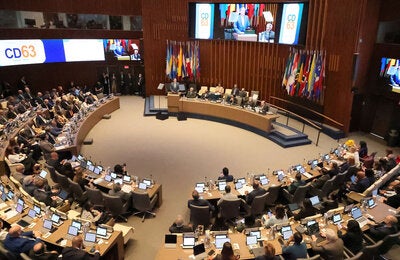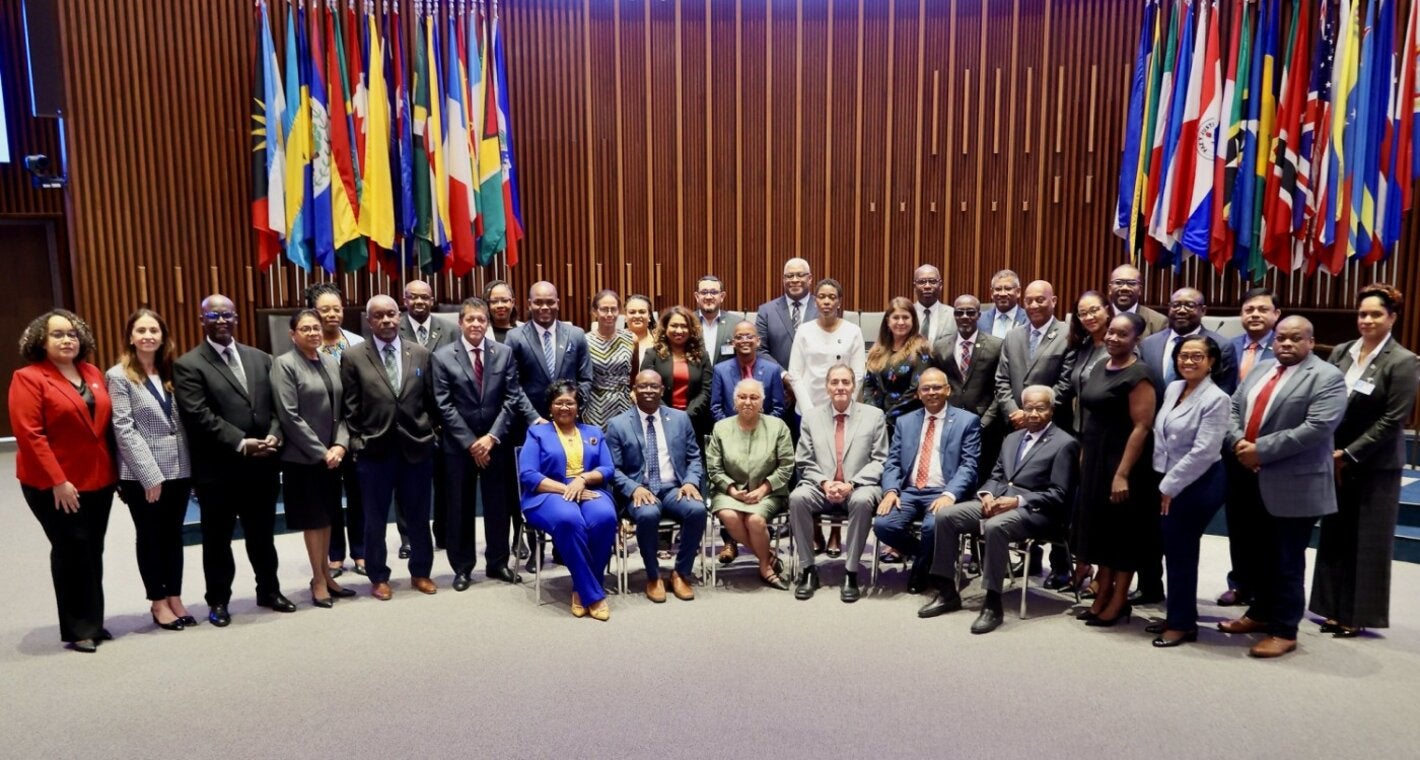
Washington D.C. United States of America, 15 October 2025 (PAHO/WHO) - CARICOM Ministers of Health unanimously approved and endorsed the Human Resources for Resilient Health Systems Caribbean Roadmap 2025-2030 during the 50th Meeting of the Council of Human and Social Development- Health (COHSOD-Health) at the Pan American Health Organization Headquarters in Washington, DC, USA. The Roadmap provides a strategic approach to address the challenges associated with developing and maintaining the Caribbean health care workforce.
Acknowledging that health workers are the backbone of care and compassion, Dr Jarbas Barbosa, PAHO Director, emphasized that the Roadmap is “not just about numbers or training; it is about valuing, retaining, and empowering the very people upon whom lives depend.” To further strengthen human resources for health in the subregion, he advised that the “reorientation of health workforce planning, development and investment among Caribbean countries…is critical in building resilient health systems that meet the needs of the population.”
Dr Benjamin Puertas, PAHO Human Resources for Health (HRH) Unit Chief, presented the HRH Caribbean Roadmap to the Ministers of Health and other national officials during the COHSOD meeting. “The Roadmap seeks to create synergies and efficiencies and catalyse multisectoral action on the health workforce, while harmonising standards in the education, training, practice, regulation and monitoring of HRH in the Caribbean,” he explained, noting that it is based on five strategic lines of action:
Strengthen governance and stewardship of human resources for health through appropriate, tailored models and mechanisms.
- Establish consolidated regulatory frameworks and mechanisms for HRH education and practice for the Caribbean.
- Establish and strengthen interprofessional teams and their integration into health services networks to achieve universal health based on the Primary Health Care approach.
- Enhance workforce capability to address population health priorities, with a focus on the Primary Health Care approach, including Public Health Emergency and Disaster preparedness and response.
- Ensure the adequate supply, employment and retention of competent, fit-for-purpose HRH through financing, regulation and promotion of decent working conditions, respecting diversity, equity, inclusiveness and protection of the rights of health workers.
The publication was produced by PAHO, the HRH Caribbean Commission, the CARICOM Secretariat and its Member States, territories and partners. CARICOM Assistant Secretary-General for Human and Social Development, Alison Drayton, reiterated the urgency of coordinated action among CARICOM Member and Associate Member states amidst ongoing regional challenges such as emerging communicable diseases, premature mortality and morbidity from NCDs, climate change, rising crime rates and a shortage of adequately trained healthcare personnel. This was echoed by the Hon. Philip Telesford, Minister of Health, Wellness, and Religious Affairs of Grenada and Chair of the 50th meeting of the COHSOD-Health. He called on the meeting participants to reaffirm their “shared responsibility to place the health and well-being of our people at the centre of our work,” including that of health workers in the region, in their efforts to build resilient health systems.
The recently signed PAHO-CARICOM Joint Subregional Cooperation Strategy 2025-2029 identifies the Roadmap as a subregional common public health good. PAHO Subregional Program Director, ad interim, Piedad Huerta, highlighted the role that this Roadmap plays in contributing to the successful implementation of the JSCS through coordinated strategies and actions that address shared HRH challenges “using a subregional approach that draws upon pan-Caribbean cooperation and solidarity among a cohesive community of countries.”