Berlin, 15 October 2026 (PAHO) – Pan American Health Organization (PAHO) Director and WHO Regional Director for the Americas Dr. Jarbas Barbosa called for countries and regional institutions to have a stronger role in shaping ongoing reforms of the global health system during the World Health Summit 2026 in Berlin this week, arguing that clearer responsibilities across national, regional and global levels can reduce duplication and help limited health resources deliver greater impact.
His call comes as WHO Member States and global health partners are examining how health cooperation is governed, financed and delivered amid tighter financial conditions and concerns over fragmentation and duplication. The reform process is considering how responsibilities, coordination and financing should be aligned across country, regional and global levels, with final recommendations expected to be considered by the World Health Assembly in 2027.
Drawing on the experience of the Americas, Dr. Barbosa highlighted how regional cooperation can bridge global health commitments and action within countries.
“As the global health architecture evolves, regional institutions must have a stronger voice in shaping decisions, not only in implementing them. Country ownership, regional leadership and effective partnerships are essential to building a more inclusive, responsive and sustainable global health system,” Dr. Barbosa said.
From global commitments to country results
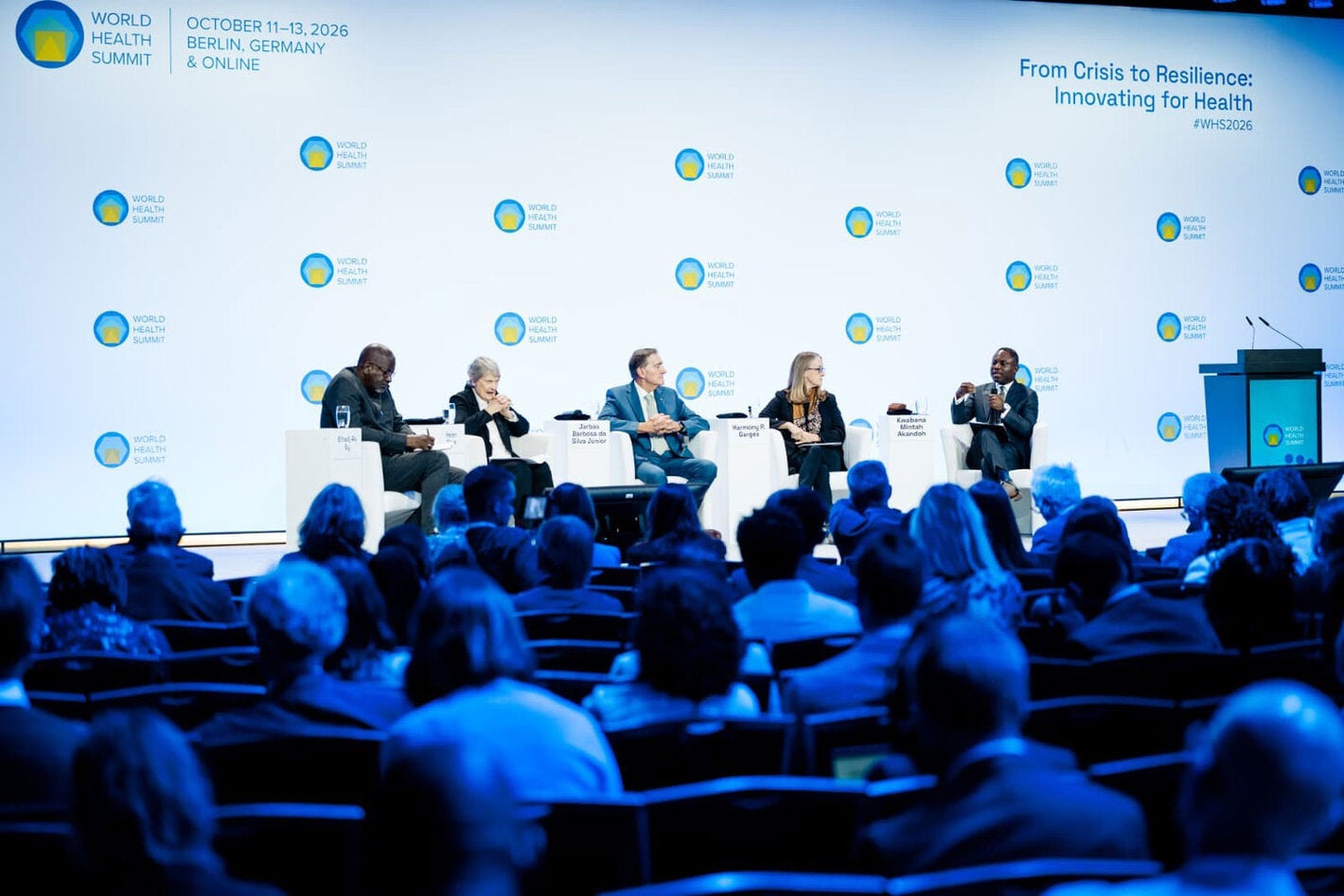
During the Summit's main-stage discussion on Governing Global Health Architecture in a Multipolar World, Dr. Barbosa highlighted more than 120 years of cooperation among countries of the Americas through PAHO. Regional approaches ranging from pooled procurement to primary health care, disease elimination, and health innovation and production, he said, illustrate how countries can work collectively on challenges where regional action brings added value.
He underscored that an effective global health architecture must recognize the distinct and complementary roles of each level: countries leading their own health priorities; regional institutions adapting global guidance and standards to regional realities and translating global commitments into concrete action at the country level; and global institutions setting norms, standards and providing technical guidance.
For the Americas, financing is also central to the debate. Dr. Barbosa noted that most countries in the Region are middle-income and rely primarily on domestic resources to finance their health systems. Better alignment of domestic financing, development resources and international cooperation, he said, can help countries advance their own priorities and achieve greater impact.
Partnerships focused on country priorities
During his three days in Berlin, Dr. Barbosa also advanced cooperation with international partners on key health priorities for the Americas.
He took part in discussions on pandemic and epidemic intelligence, dengue, healthy ageing and noncommunicable diseases, One Health and health security, and youth participation in global health decision-making. Across these discussions, he highlighted the importance of translating scientific advances and global health commitments into concrete action and results in countries.
Dr. Barbosa also met with international and private-sector partners to explore cooperation in areas including suicide prevention, brain health, implementation science, artificial intelligence and digital health. His meetings included exchanges with the WHO Foundation, Boehringer Ingelheim, the Davos Alzheimer's Collaborative, the Heidelberg Institute of Global Health and Google for Health on ongoing and potential areas of cooperation in the Americas.
Dr. Barbosa said partnerships should support countries' priorities and translate knowledge, financing and innovation into improved health outcomes.
“The future of global health must be built on health sovereignty, country ownership and regional solidarity,” he said.