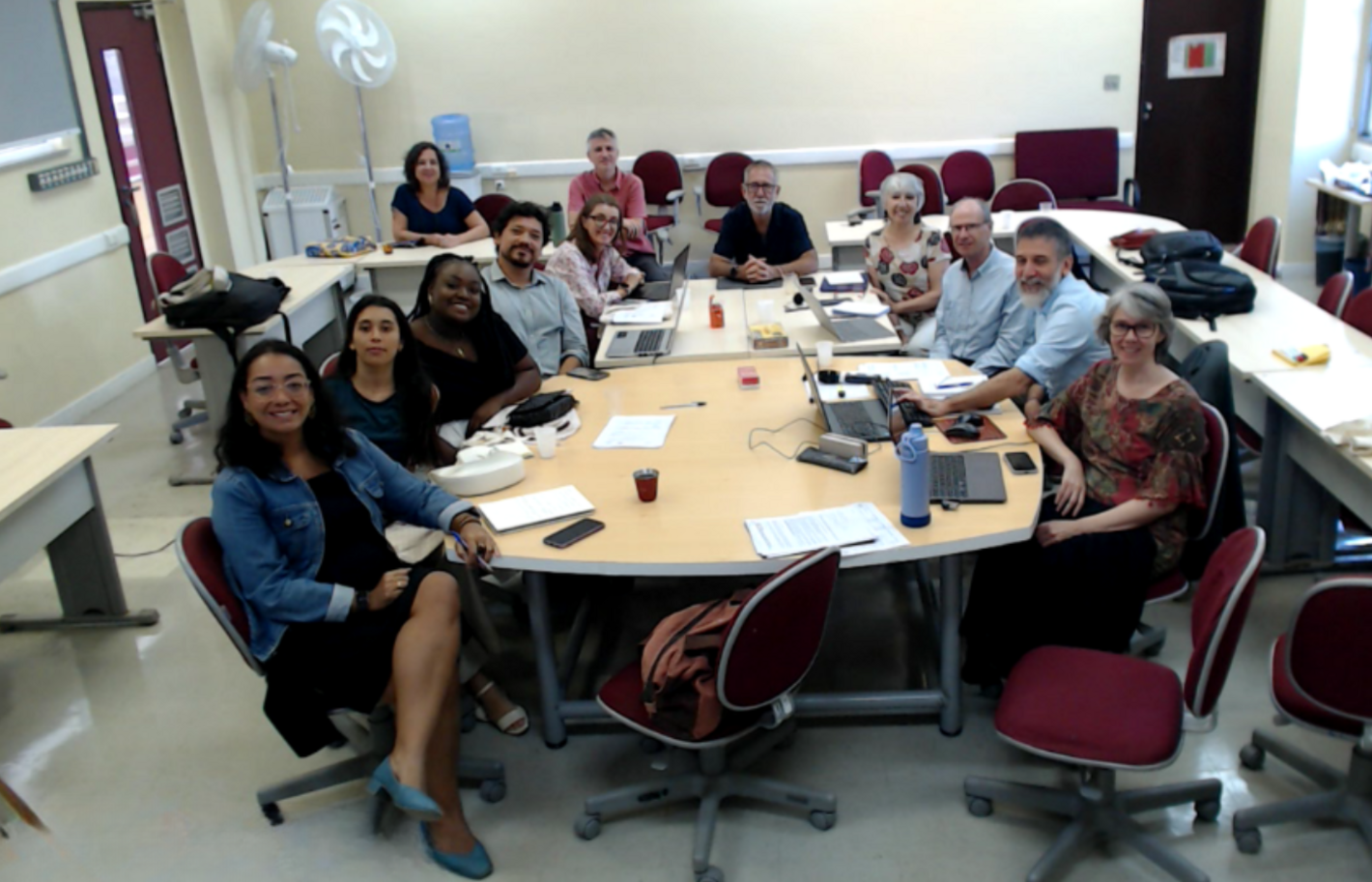
Panama City, 15 April 2026 (PAHO) – The Virtual Campus for Public Health (VCPH) of the Pan American Health Organization (PAHO), together with the Joaquín Venâncio Polytechnic School of Health at Fiocruz (EPSJV-Fiocruz), held a working workshop in Rio de Janeiro from April 9–10 to advance the analysis and consolidation of results from a project on training health technicians in underserved areas.
The activity took place within the framework of the project “Training for health professionals in underserved areas: health technicians through the VCPH,” funded by the Spanish Agency for International Development Cooperation (AECID), as part of the program “Strengthening capacities for resilient health systems II.”
The meeting brought together technical teams from PAHO, the Joaquín Venâncio Polytechnic School, the Health Technicians Observatory, and research specialists, with the aim of reviewing and strengthening the analysis of results, advancing the preparation of the final report, and defining strategies for disseminating and using the evidence generated in countries across the Region.
The analysis included the review of mixed methodologies, combining surveys of health technicians and managers in Latin America with semi-structured interviews with key stakeholders in eight countries (Argentina, Brazil, Chile, Colombia, Ecuador, El Salvador, Guatemala, and Peru). These inputs made it possible to characterize the diversity of roles, levels of training, and working contexts of health technicians across different levels of care.
One of the central themes of the workshop was the use of PAHO’s Virtual Campus as a strategic tool for the continuous training of these professionals. Findings show that, among those familiar with it, the Campus is highly valued for its free and open access and for the relevance of its learning offer. The role of country nodes in promoting and leveraging courses as part of national health workforce strengthening strategies was also highlighted.
“This work strengthens technical cooperation among countries and institutions to generate and use evidence that informs the training of health technicians. Through the Virtual Campus, we aim to support countries in developing capacities that respond to the needs of their health systems,” said Gabriel Listovsky, Chief of the Special Program, Virtual Campus for Public Health at PAHO.
The meeting also provided an opportunity to further explore challenges associated with training health technicians, including the need to adapt learning content to national contexts, strengthen instructional design, and continue researching the competencies required in a context shaped by the incorporation of new technologies.
Participants agreed on the importance of continuing to generate country-level evidence on this professional group, considering its heterogeneity and its growing role in health systems, as well as strengthening its integration into health teams, including community health workers and caregivers.
This work contributes to strengthening countries’ capacities to plan and develop evidence-based health workforce training strategies, in line with the primary health care approach and ongoing efforts to advance toward more resilient and equitable health systems in the Region.