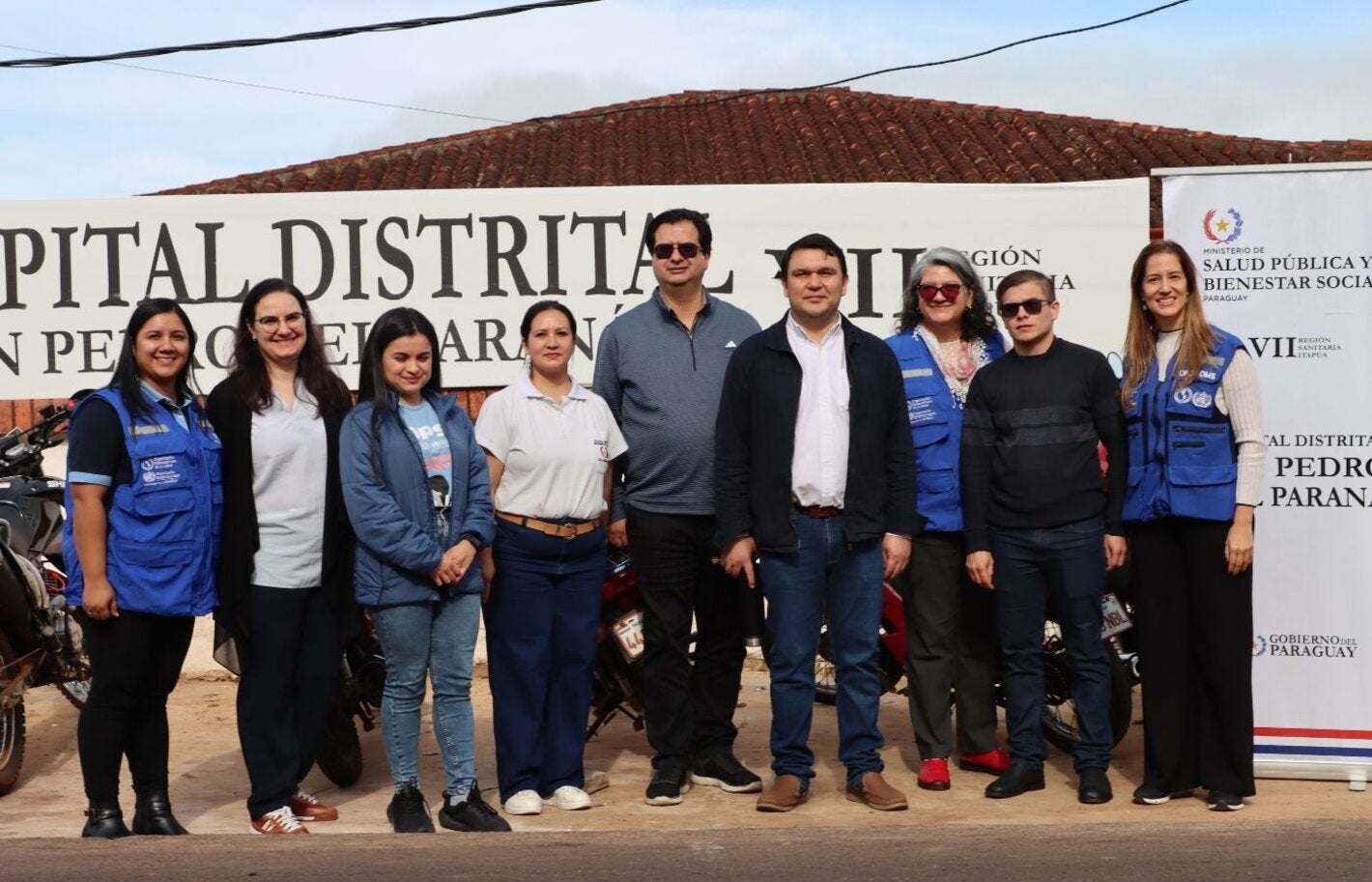
Washington, D.C., 17 June 2026 (PAHO) – The Pan American Health Organization (PAHO) held a workshop from 3 to 5 June in Encarnación, Paraguay, to strengthen the organization and composition of interprofessional health teams (EqIPS, by its acronym in Spanish) within the framework of primary health care (PHC).
The workshop aimed to strengthen the capacities of national and local teams to implement the EqIPS tool by incorporating a territorial approach that links the assessment process with the operational realities of health services at the local level. The activity was organized by PAHO, with the participation of representatives from the Ministry of Public Health and Social Welfare (MSPyBS, by its acronym in Spanish), the National Strategic Directorate of Human Resources for Health (DNERHS, by its acronym in Spanish), and the Directorate of Primary Health Care.
During the opening session, Dr. Gladys Mora, Director of the DNERHS, highlighted the importance of strengthening interprofessional health teams in line with the country's National Human Resources for Health Policy and the Regional Policy on Human Resources for Health 2030 (CD60/6).
As part of the workshop, health workers and directors from the Alto Verá and San Pedro del Paraná health districts, in the Itapúa Health Region, applied the EqIPS tool to assess and prioritize the conditions that support the organization of interprofessional health teams at the local level. Participants developed capacities to analyze the operational context, identify gaps and priorities, and agree on action plans aimed at strengthening primary health care through an interprofessional approach.
“The implementation of the EqIPS tool provides an opportunity for health teams to analyze their local realities, identify gaps, and collaboratively develop solutions that strengthen service organization and enhance the responsiveness of primary health care,” said Yohana Díaz de Valle, PAHO Advisor on Professional Education in Human Resources for Health.
The results of this assessment will help identify specific gaps and opportunities for the organization of interprofessional teams in the Alto Verá and San Pedro del Paraná districts of the Itapúa Region, contributing to improved problem-solving capacity of health services, reduced fragmentation of care, and more equitable access to services for local communities. The lessons learned will also contribute to the development of a national roadmap for the progressive implementation of interprofessional health teams in Paraguay.
This initiative is part of PAHO's technical cooperation to strengthen and institutionalize interprofessional health teams across the Region of the Americas, promoting integrated, collaborative, and people- and community-centered care.