Brasilia, November 18, 2025 – The Pan American Health Organization (PAHO) held a webinar on Monday, November 17, entitled "Toward the Elimination of Cervical Cancer in the Americas," to mark the official launch of World Cervical Cancer Elimination Day and to present new regional tools to accelerate the fight against this disease. Eliminating cervical cancer is a priority for PAHO, which works with countries to expand vaccination, strengthen screening, and ensure timely treatment.
The event highlighted the successful experiences of Brazil, Chile, and El Salvador, as well as elimination plans for Latin America and the Caribbean.
PAHO Director Jarbas Barbosa stressed the urgency of coordinated action, highlighting the impact of the disease and the goals for 2030. "Cervical cancer is preventable and curable, yet it remains one of the leading causes of cancer death among women. More than 708,000 women were diagnosed with cervical cancer in the Region of the Americas last year, and nearly 40,000 lost their lives to this disease." Jarbas Barbosa also emphasized PAHO's role in strengthening regional capacity. "To maintain and accelerate progress, it is essential to ensure equitable access to the necessary tools for prevention, detection, and treatment. Currently, Member States can acquire HPV vaccines and HPV tests through PAHO's Regional Revolving Funds."
Brazil has been making significant progress on the elimination agenda. During the webinar, Health Minister Alexandre Padilha presented the country's main actions regarding vaccination, organized screening, and expanding the availability of treatments.
"No woman should have to fear a preventable disease, which is why our goal is to vaccinate 90% of girls. We have more than 38,000 vaccination centers integrated into Primary Health Care, which is the cornerstone of our prevention policy. In each of these centers, our professionals, mostly women, receive, vaccinate, test, and follow up with patients throughout the entire care process," stated Minister Padilha.
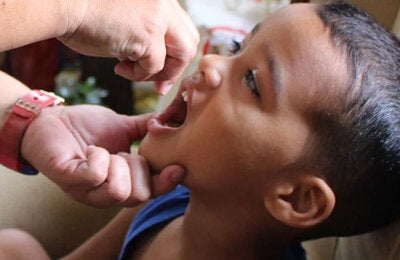
Vaccination is one of the main actions to prevent and eliminate the disease. Currently, vaccination coverage reaches more than 82% of girls and nearly 67% of boys between the ages of 9 and 14. Brazil introduced the HPV vaccine for girls in 2014 and, in 2017, expanded immunization to boys, strengthening gender equity in health. Since April 2024, the country has adopted a single-dose HPV vaccine for adolescents, in accordance with WHO and PAHO recommendations. In 2025, the age range was temporarily extended to 19 years to ensure vaccination of all adolescents.
Minister Alexandre Padilha also highlighted national technological development and its regional importance, such as the HPV DNA molecular test, developed entirely by the Paraná Institute of Molecular Biology (IBMP) and launched this year to strengthen the detection strategy.
"Without the support of PAHO, it would not have been possible to achieve the positive outcome of having 100% nationally developed technology and new implementation manuals. We are at the disposal of the regional effort led by PAHO for greater access to these technologies in the countries of the Americas," she emphasized, explaining that this new detection model began in 12 Brazilian states as a pilot project and will be extended to the entire country by the end of 2026.
The meeting brought together health ministers, experts, researchers, international organizations, and representatives of civil society, reinforcing the collective commitment to making the Americas the first region in the world to eliminate cervical cancer.
Cervical cancer is one of the diseases included in PAHO's (Pan American Health Organization) Disease Elimination Initiative.
World Cervical Cancer Elimination Day
Celebrated annually on November 17, World Cervical Cancer Elimination Day aims to raise awareness of prevention and mobilize efforts in countries to eliminate cervical cancer as a public health problem.
Among the actions carried out in Brazil, the Vaccine Museum at the Butantan Institute in São Paulo and the Buriti Palace in Brasília were illuminated in teal. The Illumination Day initiative, which lights up monuments around the world, is part of the Brazil Without Cervical Cancer Movement, coordinated by the Brazilian Group of Gynecological Tumors (EVA), in collaboration with various medical societies, patient NGOs, scientific institutions, and with the support of the Pan American Health Organization (PAHO) and the World Health Organization (WHO).
Cervical Cancer Elimination Initiative
The World Health Organization's (WHO) Global Strategy for the Elimination of Cervical Cancer is based on three pillars: vaccination, early detection, and treatment. To achieve the established goals, it is necessary to ensure that, by 2030, 90% of girls are vaccinated against HPV before the age of 15; that 70% of women undergo HPV screening at ages 35 and 45; and that 90% of women diagnosed with early-stage lesions or invasive cancer have access to timely treatment.