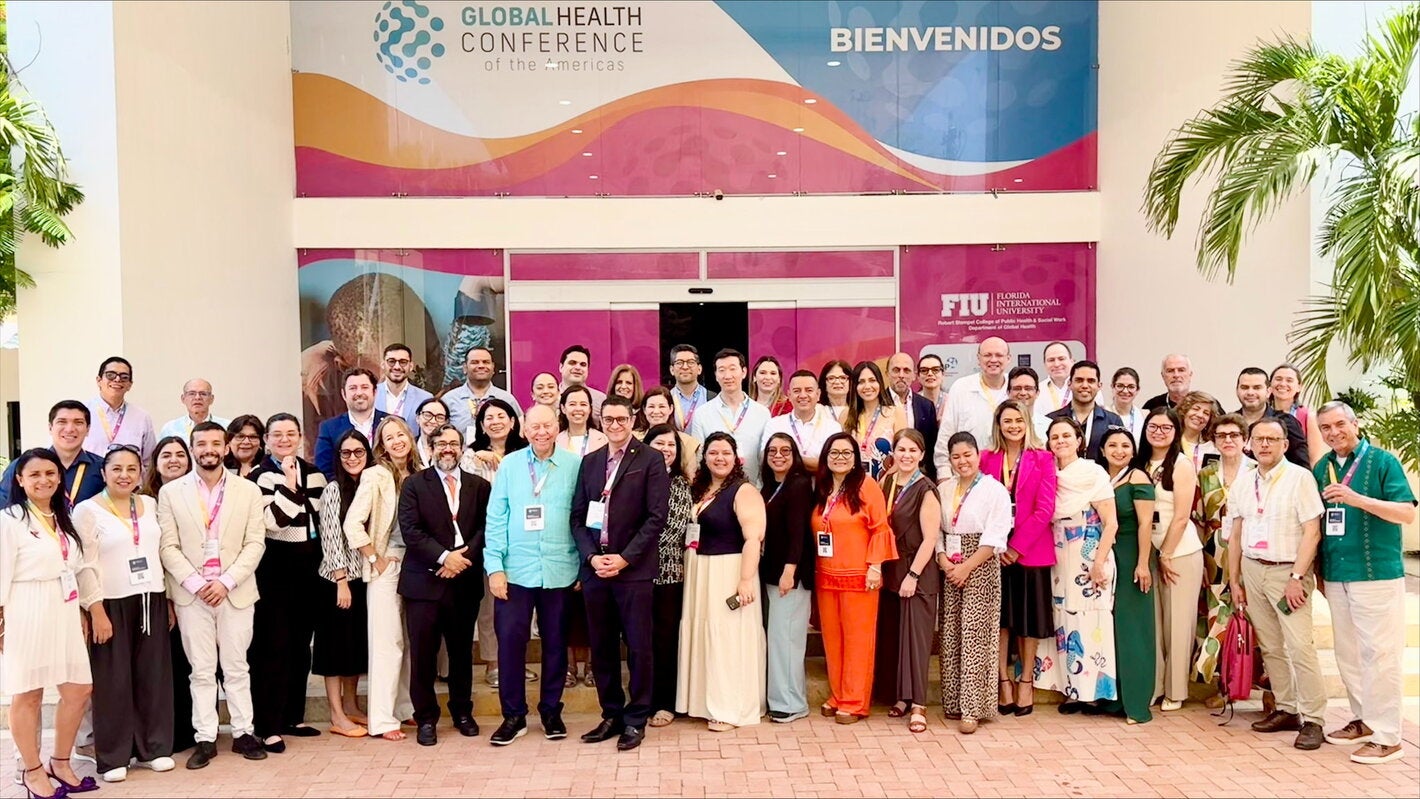
The regional workshop in Cartagena included an update on the evidence regarding strategies to accelerate the elimination of cervical cancer, as well as a demonstration of technologies available through the PAHO Strategic Fund.
Cartagena de Indias, Colombia, September 12, 2025.- Representatives from 14 countries in the Region shared the progress and challenges encountered on their path to the elimination of cervical cancer. The exchange took place during the workshop "Evidence and tools available for the elimination of cervical cancer in the Americas", organized by PAHO in collaboration with Florida International University (FIU), from September 10 to 12, in the framework of the Global Health Conference (GHC 2025).
The workshop, organized by the Department of Noncommunicable Diseases and Mental Health in collaboration with Comprehensive Family Immunization (CFI) and the PAHO Revolving Funds (the PAHO Revolving Fund for Vaccines and the Strategic Fund), updated attendees on the most up-to-date evidence of cervical cancer, as well as the exchange of country experience in HPV vaccination and screening.
Country experiences
Over the course of three days, participants exchanged evidence, experiences, and lessons learned regarding the three pillars of the strategy for eliminating cervical cancer: vaccination, screening, and treatment.
- Preliminary findings on the current situation of cervical cancer in Brazil, Colombia, and Mexico were presented by experts from Florida International University (FIU). These presentations highlighted both progress and persistent challenges in expanding coverage.
- Brazil shared the successful experience in HPV vaccination.
- Argentina and Guatemala presented innovations in screening, such as the introduction of HPV self-testing. El Salvador showcased the use of new treatment technologies, including thermoablation and mobile colposcopes, which expand access to care in underserved communities.
On the third day of the event, a demonstration of available medical equipment, including mobile colposcopes, thermoablation devices, and electrocautery units, was held with the support of MD Anderson Cancer Center and Basic Health International. Through the Strategic Fund, countries can acquire quality technologies at affordable prices and in a sustainable manner.
In addition to analyzing the progress of the three pillars, the workshop emphasized the importance of public health surveillance and information management as fundamental tools to guide policies, monitor progress, and ensure the sustainability of interventions.
Cervical Cancer Elimination Goals
The WHO's global strategy for the elimination of cervical cancer as a public health problem has set the goal to achieve this by 2030, the 90-70-90 target:
- 90% Human Papillomavirus (HPV) vaccination coverage in 15-year-old girls,
- 70% of women screened with high-performance tests at 35 and 45 years of age,
- 90% treatment of precancerous lesions and invasive cancer.
Reaffirming regional commitment
During the opening and closing of the workshop, PAHO and Global Health Conference authorities reaffirmed that the elimination of cervical cancer is an achievable goal if political commitment, technical cooperation, and sustained investment in health systems are maintained.
PAHO/WHO, in collaboration with its academic partners and allied organizations, will continue to provide technical assistance to countries to accelerate the implementation of the global strategy, strengthen national programs, and work towards the elimination of cervical cancer as a public health issue in the Americas.
Panel on Noncommunicable Diseases: Primary Care and Surveillance Framework
On the other hand, within GHC 2025, a panel was moderated by Dr. Roberta Caixeta, PAHO's Regional Advisor for the Surveillance, Prevention, and Control of Noncommunicable Diseases (NCDs). It presented PAHO's conceptual framework for integrating NCDs into public health surveillance, emphasizing that surveillance is a crucial function of public health.
NCDs represent the primary burden of mortality and morbidity in the Americas and globally. This message aligns with the call of the outcome document to be released at the upcoming 4th High-level Meeting of the United Nations General Assembly (UNGA) on NCDs. The discussion also addressed the challenges and opportunities of integrating NCDs into primary health care and closed with a roundtable of experts that enriched the debate with different academic and institutional perspectives.