Quito, June 2, 2025 (PAHO) – The country is exposed to a wide range of zoonotic pathogens due to its biodiversity, environmental and climatic factors, and the high interaction between wildlife and productive activities. These conditions have led Ecuador to establish priority strategies for surveillance, prevention, and control in the face of potential animal-borne disease outbreaks.
Zoonotic diseases represent a growing challenge for public health, animal health, and environmental safety worldwide. In the Region of the Americas, the interaction between humans, animals, and ecosystems favors the emergence and reemergence of various zoonoses that have a significant impact on health and the economy.
In recent years, Ecuador has faced outbreaks of yellow fever, rabies, hantavirus, and highly pathogenic avian influenza A(H5N1).

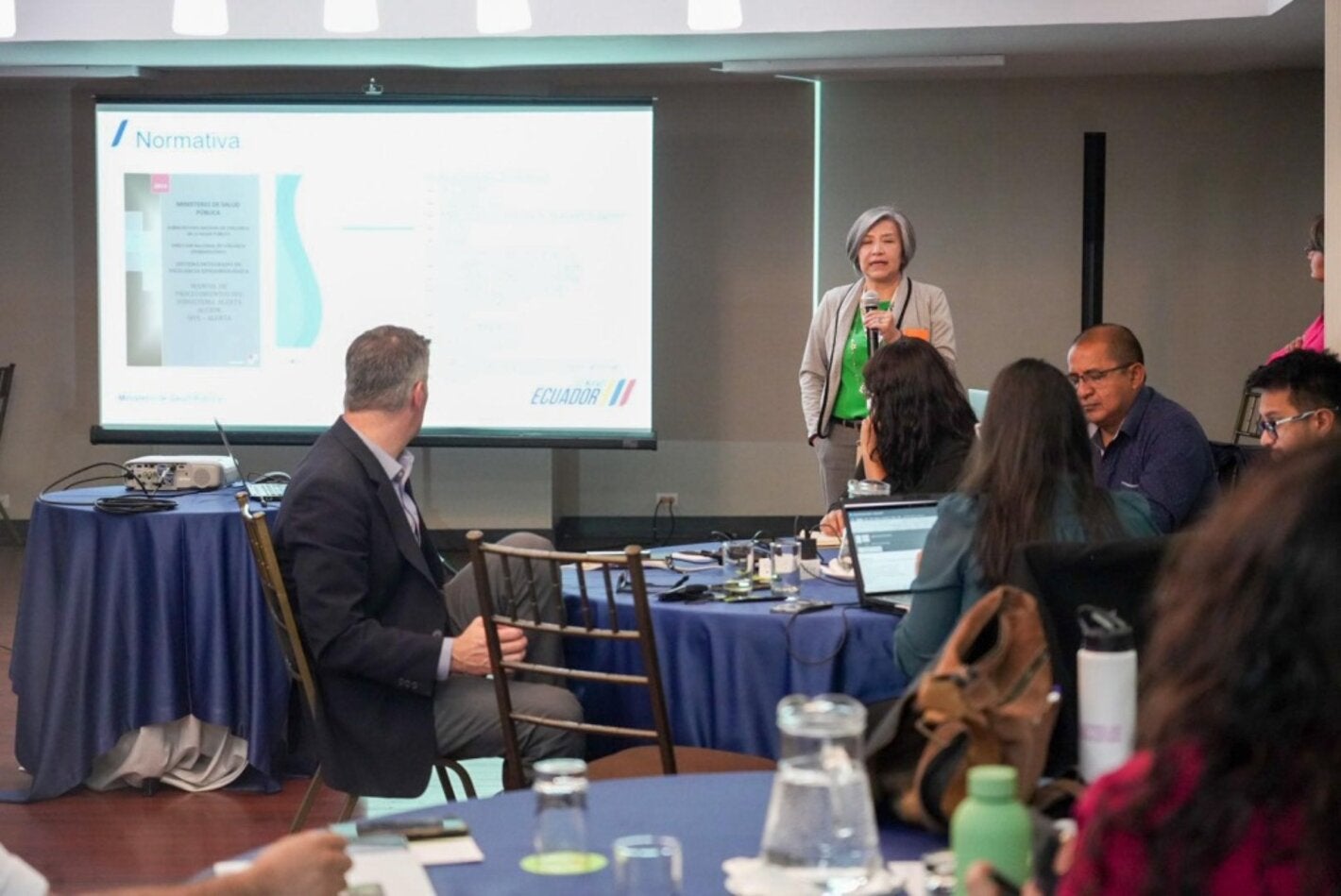
In response to these conditions, and with the technical support of the Pan American Health Organization (PAHO/WHO), specialists from the Ministry of Public Health, Agrocalidad, the Ministry of Environment, Water and Ecological Transition (MAATE), the National Institute of Public Health Research (INSPI), academia, and the Pan American Foot-and-Mouth Disease and Veterinary Public Health Center (PANAFTOSA) worked on the prioritization of zoonotic and emerging diseases. The goal was to produce a list that will enable the country to have greater clarity in carrying out surveillance and control tasks for these diseases.
This activity included technical contextualization and rationale on the importance of prioritizing zoonotic and emerging diseases, as well as an overview of the epidemiological situation in Ecuador. It also involved the application of a tool for the selection, ranking, and discussion of results, and the definition of strategies for the implementation of intersectoral actions. The workshop took place from May 27 to 29, within the framework of the Pandemic Response Optimization Through Engaged Communities and Territories (PROTECT) project, funded by the Pandemic Fund and implemented by PAHO and the World Bank.
Discover the Pandemic Fund projects implemented by PAHO to strengthen health preparedness in the Americas.