Mexico City, October 22, 2026 — The Pan American Health Organization (PAHO) has launched a guide offering local governments a roadmap for building healthier, more inclusive, equitable, and resilient communities across the life course. The publication, Linking the Regional Movement of Healthy Municipalities, Cities and Communities and the WHO Global Network for Age-friendly Cities and Communities: Opportunities and Synergies in the Region of the Americas, currently only available in Spanish, proposes ways to bring together two major initiatives promoted by PAHO and the World Health Organization (WHO) at the local level: the Regional Movement of Healthy Municipalities, Cities and Communities of the Americas and the WHO Global Network for Age-friendly Cities and Communities (GNAFCC).
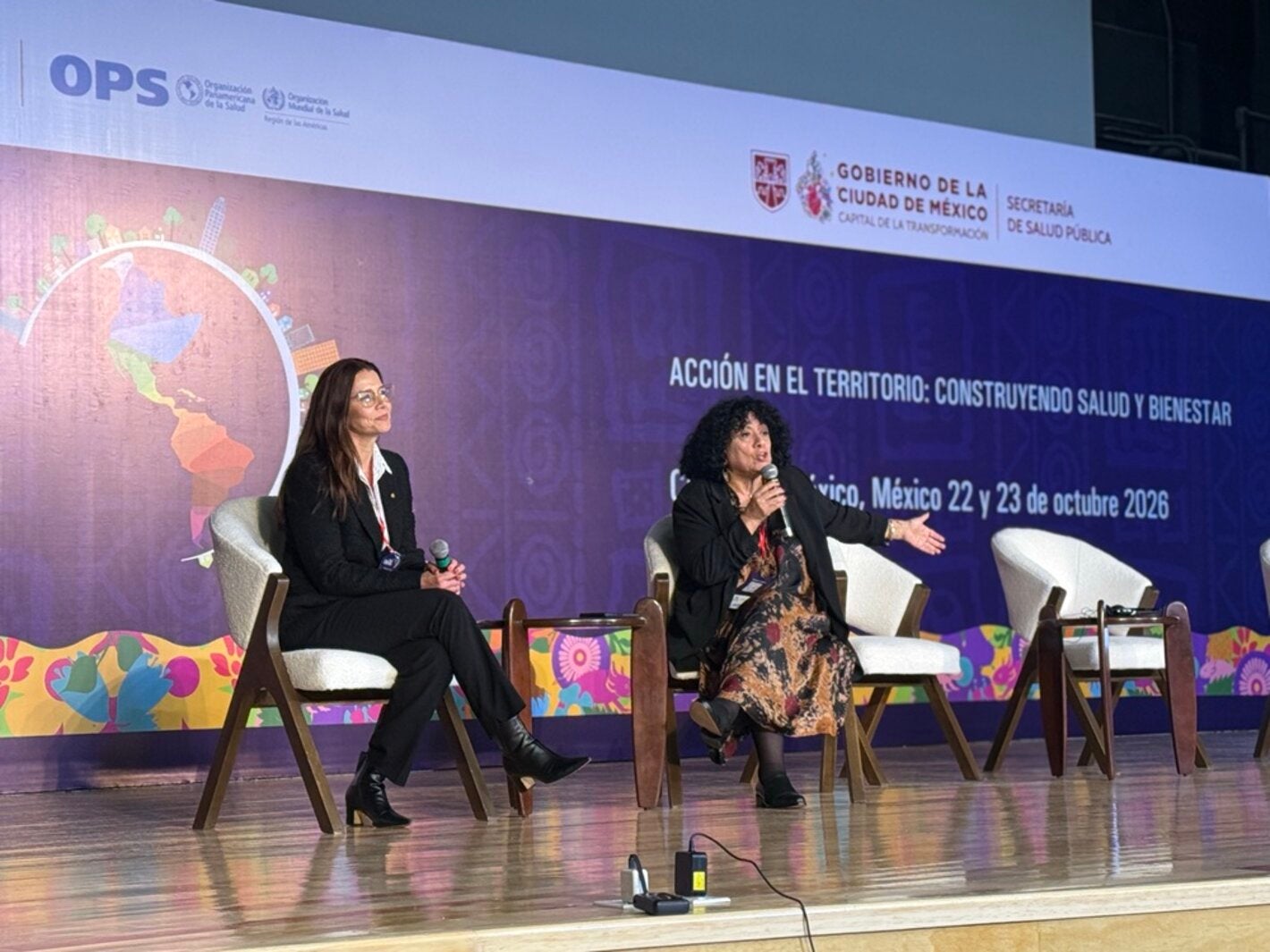
The guide was launched in Mexico City during the Ninth Meeting of Mayors for Healthy Municipalities of the Americas, which brings together local authorities, experts, and partners to exchange experiences and advance solutions that place health, well-being, and equity at the center of territorial development. The Regional Movement currently brings together more than 4,000 local governments in 17 countries, along with 14 healthy municipalities networks and representatives from 20 ministries of health across the Region. Meanwhile, the GNAFCC includes more than 1,800 cities and communities in 60 countries, with over 1,000 member cities and communities in 18 countries and territories across the Americas.
The new publication is based on a simple but transformative premise: the challenges facing municipalities today cannot be addressed by isolated sectors or fragmented responses. Health and well-being are closely linked to the conditions in which people are born, grow, live, work, and age. Additional challenges, including population aging, climate change, urbanization, and persistent social and health inequalities, call for policies that recognize the interdependence of these factors and generate comprehensive responses tailored to different local contexts.
In this context, local governments play a strategic role in addressing the social determinants of health, reducing health inequities, and promoting healthy aging. Their proximity to communities and ability to coordinate policies and stakeholders across sectors place them in a strong position to identify needs and barriers, encourage social participation, and translate health and well-being priorities into public policies, programs, and concrete actions adapted to each territory.
The guide identifies important areas of convergence between the two local government networks. These include commitment from the highest local authority; governance and intersectoral coordination mechanisms; social participation; participatory assessments; the development of action plans; and mechanisms for monitoring, evaluation, and continuous improvement, with equity and life-course approaches integrated throughout. These shared elements provide a practical foundation for making better use of existing structures, processes, capacities, and experience in local communities. Linking the initiatives does not necessarily require creating new structures, but rather strengthening and connecting existing ones to avoid fragmented or parallel efforts and enhance municipalities’ capacity to address the social determinants of health, health promotion, healthy aging, inclusion, and equity in an integrated manner.
The publication also highlights the need to address health inequalities and the significant demographic changes taking place across the Region. By 2050, approximately one in four people in Latin America and the Caribbean will be aged 60 years or older, underscoring the need to design cities, municipalities, and communities that support healthy aging, promote autonomy, and ensure the inclusion and participation of older persons in all areas of social life.
A life-course approach for the entire population
Linking the two initiatives is particularly relevant from a life-course perspective. This approach recognizes that health and well-being result from experiences and conditions that accumulate and interact across different stages of life, and that local policies can help create environments that protect health, reduce inequalities, and expand opportunities from childhood through older age.
From this perspective, policies and environments that support healthy aging do not benefit older persons alone. An accessible, safe, inclusive city or community that offers opportunities for participation can also improve living conditions for children, young people, persons with disabilities, families, and communities as a whole. This broader perspective connects healthy aging with a wider territorial agenda for health promotion, equity, and action on the social determinants of health.
Strengthening policies, governance, and social participation
From a public policy and management perspective, participation in both initiatives supports the integration of health promotion, healthy aging, equity, and the social determinants of health into municipal planning. Access to frameworks, tools, knowledge, and shared experiences can help identify local needs, inequalities, and priorities more effectively, guiding interventions toward populations and communities facing the greatest barriers and disadvantages. Coordinating existing assessments, action plans, monitoring mechanisms, and governance structures can also reduce duplication and promote more efficient use of capacities and resources.
In terms of intersectoral governance, both initiatives recognize that improving health and well-being requires the involvement of sectors that influence the social determinants of health. Coordination among health, social development, urban planning, transportation, housing, the environment, education, and other sectors makes it possible to establish shared objectives and develop more coherent responses to community needs. Working groups, councils, and other coordination mechanisms can help integrate health, equity, and well-being across municipal policies and decisions.
Social participation is another key element. Involving communities—including older persons and other population groups—in assessments, priority-setting, planning, implementation, monitoring, and evaluation helps ensure that policies better reflect the needs, experiences, and knowledge of those who live in these territories. Combining intersectoral action with social participation therefore contributes to more inclusive local governance and strengthens the capacity to develop appropriate responses to inequalities and the social determinants of health.
Participation in networks also strengthens the institutional capacities of local governments by creating opportunities for training, technical cooperation, and the exchange of tools, methodologies, knowledge, and experiences. Learning between municipalities makes it possible to explore solutions developed in other contexts, identify practices that can be adapted locally, and share responses to common challenges. Connections with national, regional, and global networks further expand opportunities for cooperation and access to innovative experiences and good practices. In this way, networks serve as platforms for capacity-building, collective learning, and greater cooperation among municipalities.
From synergies to action
The document provides practical guidance for municipalities, cities, and communities seeking to join both initiatives or strengthen coordination when both are already present in their territories. To this end, the guide outlines different implementation scenarios and recommendations related to governance, social participation, intersectoral coordination, participatory assessments, planning, monitoring, and evaluation, with the aim of developing more integrated responses to the social determinants of health and health inequities.
This approach allows coordination to be adapted to the characteristics, capacities, and experience of each municipality, recognizing the diversity of local contexts across the Region. By bringing together health promotion, healthy aging, equity, social participation, and intersectoral action within a shared territorial agenda, local governments can strengthen their capacity to address the social, economic, and environmental conditions that shape people's health and well-being throughout their lives.
Read the publication (in Spanish) Linking the Regional Movement of Healthy Municipalities, Cities and Communities and the WHO Global Network for Age-friendly Cities and Communities: Opportunities and Synergies in the Region of the Americas here.