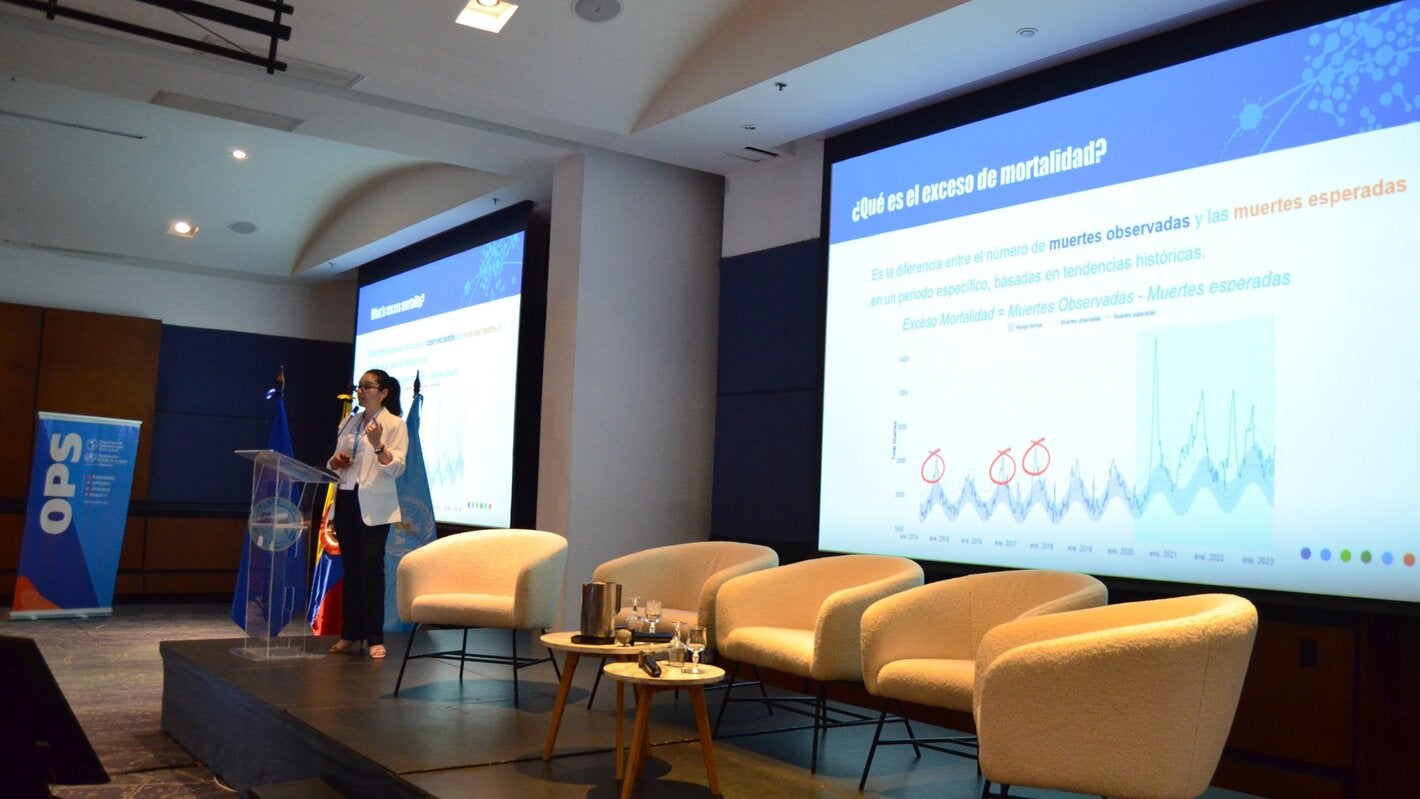
Washington, D.C., July 22, 2025 (PAHO) – The PAHOMoMo Regional Network, a key initiative for monitoring excess mortality associated with respiratory diseases, has made significant progress in the initial phase of its implementation, which includes preliminary monitoring of all-cause excess mortality. Currently, Argentina, Brazil, Chile, and Guatemala are leading this pilot stage, which focuses on implementating and standardizing models, conducting retrospective analysis of mortality data and developing key indicators and dynamic visualization tools.
These elements enable each country to understand mortality patterns in their local contexts better, facilitating a more informed and timely response. Among the main challenges identified are variability in data quality and the availability of real-time information, which are fundamental for effective surveillance. As part of the project's expansion, an invitation has been extended to Uruguay, Paraguay, Costa Rica, Colombia, Cuba, Panama, Peru y El Salvador—countries that had already expressed interest during the first call— to join this initial phase.
A harmonized continuous monitoring system is essential for anticipating health crises (such as pandemics, natural disasters, etc.), strengthening countries' capacity to transform data into concrete actions, and promoting evidence-based regional cooperation. As the project progresses, it is expected to expand the participation of more countries and consolidate a sustainable system that supports public health planning and response in the Americas. As a next step, efforts will move toward implementing the calculation of the number of deaths attributable to seasonal influenza and other respiratory infections.