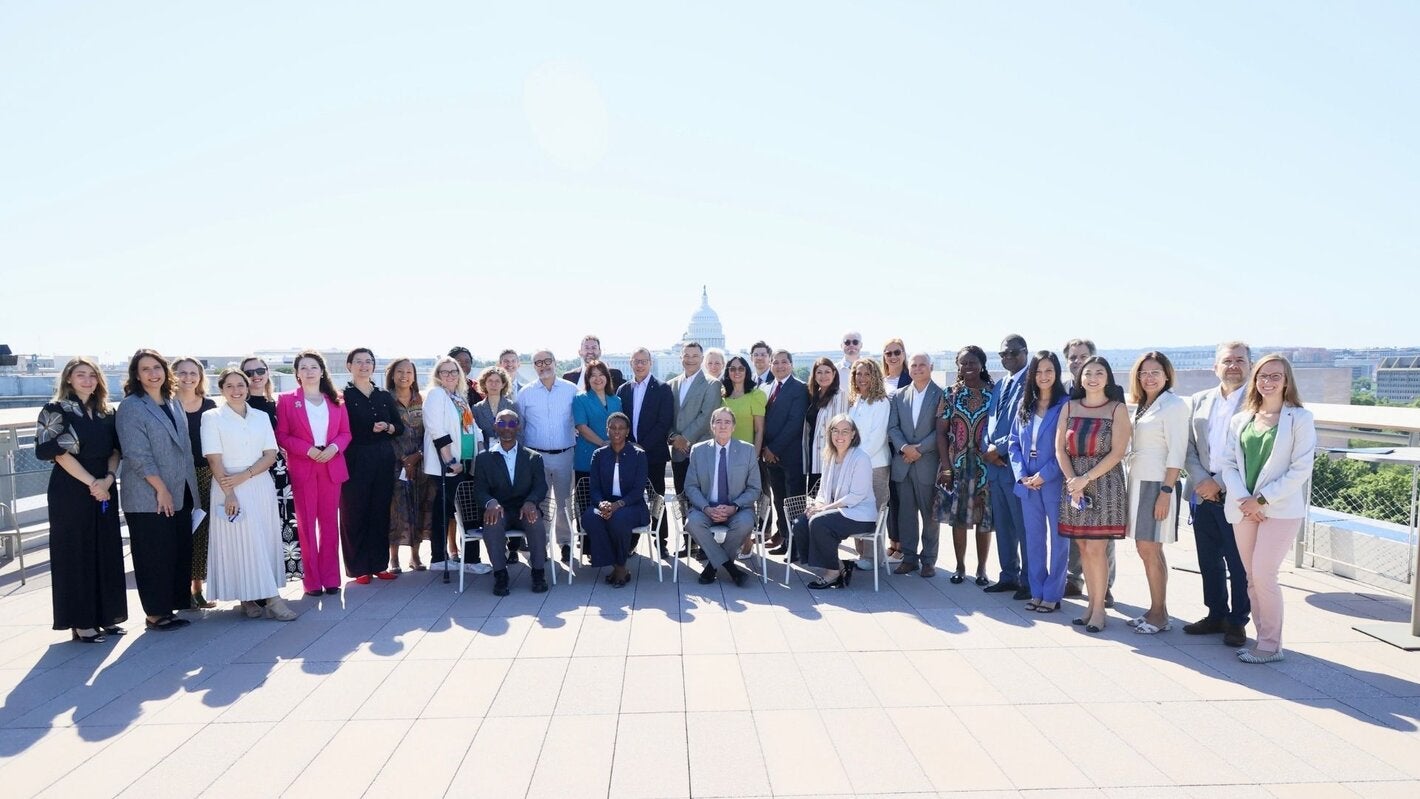
Representatives of PAHO/WHO Country Offices (PWRs) from twelve countries across the Americas gathered in Washington, D.C., for the second Executive Tobacco Control Program, continuing the series launched in 2024.
Washington, D.C., 25 June 2026 — The second edition of the Executive Tobacco Control Program for PAHO/WHO Representatives (PWRs) concluded today with a renewed approach that combined strategic leadership sessions with specialized content on addressing the tobacco epidemic and, more broadly, noncommunicable diseases (NCDs). This edition builds on a pioneering initiative launched in 2024, which positioned the Region of the Americas as the first WHO Region to develop a training program of this kind for its representatives.
Over two days, the program brought together twelve PAHO/WHO Representatives from Country Offices across South America, Central America, and the Caribbean. Organized in coordination with WHO, the program convened experts from various WHO and PAHO technical units, Bloomberg Philanthropies, Johns Hopkins University, Campaign for Tobacco-Free Kids, and other partner organizations and public health leaders. The agenda enabled participants to strengthen their leadership, negotiation, and influencing skills while deepening their understanding of current technical issues, including electronic cigarettes, fiscal policies for health, and effective measures to protect children and adolescents from tobacco industry marketing strategies.
“Tobacco control lessons extend far beyond tobacco itself. The experience gained in designing and implementing effective multisectoral policies, responding to misinformation, managing industry interference, and adapting to increasingly aggressive, globalized, and digitalized commercial strategies offers valuable insights for addressing other risk factors associated with noncommunicable diseases. This program seeks to strengthen the leadership capacity of our Representatives so they can apply these lessons and promote public policies that protect people’s health throughout the Region,” said Jarbas Barbosa, PAHO Director.
As heads of PAHO/WHO Country Offices, PWRs play a critical role as institutional representatives and facilitators of dialogue with governments, parliaments, civil society, academia, and the media. The 2026 Executive Program aimed to strengthen the competencies required for this role by promoting the exchange of experiences, knowledge, and practical tools that help translate scientific evidence into effective public policies.
Building on the achievements of previous editions, this year’s program included dedicated media training through a hands-on session designed to strengthen participants’ confidence and effectiveness when engaging with the press. The session focused on communicating key tobacco control messages clearly, managing challenging questions, and leveraging media engagement as a tool for advocacy and public influence.
Country Offices are key actors in advancing the noncommunicable diseases agenda and supporting countries in the design and implementation of comprehensive responses. Their technical credibility, convening power, and relationships with key stakeholders enable them to create spaces for dialogue, foster consensus, and support the development and implementation of evidence-based policies. This requires a multisectoral, interdisciplinary, and intergenerational perspective capable of addressing complex regulatory challenges. It also requires the ability to respond to interference from industries that market products harmful to health, while strengthening strategic leadership, communication, and partnership-building capacities. In this context, PWRs serve as a strategic bridge between Member States and the broader technical community supporting this agenda.
The program also emphasized that countries are not alone in this effort. The Region of the Americas benefits from a broad network of allies, including technical experts, academic institutions, civil society organizations, and international partners that provide technical assistance in areas such as legislation, health economics, strategic communication, and public policy monitoring.