Washington, DC, 25 September 2026 (PAHO) – The Pan American Health Organization (PAHO) and the World Health Organization (WHO) supported Honduras in a national process aimed at identifying priorities and defining actions to strengthen its health workforce. From 22 to 24 September, a technical mission held meetings with national authorities and institutions and supported the holding of the Policy Dialogue for Strengthening the Nursing Workforce in Tegucigalpa.
During activities and working sessions with the Secretariat of Health, the National Autonomous University of Honduras (UNAH), and other strategic partners, the mission analyzed progress on ongoing technical cooperation on the health workforce and identified opportunities to expand collaboration in priority areas.
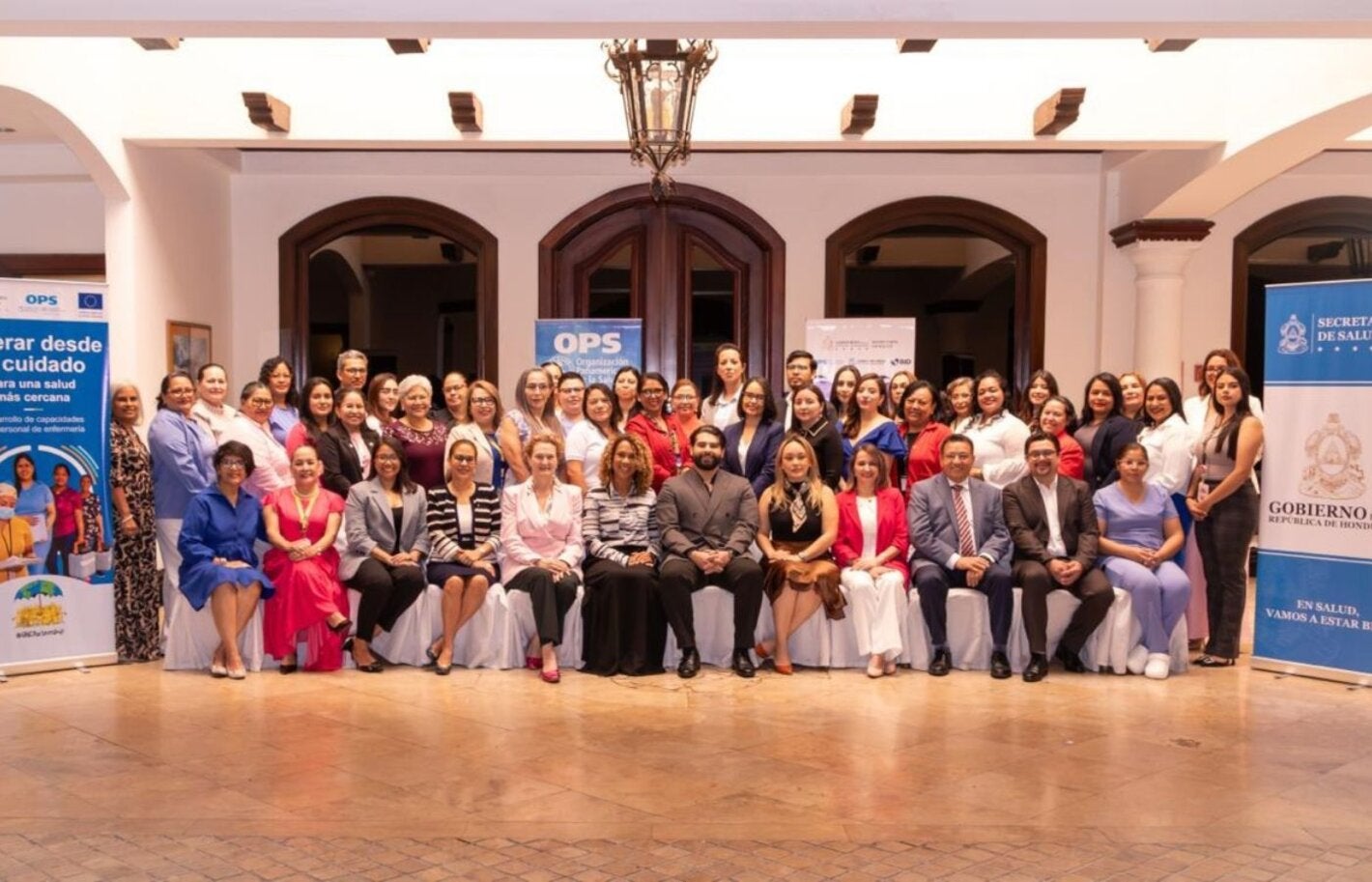
The Policy Dialogue, held on 23 and 24 September, brought together 53 participants, including national authorities; representatives of training institutions, students, and health services; the College of Nursing Professionals of Honduras; and the National Association of Auxiliary Nurses of Honduras. Drawing on data and evidence on the situation of the country’s nursing workforce, participants identified key challenges and agreed on actions that will serve as the basis for a national roadmap aimed at strengthening nursing.
“Nursing sustains a large share of health care; the future of health systems passes through nurses’ hands every day. That is why nursing deserves to be at the center of this dialogue, which will help us understand Honduras’s real capacity to respond to its health needs,” said Ana Emilia Solís, PAHO/WHO Representative in Honduras.
With this initiative, Honduras joins other countries in the Region, including Guatemala, Mexico, and countries in the Caribbean, that have held nursing policy dialogues with PAHO and WHO support. These spaces bring together stakeholders from the health, education, labor, and regulatory sectors to jointly analyze the situation of the workforce, agree on evidence-based policy priorities, and make inter-institutional commitments.
“These meetings allow broad political, academic, and professional participation, with representation from the public and private sectors. They are a space to initiate policy advocacy and build common agendas,” explained Benjamín Puertas, Unit Chief, Health Workforce, PAHO.
“Addressing the challenges of the health system is not only a technical necessity; it is an ethical commitment to the population. Health in Honduras is built when we move forward together in the same direction,” said attorney Carlos Antúnez, on behalf of Miguel Castillo, Vice Minister of Projects and Investments.
“We cannot talk about health services without talking about human resources. We know the importance of nursing work within the Secretariat of Health and its impact on the health system. Our authorities are committed to investing in the health workforce,” said María Ángela Ayala, General Director of Human Resources Development at the Secretariat of Health.
The outcomes of the Policy Dialogue will help guide PAHO and WHO technical cooperation with Honduras to advance toward a sustainable nursing workforce that contributes to more responsive, equitable, and resilient health systems, in line with the Policy on the Health Workforce 2030. This activity was carried out with support from the World Health Organization, with funding from the Burdett Trust for Nursing.