
Rio de Janeiro, 27 January 2026 (PAHO) - At the II Regional Forum of the Alliance for Primary Health Care in the Americas, organized by the Pan American Health Organization (PAHO) and the Ministry of Health of Brazil, experts from across the Region came together to address key challenges facing health systems today: ensuring the availability, retention, and optimal performance of the primary health care workforce, particularly in rural and underserved areas.
The session on "The health workforce: employment, working conditions and migration" was moderated by Josep Figueras, former Director of the European Observatory on Health Systems and Policies. He opened the discussion by drawing a comparative analysis between PAHO's Health Workforce Policy 2030 and the WHO European Region's Framework for Action on the Health and Care Workforce 2023-2030, highlighting convergent priorities around workforce availability, distribution, competencies, and working conditions. He emphasized that while regional contexts differ, the challenges of retention, migration, and sustainable working environments are universal concerns requiring tailored yet evidence-informed responses.
Benjamin Puertas, Unit Chief, Human Resources for Health at PAHO, emphasized that the capacity of primary health care to respond to growing, more complex demand with higher citizen expectations is increasingly constrained by workforce availability. He highlighted that aging of the health workforce, migration and mobility, burnout-related exits, and unsustainable working conditions—including long hours, are undermining health systems' ability to deliver quality care. He noted concerning signals of distress and attrition, particularly among family physicians, alongside a declining relative presence of family medicine in several countries.
The dialogue unfolded around anchor questions to capture the most operational and impactful strategies: measures on working conditions that have most influenced retention in primary health care; changes in team design that have improved access and continuity without overburdening family physicians; policies that are working to reduce outmigration and manage mobility, particularly in remote and underserved areas; and digital and AI solutions that are genuinely improving workforce performance and reducing administrative load. Through this exchange, panelists shared experiences, contrasted approaches, and identified common threads across diverse national and subnational contexts.
Juan Marcelo Estigarribia, Chief of Staff at the Ministry of Health of Paraguay, outlined the country's human resources for health policy and actions. He described the evolution of governance structures for workforce planning, including the expansion of family health teams and strategic incorporation of new professional profiles. He emphasized sustained investments in training, deployment of digital health information systems, and formal recognition of community health workers as critical to strengthening workforce capacity. With the support of PAHO, Paraguay established the Human Resources for Health Week, whose first edition took place in September 2025, bringing together stakeholders from the relevant sectors for activities that included workshops, keynote lectures, and field visits. Key challenges identified include ensuring comprehensive team coverage in remote areas, managing migration pressures, and embedding interprofessional education across health workforce development. He highlighted bonding schemes linked to training programs and financial incentives for rural areas as strategies to improve geographic distribution and retention.
Evellin Bezerra, Director of Health Workforce Management and Regulation at the Ministry of Health of Brazil, shared the country's experience in strengthening primary health care as the foundation of the Unified Health System (SUS). She emphasized that Brazil's approach combines sustained federal, state, and municipal investment in multidisciplinary family health teams with strategies to improve working conditions and professional development pathways. She described how the country has prioritized expanding access to primary care in underserved areas, while simultaneously working to reduce administrative burden through digital tools and streamlined processes. She noted that key challenges include maintaining workforce stability in remote regions, and ensuring that primary health care teams have the resources and autonomy needed to resolve the majority of population health needs at the first level of care.
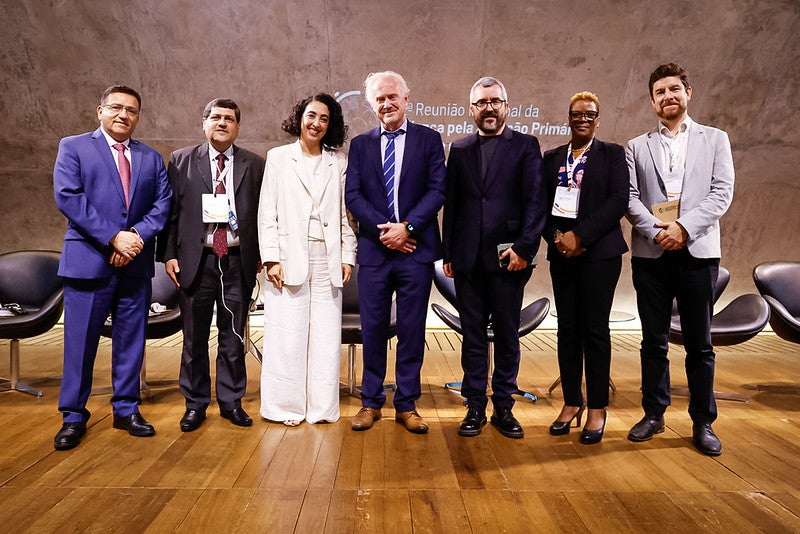
Javier Padilla Bernáldez, Secretary of State for Health of Spain, addressed working conditions as central to workforce retention and performance. He shared Spain's approach to improving the work environment in primary health care, including adjustments to remuneration, panel size management, and protected time for non-clinical activities. He emphasized the importance of addressing violence and harassment through zero-tolerance policies, psychosocial support, and leadership training. He noted that fostering supportive organizational culture, ensuring work-life balance, and providing career development pathways are essential to combat burnout.
Julieta Frederick-Cassius, Principal Nursing Officer at the Ministry of Health of Saint Lucia, shared the Caribbean experience with health workforce migration and strategic enrichment of professional roles. She highlighted that small island states face particular vulnerabilities related to outmigration driven by limited career advancement opportunities and salary differentials. In response, Saint Lucia has invested in expanding nursing scope of practice, including advanced practice nursing, case management, chronic disease management, and protocol-based prescribing. She emphasized that these expanded roles not only help mitigate physician shortages but also improve access, continuity of care, and patient satisfaction. Enabling factors included regulatory reforms, targeted training programs, clear clinical protocols, and regional collaboration on competency recognition and ethical recruitment frameworks.
Cristian Herrera, Senior Health Specialist for Latin America and the Caribbean Region at the World Bank, focused on technology's role in enhancing health service delivery and workforce performance. He emphasized that digital health solutions and artificial intelligence can be powerful enablers for addressing workforce gaps when implemented thoughtfully. He highlighted concrete applications demonstrating impact and noted that AI applications in decision support and workload prioritization show promise but require attention to quality assurance, bias mitigation, and patient safety.
In their closing remarks, Josep Figueras and Benjamin Puertas emphasized the need for integrated, multi-dimensional approaches that address retention, working conditions, team composition, migration management, and technological enablers simultaneously. They highlighted that successful strategies are context-specific yet grounded in common principles: investing in people, protecting their well-being, recognizing their contributions, and creating enabling environments for high-quality care. They underscored the importance of strong governance, sustained financing, interprofessional collaboration, and a culture of continuous learning and adaptation.
PAHO remains committed to providing technical cooperation to countries in the Region to strengthen their primary health care workforce, advance the implementation of the Health Workforce Policy 2030, and support evidence-informed decision-making for resilient and equitable health systems.