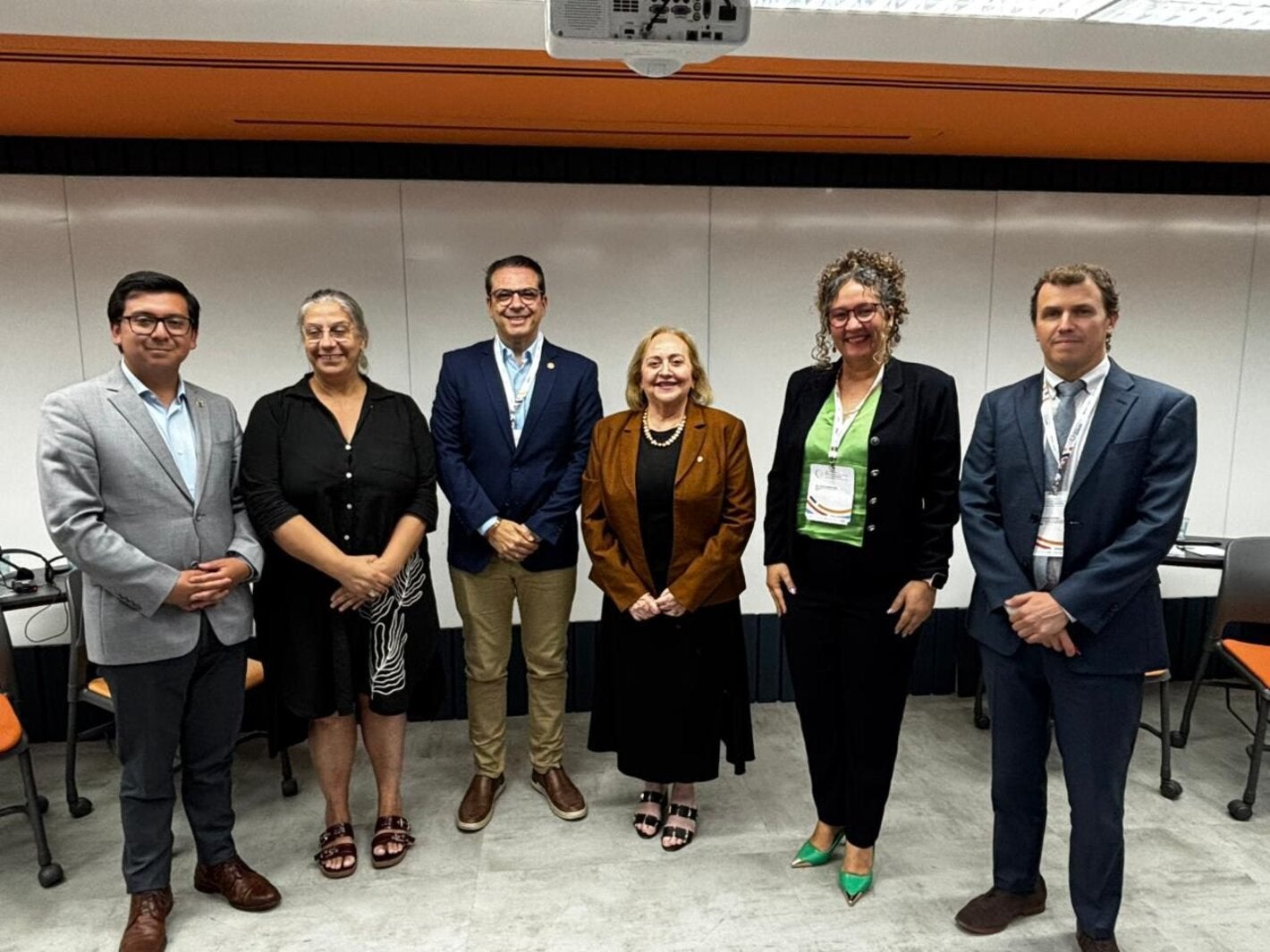
Rio de Janeiro, 27 January 2026 (PAHO)—As part of the II Regional Forum of the Alliance for Primary Health Care in the Americas, the panel Primary Health Care (PHC), Life-Course Approach, and Maternal and Neonatal Health was held on 27 January in Rio de Janeiro, Brazil, with a focus on the role of primary health care and the life-course approach in improving maternal and neonatal health outcomes. The session brought together national and subnational authorities to exchange experiences and priorities across the Region.
Opening the panel, Suzanne Serruya, Unit Chief, Life Course, Women’s and Children’s Health at the Pan American Health Organization (PAHO), underscored the importance of investing in primary health care from a life-course perspective to reduce preventable maternal and neonatal deaths, address persistent inequities, and ensure continuity of care across different stages of life.
Country experiences illustrated how this approach is being implemented in diverse contexts. Zaida Arteta, Director of Coordination at the Ministry of Public Health of Uruguay, presented advances under the country’s Integrated National Health System, highlighting efforts to strengthen the problem-solving capacity of primary care through community-based and referral teams, the training of family and community health professionals, the expansion of telehealth, and the introduction of real-time monitoring systems for key indicators such as early pregnancy detection and vaccination coverage.
Riane Azevedo, Municipal Secretary of Health of Fortaleza, Brazil, shared progress resulting from the sustained expansion of the primary health care network, improvements in early prenatal care coverage, and the implementation of targeted strategies for adolescents, alongside the continuous updating of clinical guidelines.
Stalin Santiago Andino, Vice Minister of Comprehensive Health Care at the Ministry of Public Health of Ecuador, presented advances in the country’s intersectoral policy for the comprehensive approach to adolescent pregnancy, developed in coordination with the education, social development, and government sectors, which has contributed to a sustained reduction in adolescent pregnancies. He also emphasized the need to strengthen primary health care responses to chronic child undernutrition and mental health, integrating these priorities within a life-course framework.
Yagen Pomares, Director of Primary Health Care at the Ministry of Public Health of Cuba, presented the country’s experience in addressing population aging through comprehensive programs for older adults, supported by multidisciplinary teams and community-based strategies.
From a regional financing perspective, Francisco Ochoa, from the Social Protection and Health Division of the Inter-American Development Bank (IDB), noted that maternal mortality in Latin America remains high compared with other regions, reinforcing the need to consolidate primary health care and life-course approaches, with solutions adapted to local contexts and sustained intersectoral action on the social determinants of health.
The exchange reaffirmed that strengthening primary health care, anchored in a life-course approach, remains a shared priority for countries and partners, and a cornerstone for advancing more equitable, resilient, and people-centered health systems in the Americas.