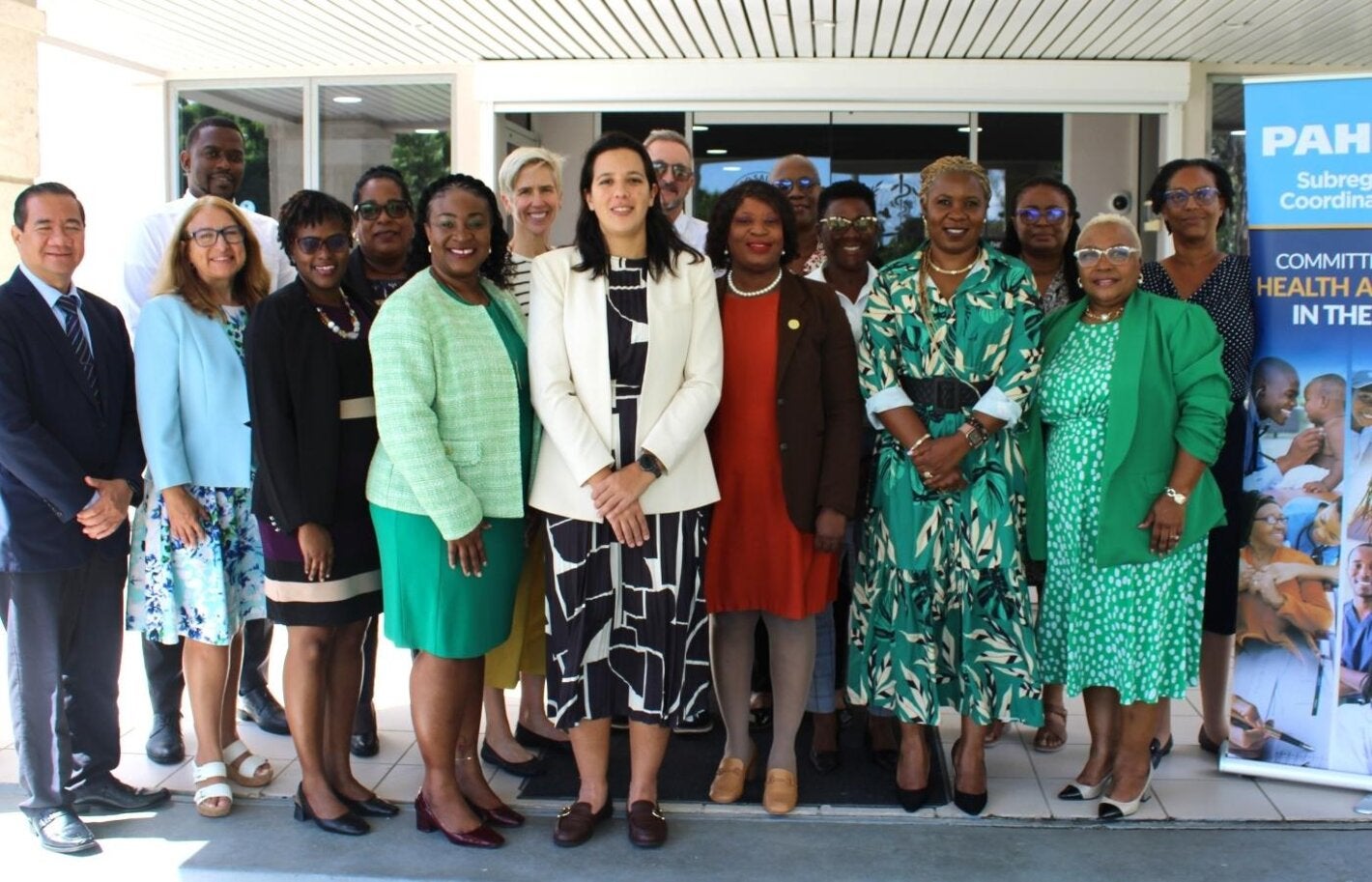
Washington, D.C., 30 October 2025 (PAHO) – The Pan American Health Organization (PAHO) and the World Health Organization (WHO) held the meeting “Strengthening the Nursing Workforce in the Americas through the Development of the New Regional Nursing Body (RNB) Strategic Plan for Nursing and Midwifery 2025–2035,” on October 29–30 in Bridgetown, Barbados. The hybrid meeting brought together 18 in-person and 68 virtual participants from 17 Caribbean Community (CARICOM) countries and territories: Anguilla, Antigua and Barbuda, Bahamas, Barbados, Belize, Bermuda, Cayman Islands, Dominica, Grenada, Guyana, Jamaica, Saint Kitts and Nevis, Saint Lucia, Suriname, Trinidad and Tobago, Turks and Caicos Islands, and Virgin Islands.
Over two days, representatives from ministries of health, regulatory bodies, academic institutions, nursing councils and associations, as well as international organizations, worked on analyzing evidence on the nursing and midwifery workforce and identifying policy priorities for the formulation of the RNB Strategic Plan for Nursing and Midwifery 2025–2035.
This initiative responds to a request from the RNB for PAHO’s technical cooperation to strengthen governance and leadership mechanisms to ensure a sustainable nursing workforce, in alignment with the Policy on the Health Workforce 2030 and the Global Strategic Directions for Nursing and Midwifery 2021–2030 of the World Health Organization.
“In recent years, and particularly throughout the COVID-19 pandemic, we have received a clear message: there can be no strong and resilient health systems without an adequate, well-distributed, and well-prepared health workforce. Nurses and midwives play an indispensable role in these systems, not only because of their numbers but also due to the diversity and significance of their roles, demonstrating the critical importance of sustained investment in this workforce,” said Solange Kobi-Jackson, on behalf of Dr. Amalia Del Riego, PAHO/WHO Representative in Barbados and the Eastern Caribbean Countries.
“This policy dialogue is a model of shared governance and interprofessional cooperation. It is led by nurses and midwives who, time and again, have proven their critical role in advancing health equity, quality, and resilience. PAHO reaffirms its steadfast commitment to support this process, facilitating dialogue, building capacity, and helping to translate data and evidence into actionable policy,” said Piedad Huerta, Subregional Program Director for the Caribbean, a.i., PAHO/WHO.
“The RNB’s unmatched depth of experience and regional insight positions us as an unparalleled force for transformative change. Our commitment is clear: to ensure inclusive, evidence-based strategies that protect and strengthen nursing and midwifery, align with global standards, and secure the future of resilient health systems across the region,” said Annastacia Jordan, RNB Chair and Chief Nursing Officer of Barbados.
“The Caribbean has played an exemplary role in this process, with strong and committed leadership, particularly through the RNB, which continues to mobilize efforts and voices for the strengthening of the profession. The new Strategic Plan for Nursing and Midwifery 2025–2035, which begins to take shape in this meeting, will serve as a key instrument for consolidating past achievements and guiding our collective vision for the decade ahead,” said Yohana Diaz, on behalf of Dr. Benjamin Puertas, Unit Chief, Human Resources for Health, PAHO.
As a result of the meeting, policy priorities and recommendations were identified for the formulation of the new strategic plan, which will be structured around five areas: (1) leadership and governance, (2) education and training, (3) regulation, (4) service delivery, and (5) employment and working conditions. The RNB, PAHO, and other partners will continue to work jointly on the development and implementation of this strategic plan.
The activity reinforces PAHO’s commitment to strengthening the health workforce, recognizing nursing as an essential component for achieving resilient, equitable, and primary health care–based health systems across the Region of the Americas.