Buenos Aires, September 30, 2026 (PAHO). Argentina is making progress in developing national capabilities to generate forecasts on the evolution of severe acute respiratory infections, with the aim of complementing epidemiological indicators and facilitating timely decision-making during periods of high viral circulation.
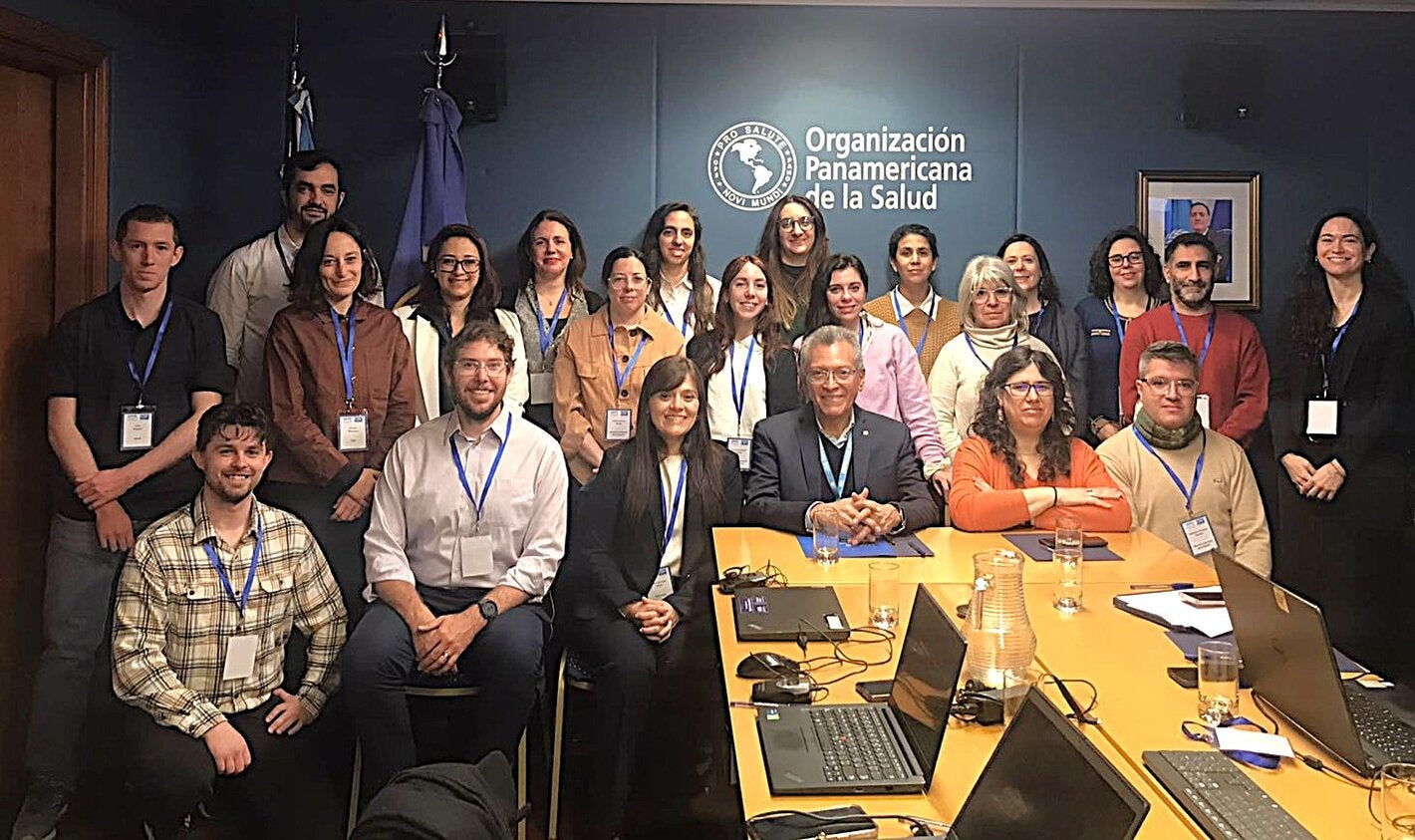
As part of this process, teams from the National Ministry of Health, the Pan American Health Organization (PAHO), the U.S. Centers for Disease Control and Prevention (CDC), and Northern Arizona University participated in three days of workshops and training as part of the regional project on Forecasting Modeling for Respiratory Virus Surveillance in the Southern Cone.
The workshop combined presentations on forecasting and real-time estimation models with exercises applied to national data. Participants used the MicroHub platform, adapted tools developed in the R programming language to the Argentine context, and identified data sources and hospital capacity indicators that could feed into the models.
Surveillance of respiratory viruses provides critical information on severe acute respiratory infections. However, the time required to collect, process, and report the data can limit its usefulness for decision-making. In this regard, during the workshop’s opening session, Wilmer Marquiño, PAHO’s advisor on Health Surveillance, Prevention, and Control of Communicable Diseases in Argentina, highlighted the value of the initiative, noting that “real-time estimation and forecasting methods make it possible to partially offset these delays and anticipate the evolution of severe acute respiratory infections, which facilitates more timely responses.”
The next steps include continuing to develop the models, moving forward with the implementation of the forecasting system, and gradually expanding the use of its outputs in the Ministry of Health’s decision-making processes.