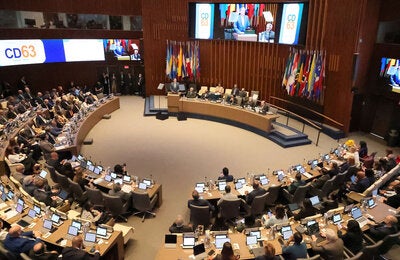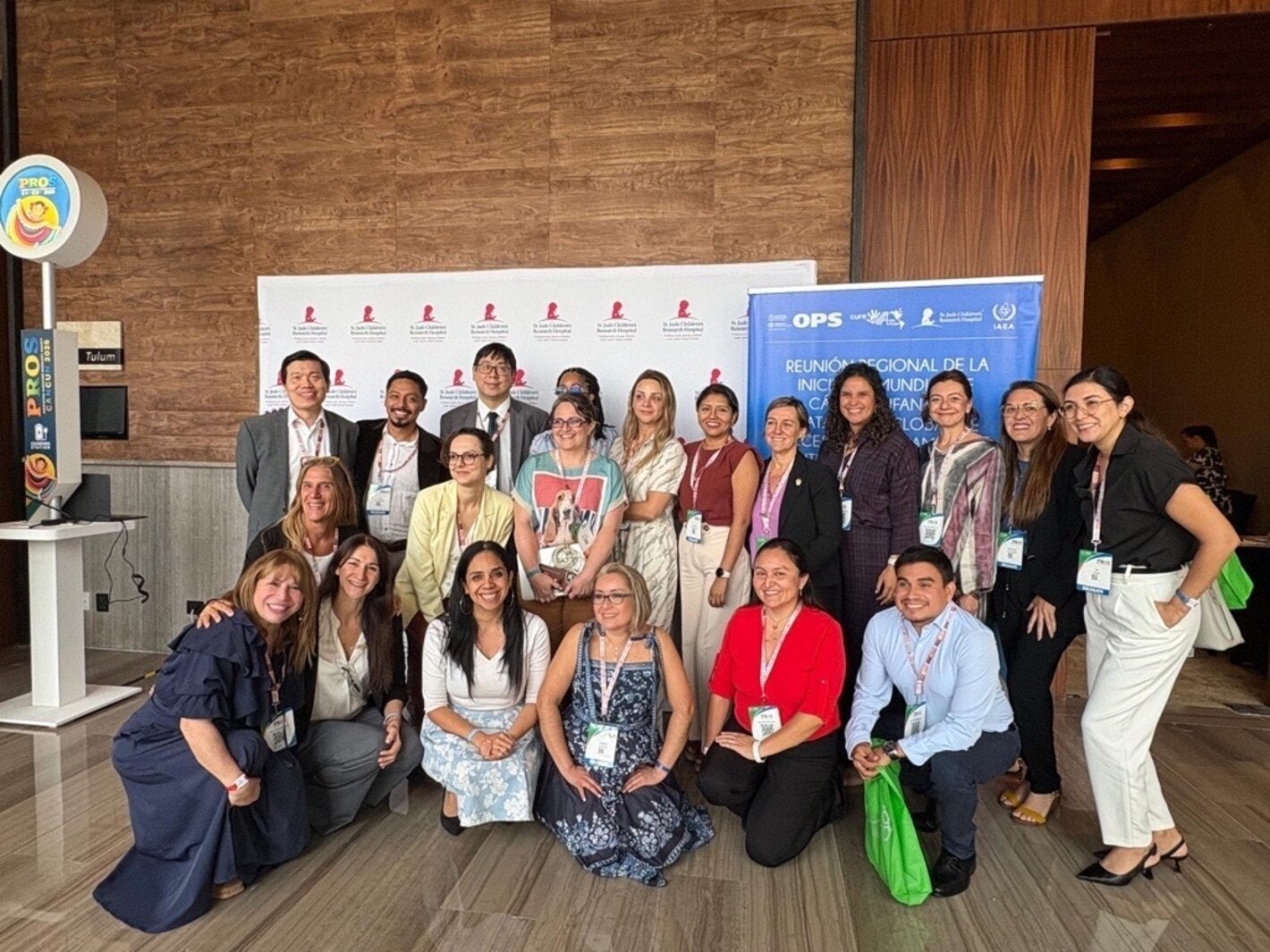
Cancún, Mexico, June 5, 2026 – At the World Congress of the Pediatric Radiation Oncology Society (PROS 2026), PAHO, St. Jude Children’s Research Hospital, and the IAEA brought together health experts from Latin America and the Caribbean to advance pediatric radiotherapy and comprehensive childhood cancer care in the Americas region.
The regional meeting focused on progress made under the Global Initiative for Childhood Cancer (GICC) and the Global Platform for Access to Childhood Cancer Medicines (GPACCM). Held on June 3 and 4, 2026, in Cancún, Mexico, the event gathered representatives from health ministries across 19 countries, scientific societies, international organizations, foundations, and experts in pediatric oncology and radiotherapy.
Participants discussed the progress, challenges, and opportunities regarding access to safe, timely, and high-quality pediatric radiotherapy services, particularly in resource-limited settings. They also shared experiences in implementing national programs, South-South cooperation initiatives, and strategies to strengthen training, monitoring, and quality improvement in childhood cancer care.
Radiotherapy is vital for treating various childhood cancers. About 30% of children and adolescents with cancer—roughly 8,000 to 10,000 annually in Latin America and the Caribbean—require radiotherapy during treatment.
Significant access gaps persist across the region. Regional studies estimate that 25% to 40% of patients needing radiotherapy do not receive it in a timely manner. Disparities in infrastructure, equipment, and human resources continue to affect the quality and availability of radiotherapy services in several countries across the region.
During the meeting, participants also explored concrete actions to strengthen regional capacity in pediatric radiotherapy, including expanding training programs for health professionals, strengthening technical cooperation networks, optimizing and adapting existing equipment, and developing strategies to improve timely access to specialized technologies and services—particularly in resource-limited settings. Additionally, discussions addressed opportunities to expand technical support programs and regional collaboration to facilitate equitable access to quality pediatric radiotherapy services.
During the meeting, the IAEA presented progress and challenges in implementing pediatric radiotherapy programs and highlighted alignment with the global "Rays of Hope" initiative, which aims to expand access to radiotherapy and nuclear medicine services in low- and middle-income countries.
PAHO reaffirmed its commitment to continue working with countries and regional and international partners to strengthen national capacities and promote comprehensive, equitable, and high-quality care for all children and adolescents with cancer in the Americas. For more information and resources on childhood cancer, please visit the PAHO Global Initiative for Childhood Cancer and the PAHO Radiological Health program.