Santo Domingo, November 6, 2025 (PAHO/WHO) –
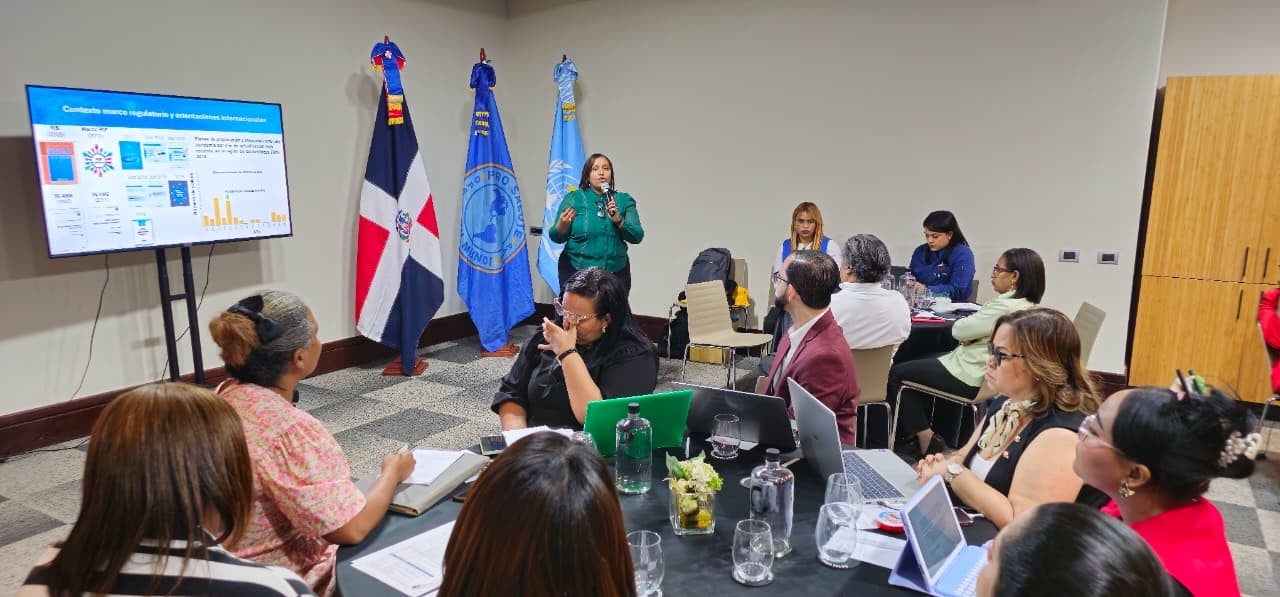
The Dominican Republic reaffirms its commitment to preparedness and response to health emergencies by conducting the National Simulation Exercise for Preparedness and Response to Pandemics caused by Respiratory Pathogens with Pandemic Potential, held in Santo Domingo from November 4 to 6, 2025.
The exercise, led by the Ministry of Public Health and Social Assistance (MISPAS) with technical support from the Pan American Health Organization/World Health Organization (PAHO/WHO), brought together representatives from key institutions for intersectoral analysis and coordination.
This table-top exercise (TTX) tested the functionality of the Operational Plan for Preparedness and Response to Pandemics caused by Respiratory Pathogens (POPR-PR), which is currently under development, through the discussion of progressive scenarios simulating everything from early case detection to post-crisis recovery. Participants analyzed the activation of coordination mechanisms, supply management, risk communication and community participation, clinical care, and access to medical countermeasures, under a hypothetical, realistic scenario inspired by a multi- hazard’s context.
The exercise included the active participation of MISPAS teams, including the Vice Ministry for Risk Management and Environmental Health, the Directorate of Epidemiology, the Dr. Defilló National Laboratory, the Directorate of Vaccine-Preventable Diseases, the Directorate of Communications, the Directorate of Support for Health Promotion and Education (DAPES), and the Provincial Directorates of Espaillat and Santiago, as well as the Directorate of Health Area V of the National District.
Also, present were representatives from the National Health Service, the José María Cabral y Báez, Robert Reid Cabral, and José Contreras hospitals, the Directorate of Out-of-Hospital Emergency Care Services, PROMESE/CAL, the Ministries of Agriculture and Education, the Emergency Operations Center, the Dominican Society of Infectious Diseases, the Dominican Red Cross, and AERODOM-AILA.
During the simulation, the participants highlighted the country's progress in pandemic preparedness, including the updating of the Health Sector Multi- hazard’s Response Plan, the implementation of the National Program for the Prevention and Control of Respiratory Diseases, the updating of the National Deployment and Vaccination Plan, the classification of the Emergency Medical Team (EMT-RD) as Type 1 Fixed with international deployment capacity, and the updating of the National Strategy for Risk Communication and Community Participation.
The results of the exercise were very positive, highlighting the effectiveness of the operational plan, multisectoral coordination, and the relevance of the simulated scenarios. The POPR-PR was recognized as a robust, up-to-date, and well-structured instrument, with clearly defined roles and responsibilities that facilitate decision-making during complex emergencies.
Areas for improvement were also identified to continue strengthening the country's preparedness, such as the inclusion of primary care and communities, logistical and budgetary planning, and the strengthening of interministerial communication and collaborative surveillance with a One Health approach. The importance of integrating mental health and psychosocial support and ensuring the continuity of essential services such as vaccination and chronic disease control during health emergencies was also highlighted.
This exercise is part of the participatory process of developing and updating the Operational Plan for Preparedness and Response to Pandemics caused by Respiratory Pathogens, which MISPAS has been developing this year with technical support from PAHO/WHO and incorporating input from health system institutions and allied sectors. It is a fundamental step toward greater national and regional health resilience.
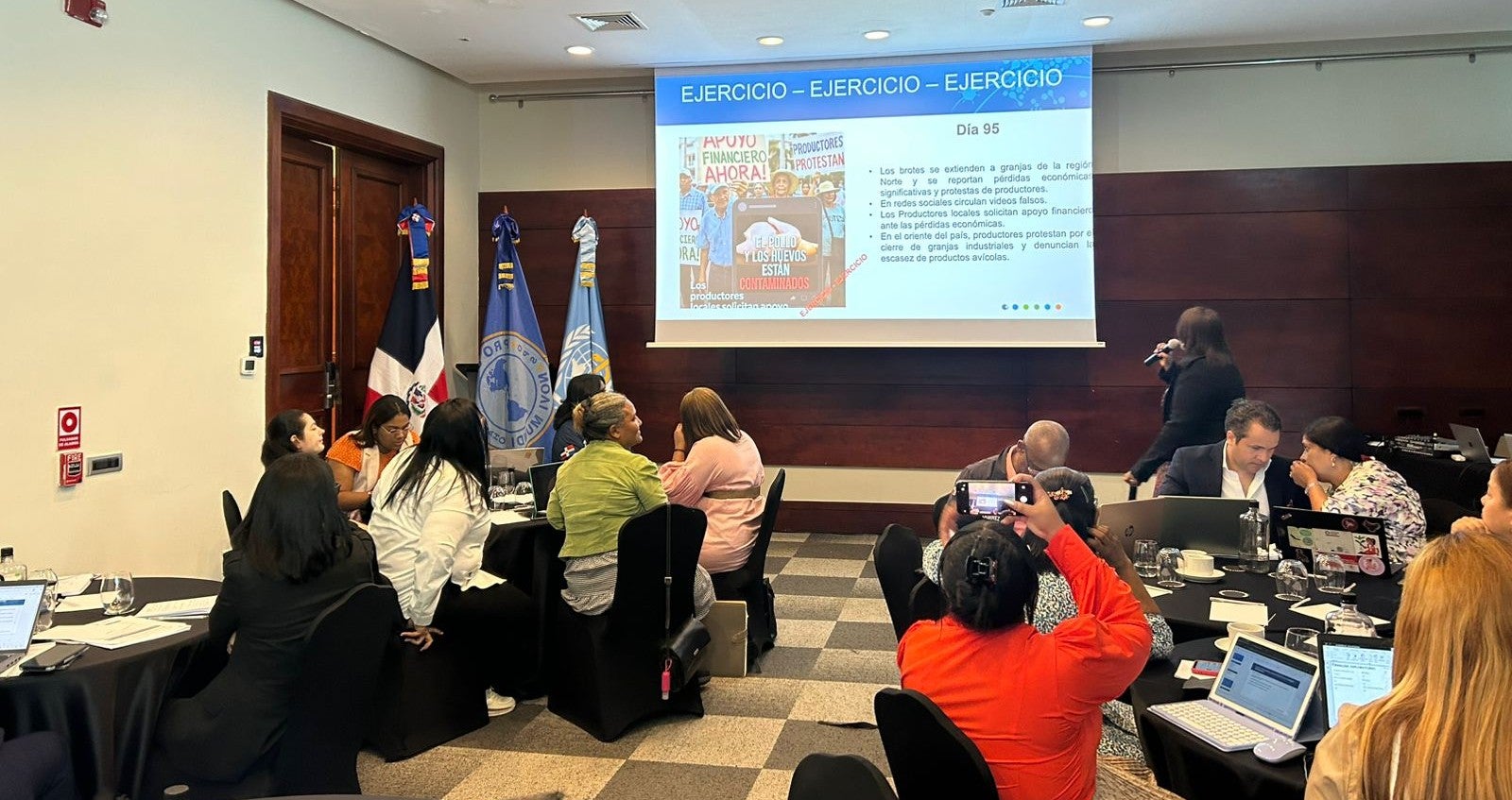
The next steps include integrating the recommendations from the exercise into the final version of the operational plan, validating the results with key stakeholders, and formalizing the document through established national mechanisms.
With this exercise, the Dominican Republic consolidates its leadership in the Caribbean region in terms of preparedness for health emergencies and reaffirms its commitment to the principles of intersectoral coordination, scientific evidence, and the One Health approach promoted by the Pandemic Influenza Preparedness Framework (PIP) and the Preparedness and Resilience for Emerging Threats (PRET) initiative of WHO/PAHO.