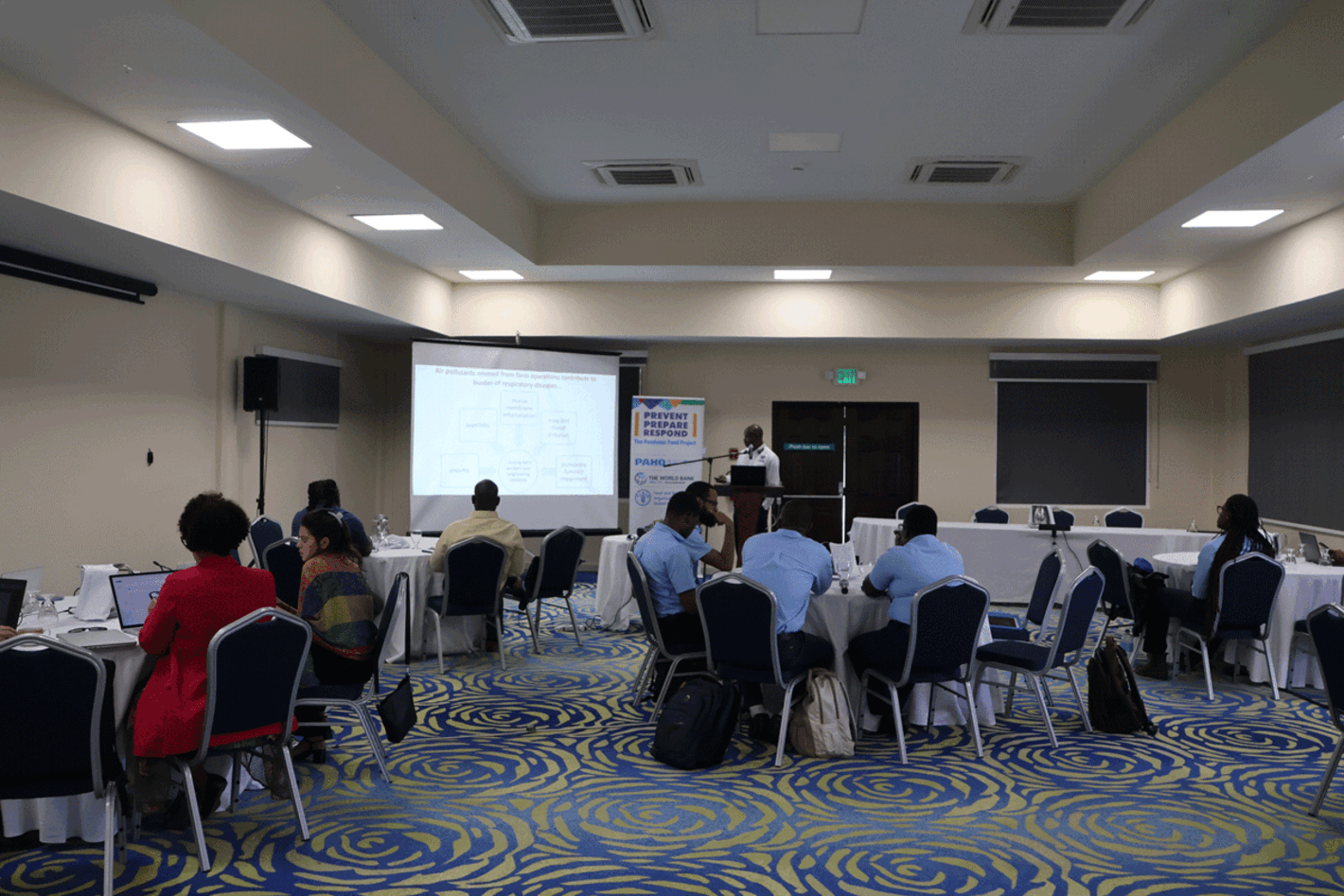
Barbados, December 9, 2025 (PANAFTOSA/SPV-PAHO/WHO) – With the aim of strengthening preparedness, prevention, and response to emerging health threats, the Eastern Caribbean countries—Saint Vincent and the Grenadines, Saint Lucia, Grenada, and Saint Kitts and Nevis—held a Workshop on the Prioritization of Zoonotic Diseases. The workshop was conducted with technical support from the Pan American Health Organization (PAHO), through PANAFTOSA and the PAHO Office in Barbados and the Eastern Caribbean Countries, as well as the Food and Agriculture Organization of the United Nations (FAO), with the participation of representatives from the Ministries of Public Health, Agriculture, and Environment, as well as academic institutions and the private sector.
This activity is part of the project “Strengthening Prevention, Preparedness and Response to Health Emergencies in the Eastern Caribbean Countries (ECC)”, funded by the Pandemic Fund. The project is led by the Ministries of Health and Agriculture of the participating countries, with PAHO/WHO, FAO, and the World Bank serving as implementing entities.
The objective of the workshop is to develop a prioritized list of zoonotic diseases that will serve as a basis for guiding public policies and strategic decision-making under the One Health approach. This prioritization will help optimize resources, strengthen intersectoral coordination, and support the development of surveillance, prevention, and control strategies at the human–animal–environment interface.
Zoonoses—diseases transmitted from animals to humans—represent a growing challenge for public health, animal health, and environmental safety. In the Region of the Americas, the interaction among humans, animals, and ecosystems favors the emergence and reemergence of various zoonoses that have significant impacts on health and the economy.
The identification and prioritization of zoonotic diseases is a key step toward improving preparedness and response to health events, in line with the International Health Regulations (IHR), the regulatory frameworks of the World Organization for Animal Health (WOAH), and the Sustainable Development Goals (SDGs). A list developed through multisectoral consensus strengthens evidence-based decision-making, increases efficiency in resource allocation, and reinforces intersectoral collaboration.

| 
|
Prioritization Criteria
Participants considered several key criteria in selecting priority diseases, including disease severity, surveillance and control capacity, potential for animal-to-human transmission, human-to-human transmission, economic impact and effects on vulnerable communities, and sensitivity to climate and environmental change.
With the completion of the workshops in these four countries, the subregion has made significant progress in strengthening its capacity to address zoonotic threats and enhance health security. The prioritized lists will be used to guide national strategies for surveillance, intervention, and intersectoral cooperation.
PAHO, through PANAFTOSA and its Eastern Caribbean Countries office, together with FAO, will continue providing technical support to Eastern Caribbean countries to advance the next steps and complete pending exercises in the remaining countries early next year.
This initiative represents an important move toward building a more resilient health system that is better prepared to address future health challenges.