• aid

After the storm: How psychological first aid helped Jamaicans recover after Hurricane Melissa

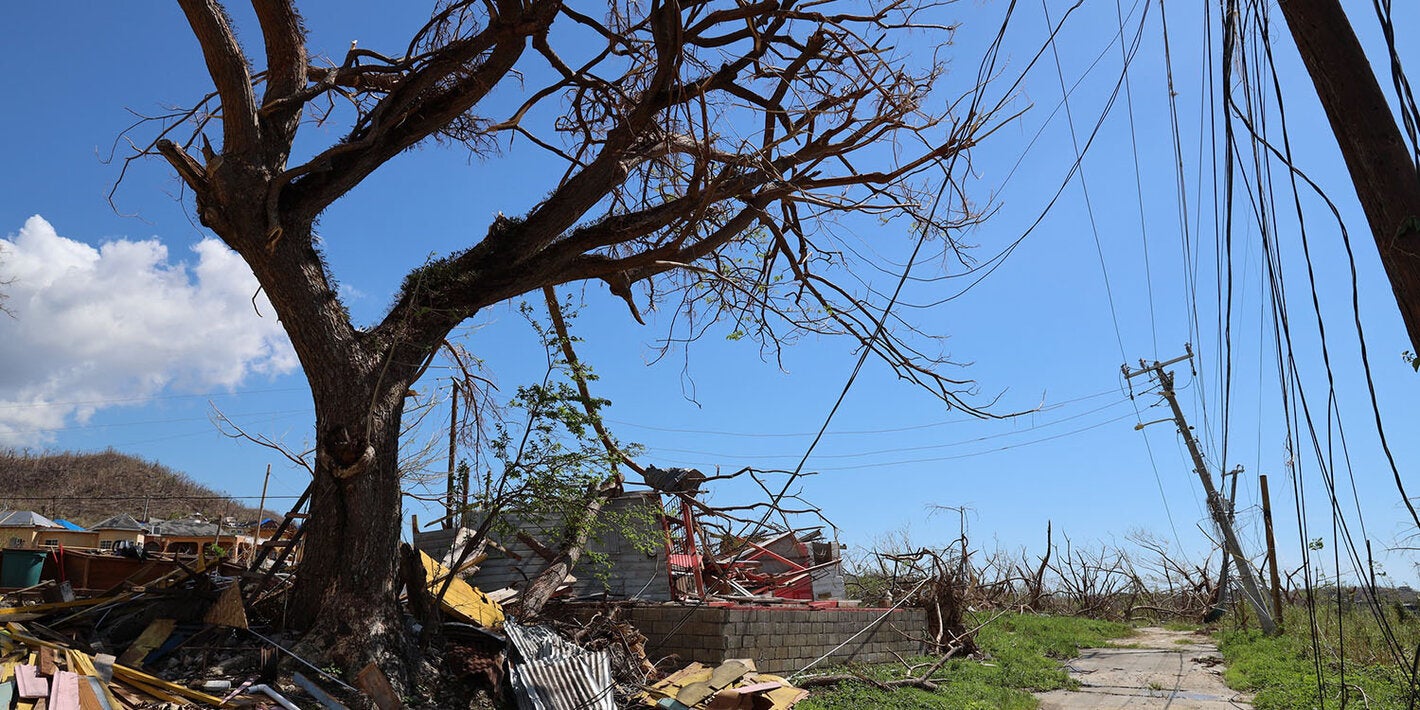
Following Hurricane Melissa, thousands of Jamaicans received mental health and psychosocial support through efforts led by the Ministry of Health and Wellness, PAHO/WHO, and partners. Nearly a year on, their experiences offer lessons on how mental health support can strengthen recovery after disasters.

— October 2026 —

In the days after Hurricane Melissa, which struck Jamaica on October 28, 2025, Shawna Guthrie was focused on getting through the day. There was her family to look after, basic needs to meet and the disruption around her to navigate. Although the storm had passed, she did not yet feel safe.

“I was still worried and constantly thinking about what could happen,” she recalled. “At the same time, I still had my everyday responsibilities and couldn't just stop because I was overwhelmed.”

Like many Jamaicans affected by the Category 5 hurricane, Guthrie was confronting a less visible consequence of the disaster. The immediate danger had passed, but fear, grief and uncertainty could remain long after the storm was over.

“I was trying to be strong and focus on what needed to be done, but emotionally I was tired,” she said. “There came a point where I realized that being strong doesn't mean you don't need help.”

Guthrie received Psychological First Aid (PFA) from a trained health worker, who listened to what she had experienced, helped her work through her immediate concerns and connected her with additional support when needed.

PFA is a practical approach to helping people cope in the immediate aftermath of a crisis or disaster. It focuses on listening to people’s needs, providing compassionate support, and connecting them with practical assistance or specialized care when needed.

Guthrie’s experience was similar to that of thousands of people affected by the hurricane who received psychosocial support in the months following the disaster.

“I didn't necessarily need someone to fix everything,” she said. “I just needed someone to understand that I was scared, overwhelmed, and trying my best.”
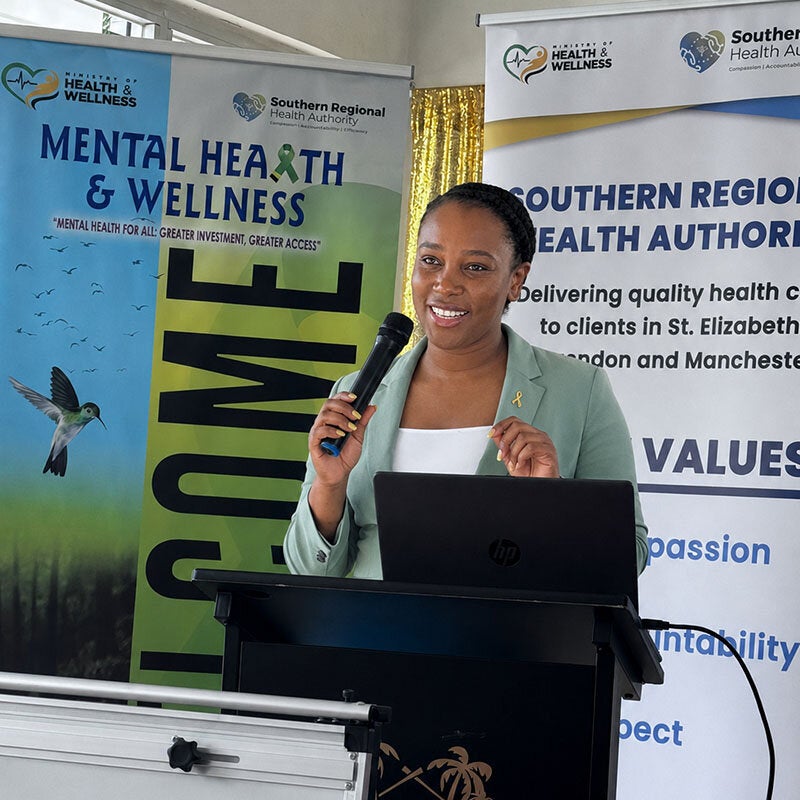
Dr. Janique Baldwin-Miller, Regional Psychiatrist for Jamaica’s Southern Regional Health Authority, helped lead efforts to strengthen mental health and psychosocial support in communities affected by Hurricane Melissa.

Dr. Janique Baldwin-Miller, Regional Psychiatrist for Jamaica’s Southern Regional Health Authority, helped lead efforts to strengthen mental health and psychosocial support in communities affected by Hurricane Melissa.

When the storm is over, recovery continues

Dr. Janique Baldwin-Miller, Regional Psychiatrist for the Southern Regional Health Authority (SRHA), saw that need unfolding across many communities including Clarendon, Manchester and St. Elizabeth.

“There was shock that such a disaster had occurred, relief that many individuals survived, grief over the loss of property, loved ones, and livelihoods,” she recalled. “At the same time, there was a strong sense of purpose and determination to rebuild stronger communities.”

In Jamaica’s southern region alone, an estimated 40,000 people—approximately 10% of the adult population—required PFA. According to the data available up to May 2026, some 27,000 people, or 68% of that estimate, had received support.

“With the wide range of emotional reactions that people have experienced, and continue to experience, it is essential that Psychological First Aid provides a compassionate and practical helping hand,” Baldwin-Miller explained. “Individuals can be guided, one step at a time, toward recovery by connecting them with available resources and support systems in a humane and dignified manner.”

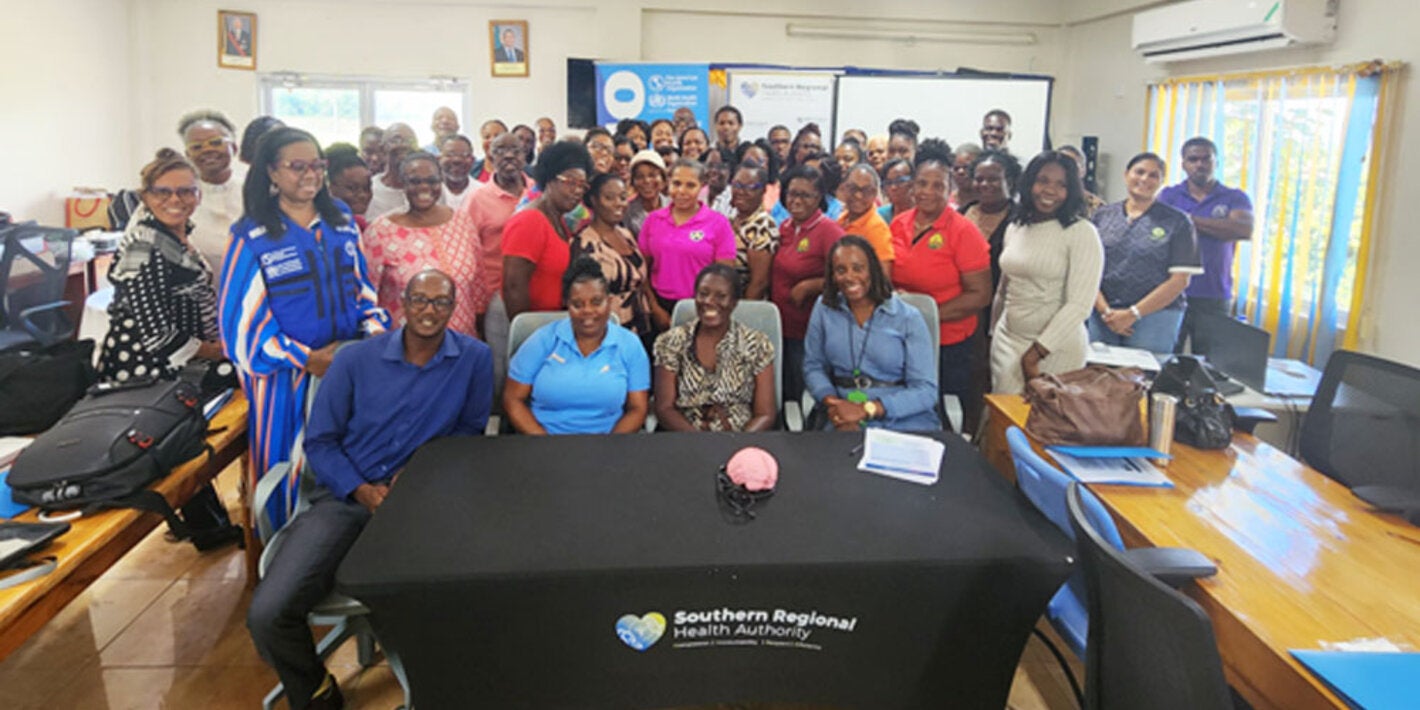
In the storm’s aftermath, Jamaica’s Ministry of Health and Wellness, with support from the Pan American Health Organization/World Health Organization (PAHO/WHO) and partners, organized a series of PFA training sessions for healthcare workers, government ministries and agencies, community organizations and faith-based groups. 

By the end of February 2026, approximately 4,700 people had received training in Psychological First Aid through various initiatives carried out following the hurricane. These efforts also included a training-of-trainers component and the establishment of training hubs in St. Elizabeth, Westmoreland, and St. James to strengthen local capacity in some of the parishes most affected by the hurricane.

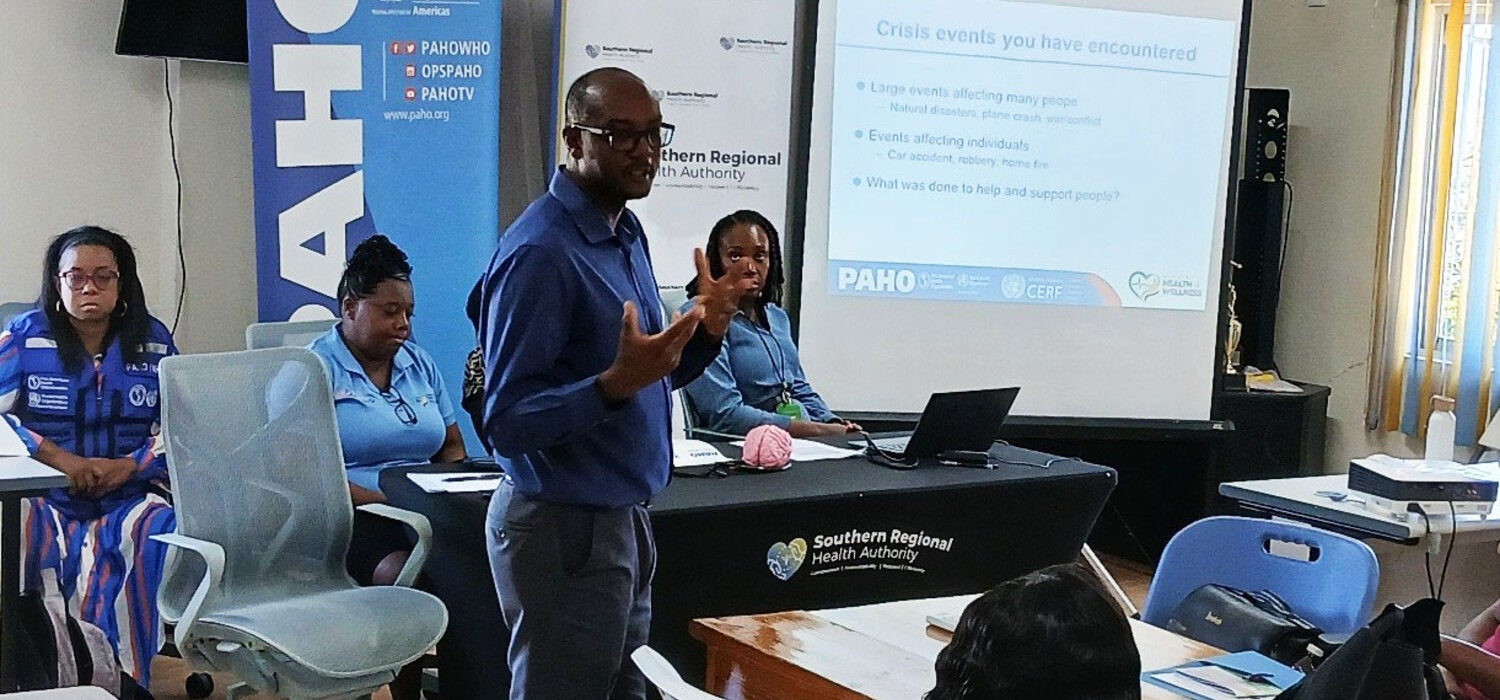
Through simulations, scenario-based exercises, role-playing, singing and artistic activities, participants practiced the core PFA principles of “Look, Listen and Link.”

“The PFA trainings have been invaluable because they have simplified and organized how we provide support that is meaningful, evidence-based, and measurable,” Baldwin-Miller said.

Support beyond the immediate emergency

With multiple organizations responding across affected communities, coordination was essential. The Mental Health and Psychosocial Support (MHPSS) Health Cluster brought together 14 organizations to coordinate services, share information, and respond to mental health and psychosocial needs in affected communities.

Supported by emergency funding, including contributions from the Central Emergency Response Fund (CERF) and the United Kingdom’s Foreign, Commonwealth and Development Office (FCDO), PAHO/WHO also worked with national partners to expand access to mental health support, strengthen local capacity and improve coordination among organizations working in affected communities. But the people providing that support were often experiencing the disaster themselves. 

“The experience was traumatic for many healthcare workers, and a significant number experienced burnout while simultaneously coping with their own losses and supporting others,” Baldwin-Miller said.

This highlighted the need to ensure that emergency mental health responses also protect the people delivering the care. Baldwin-Miller believes the experience has underscored the importance of stronger systems to support frontline workers during emergencies, including external assistance when needed, dedicated periods of rest and recovery, and stronger employee assistance programs.

The experience also showed that mental health must be an integral part of disaster recovery. For people rebuilding their homes, restoring their livelihoods and caring for their families, emotional recovery goes hand in hand with physical reconstruction and can sometimes be essential to coping with the aftermath and gradually returning to everyday life. 

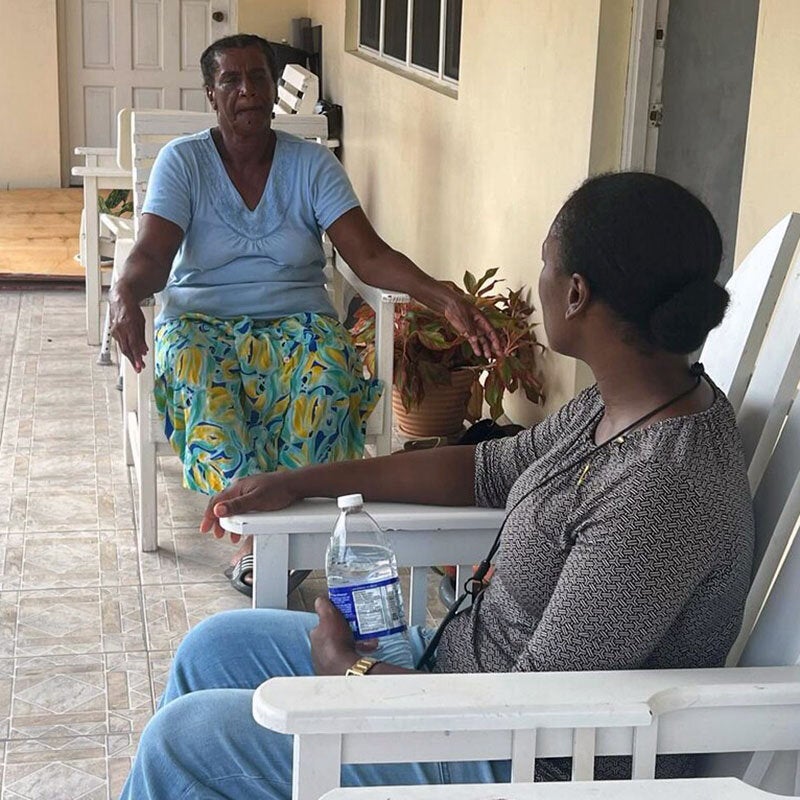
Following Hurricane Melissa, health workers and community partners across Jamaica were trained in Psychological First Aid to provide practical and emotional support to people affected by the disaster.
Nearly a year later

Nearly a year after Hurricane Melissa, Dr. Baldwin-Miller sees signs of recovery across the communities she serves.

“When I listen to people speak, I hear hope,” Baldwin-Miller said. “I hear individuals saying that despite this disaster, they are picking up the pieces and discovering strengths they did not know they possessed.”

For Shawna Guthrie, recovery has also meant recognizing that asking for help is part of moving forward. While memories of the hurricane and uncertainty about future disasters remain, she has learned to talk about what she is feeling and seek support when she needs it.

“People need support after the cameras leave, and the attention moves on,” Guthrie said. “They need someone to check on them weeks and months later—not just immediately after the hurricane. Rebuilding a home or replacing belongings is important, but rebuilding a person's sense of safety and peace of mind is just as important.”

Nearly a year after Hurricane Melissa, Jamaica’s experience shows that recovery does not end when attention to the emergency fades. The response has helped expand the number of people trained to provide support, strengthen coordination mechanisms, and reinforce the understanding that recovering from a disaster is not only about rebuilding what was lost, but also about helping people and communities regain a sense of safety, connection and hope for the future.