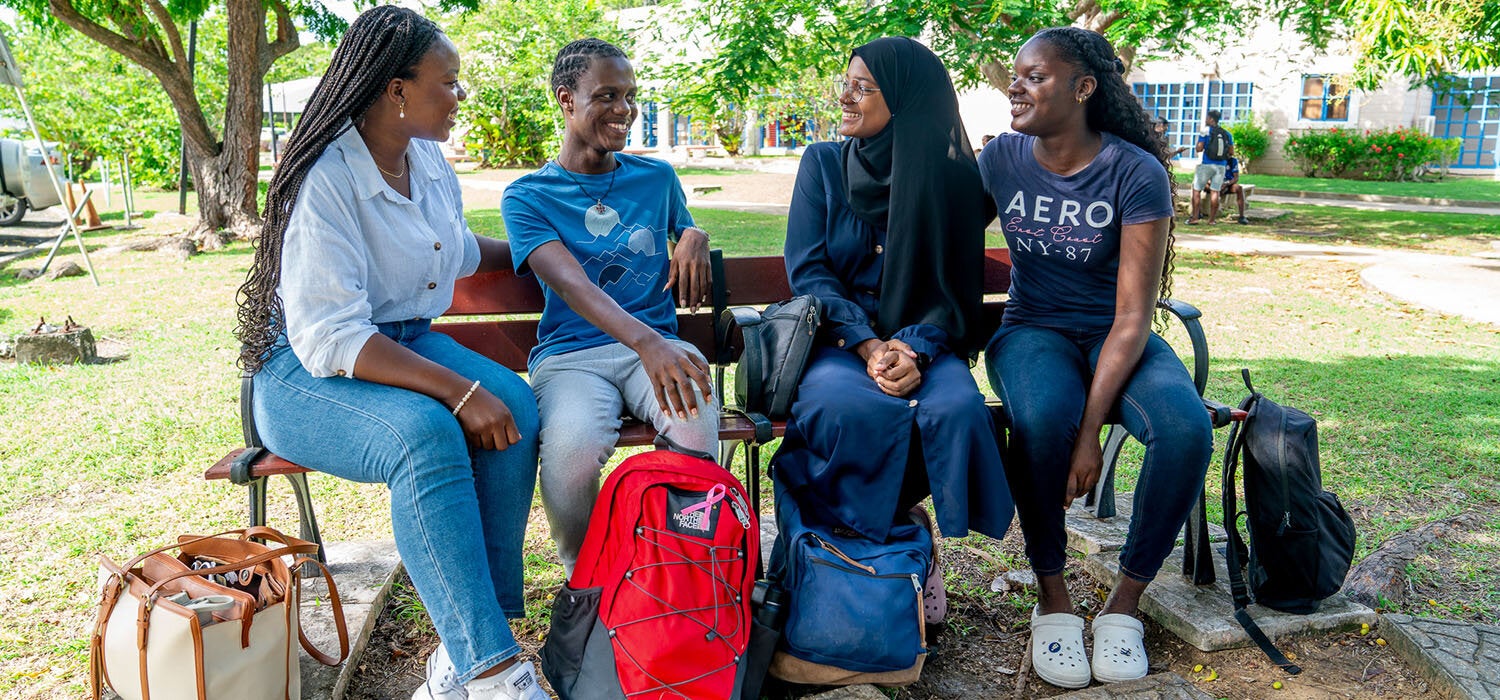
• women sitting on a park bench smiling

From the clinic to policy: Emerging Caribbean health leaders seek solutions beyond the consultation room

As a physician in Barbados, Dr. Shreyas Shenoy has seen firsthand how some health challenges extend far beyond the walls of a clinic. While medical training prepares clinicians to care for individual patients, it does not always equip them to address the broader systems, policies and social barriers that shape health outcomes.

— September 2026 —

That realization led him to spend eight weeks at the Barbados office of the Pan American Health Organization (PAHO), the WHO Regional Office for the Americas, alongside two fellow Caribbean health professionals, exploring how public policy can help tackle some of the region’s most pressing health challenges.

The three participants formed the third cohort of the joint University of the West Indies (UWI) and PAHO Diploma in Health Policy and Health Systems. The programme was created to strengthen leadership and policy capacity across the Caribbean, preparing public health professionals to advance universal health through stronger health systems and evidence-informed decision-making.

After completing six online modules over two years, the participants concluded their training with an intensive practicum at the PAHO Barbados Office. The third cohort was the first to benefit from an expanded eight-week placement—double the length of previous practicums. There, they moved beyond academic theory and into the realities of health governance, policy development and implementation.

“It is particularly pleasing to witness the journey from conceptualization to final creation of evidence-informed policy briefs which address cutting-edge regional issues,” said Dr. Heather Harewood, Head of the Public Health Group and Programme Coordinator at The University of the West Indies, Cave Hill Campus.

“This joint initiative with UWI provides unique opportunities for future Caribbean health leaders to hone their knowledge and skills in health policy and health systems governance in real-world settings,” added Dr. Edwin Bolastig, Subregional Advisor for Human Resources for Health at PAHO.

For many clinicians, the experience required a fundamental shift in perspective.

“It allows them to see the larger public health picture – the population-based dimension of the problems they observe in their practice,” explained Dr. Gloria Giraldo, a PAHO technical advisor and mentor. “It is exciting to see their lens expand and embrace a much broader public health perspective.”
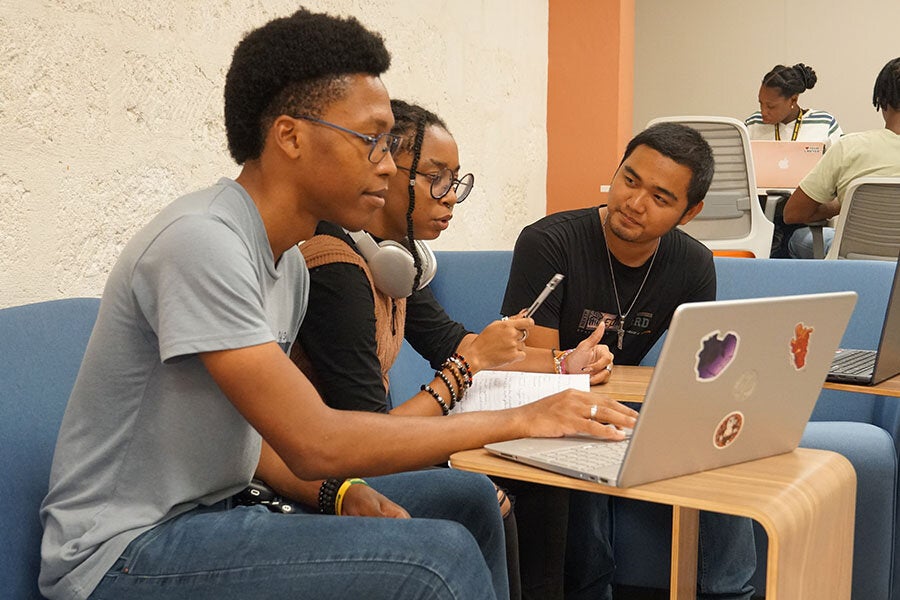
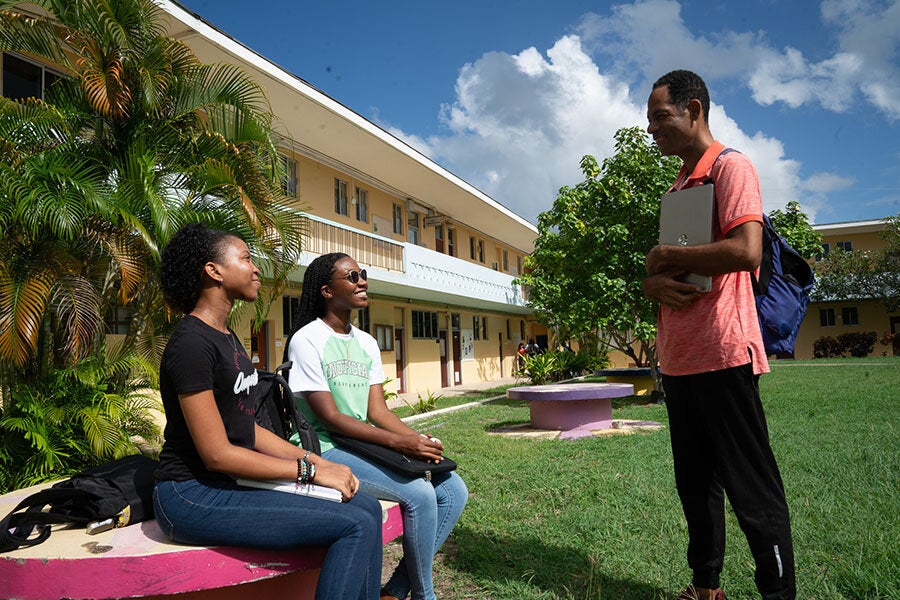
students
students
Looking beyond individual patients

For Dr. Shenoy, that broader perspective led him to focus on an area rarely discussed in health policy conversations in the Caribbean: access to health services for transgender and non-binary populations.

His policy brief, Stop Trans-Hate in Healthcare, examines barriers to gender-affirming health care and proposes measures to improve access and equity in Barbados.

“Presenting my policy brief was the most significant and memorable experience for me,” Shenoy said. “Being able to present it to my colleagues and mentors in a safe, non-judgmental environment was immensely helpful in both an academic and motivational sense. It’s my hope that the understanding shown by those I interacted with here will soon become the norm.”

While Shenoy focused on health equity, Dr. Shernese Agard, a Public Health Registrar from Barbados currently based in the British Virgin Islands, turned her attention to another growing challenge across the Caribbean: dementia care.

Her policy brief, Mandatory Training for Registered Caregivers of Patients with Dementia in the British Virgin Islands, explored how better preparation and support for caregivers could improve quality of care for people living with dementia while strengthening health and social support systems.

“It was truly exciting to understand how a policy could be formulated and go through the process from conceptualization to implementation,” Agard reflected. “It showed me that policies can be born from a place of passion and a desire to see change.”

For Tecla Jn. Baptiste, Assistant Principal Nursing Officer in Saint Lucia, the challenge was different but equally systemic. Her work focused on continuity of care and the barriers patients often face when moving between levels of the health system.

Her policy brief, Strengthening Patient Continuity of Health Care in Saint Lucia, proposes measures to strengthen referral pathways and improve coordination across integrated health service delivery networks.

“Effective health leadership must extend beyond technical expertise,” Jn. Baptiste said. “It requires understanding how policies are developed, implemented and sustained within complex political, social and organizational environments.”

Learning how policy gets made

Throughout the practicum, participants engaged with PAHO technical experts and senior leaders while gaining exposure to regional and global health discussions, including deliberations surrounding the 79th World Health Assembly.

The experience provided opportunities to examine issues such as health workforce migration, climate-resilient health systems, governance, financing and implementation science—topics that increasingly shape health outcomes across the Caribbean.

For Jn. Baptiste, connecting local challenges with global discussions was particularly valuable.

“Through engaging discussions with PAHO advisors on health policy frameworks, human resources for health, climate change and health, health workforce migration and regional health systems, I gained a deeper appreciation for systems thinking, strategic partnerships and implementation science,” she explained.

The practicum also benefited from a network of mentors who helped participants transform real-world challenges observed in their daily work into practical, evidence-informed policy proposals.

“By exposing students to real-world public health challenges and providing opportunities to apply their academic knowledge to practical issues, the programme helps them develop critical thinking, analytical and communication skills,” said Dr. Rosmond Adams, Health Systems and Services Advisor at PAHO Suriname and mentor to Shenoy. “Public health is not an individual task; its greatest successes are achieved through multidisciplinary teamwork and strong partnerships.”

students
students
Preparing the next generation of Caribbean health leaders

This Diploma shows what the Caribbean can achieve when institutions invest in people. UWI provides academic rigor, while PAHO brings technical expertise and regional reach. Together, participants turn that foundation into policies that improve lives,” noted Leah-Mari Richards, Chief of the PAHO Subregional Program for the Caribbean. “Our ambition is to deepen the PAHO-UWI partnership, expand cohorts and practica, and ensure every graduate returns to their health system as an agent of change. Health leadership for the Caribbean should be grown in the Caribbean, and this programme is a model for making that happen.”

For all three participants, the experience reinforced a common lesson: many of the challenges facing Caribbean health systems cannot be solved one patient at a time.

Whether addressing equitable access to care, improving support for people living with dementia, or strengthening patient referral systems, sustainable solutions often require policy change alongside clinical expertise.

As they return to Barbados, Saint Lucia and the British Virgin Islands, they carry with them new technical skills, professional networks and a deeper understanding of how health systems function.

More importantly, they return with the conviction that some of the most meaningful improvements in health begin long before a patient enters a consultation room.