Strengthening AMR Surveillance, Response, and Resilience Across the Caribbean
What is AMR and Why Does It Matter?
Antimicrobial resistance (AMR) happens when bacteria, viruses, fungi, or parasites adapt and stop responding to the medicines used to treat them. These “superbugs” make infections harder and sometimes impossible to cure.
In the Caribbean, AMR poses a serious and growing threat to public health, affecting everything from basic infections to cancer treatments and surgeries. It drives up healthcare costs, burdens health systems, and risks reversing decades of progress in treating communicable diseases.
Without urgent and coordinated action, we risk a future where simple infections become deadly. The good news? Across the Caribbean, we’re taking bold, people-centered steps to stop that future from becoming reality.
Our Regional Approach
PAHO is working closely with countries, partners, and communities across the Caribbean to bolster AMR preparedness and response. We are:
- Strengthening national and regional AMR surveillance
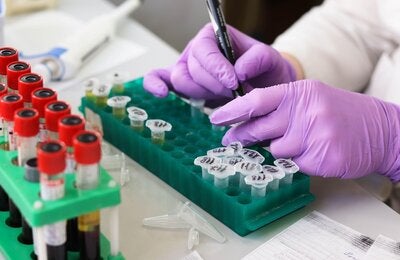
- Expanding laboratory capacity
- Supporting cross-sectoral, One Health action
- Fostering implementation research and innovation
- Promoting responsible use of antimicrobials
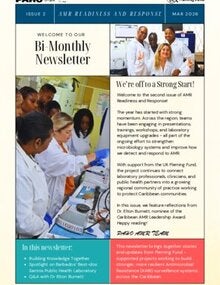
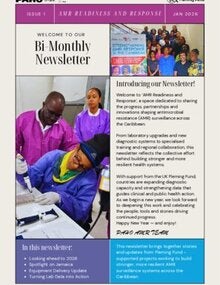
Much of this work is being advanced through three key projects supported by the UK Government’s Fleming Fund, as well as new South-South cooperation efforts beginning in 2025.
Featured AMR Projects
Fleming Fund-Supported Projects
Strengthening AMR Response in the Caribbean
Led by PAHO/WHO | Funded by the UK Fleming Fund
This project supports 10 Caribbean countries in strengthening diagnostic capacity and AMR surveillance systems through:
- National laboratory upgrades
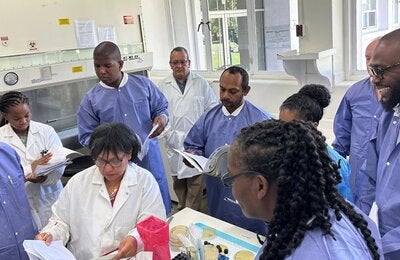
- Staff training in resistance detection
- Integration into AMR data-sharing networks
Countries Involved: Antigua & Barbuda, Bahamas, Barbados, Belize, Dominica, Grenada, Guyana, Jamaica, Saint Lucia, Saint Vincent & the Grenadines

South-South Solidarity Against Superbugs (CCHD Project)
Launched in 2025 | Under PAHO’s Cooperation Among Countries for Health Development (CCHD)
This initiative strengthens AMR responses by connecting:
- CARICOM Member States
- Argentina
- Panama
It supports cross-country learning and policy alignment, helping countries strengthen AMR governance, response plans, and lab systems.
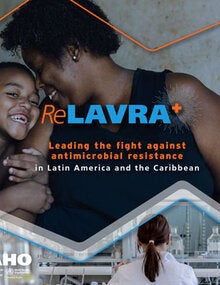
This brochure provides an overview of the work of the Latin American and Caribbean Network for Antimicrobial Resistance Surveillance (ReLAVRA+). Since its creation in 1996, ReLAVRA+ has grown to include 33 countries, strengthening laboratory capacity, improving AMR detection, and fostering collaboration across the Region. The brochure highlights key milestones in ReLAVRA+’s evolution, from expanding its membership to the Caribbean, to launching isolate-level surveillance and fungal pathogen monitoring. It details how the network drives evidence-based decision-making by providing high-quality, timely data and by supporting capacity-building, external quality assessments, and regional data platforms. In a context of rising antimicrobial resistance, ReLAVRA+ is essential for guiding clinical practice, informing national policies, and supporting public health action. Looking ahead, the network is helping countries to advance genomic surveillance, integrate a One Health approach, and leverage AMR data for stronger, more resilient health systems. With solidarity, resilience, and excellence at its core, ReLAVRA+ continues to lead efforts to safeguard effective treatments and promote sustainable health across the Americas. Link to RedLAVRA+ brochure.
Country AMR Highlights & Knowledge Hub
A regional effort is only as strong as its local actions. Here’s where we spotlight how individual countries are advancing AMR efforts - from policy action to community and individual mobilisation.
Awareness Campaigns and Initiatives
Caribbean AMR Expert Series | Nneka Hull James (CAHFSA)



News
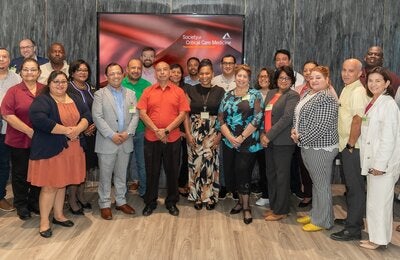
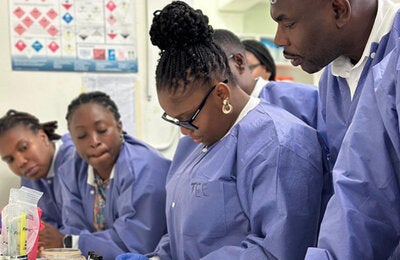

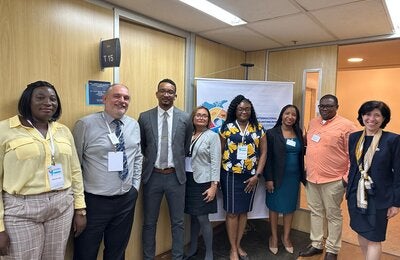
Regional Stories
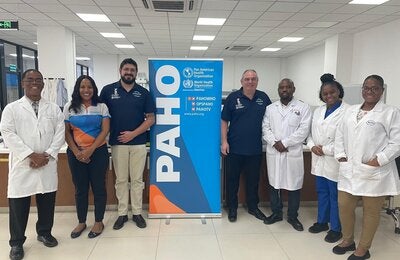
Country Stories

Events
25 Nov 2025 - 25 Nov 2025