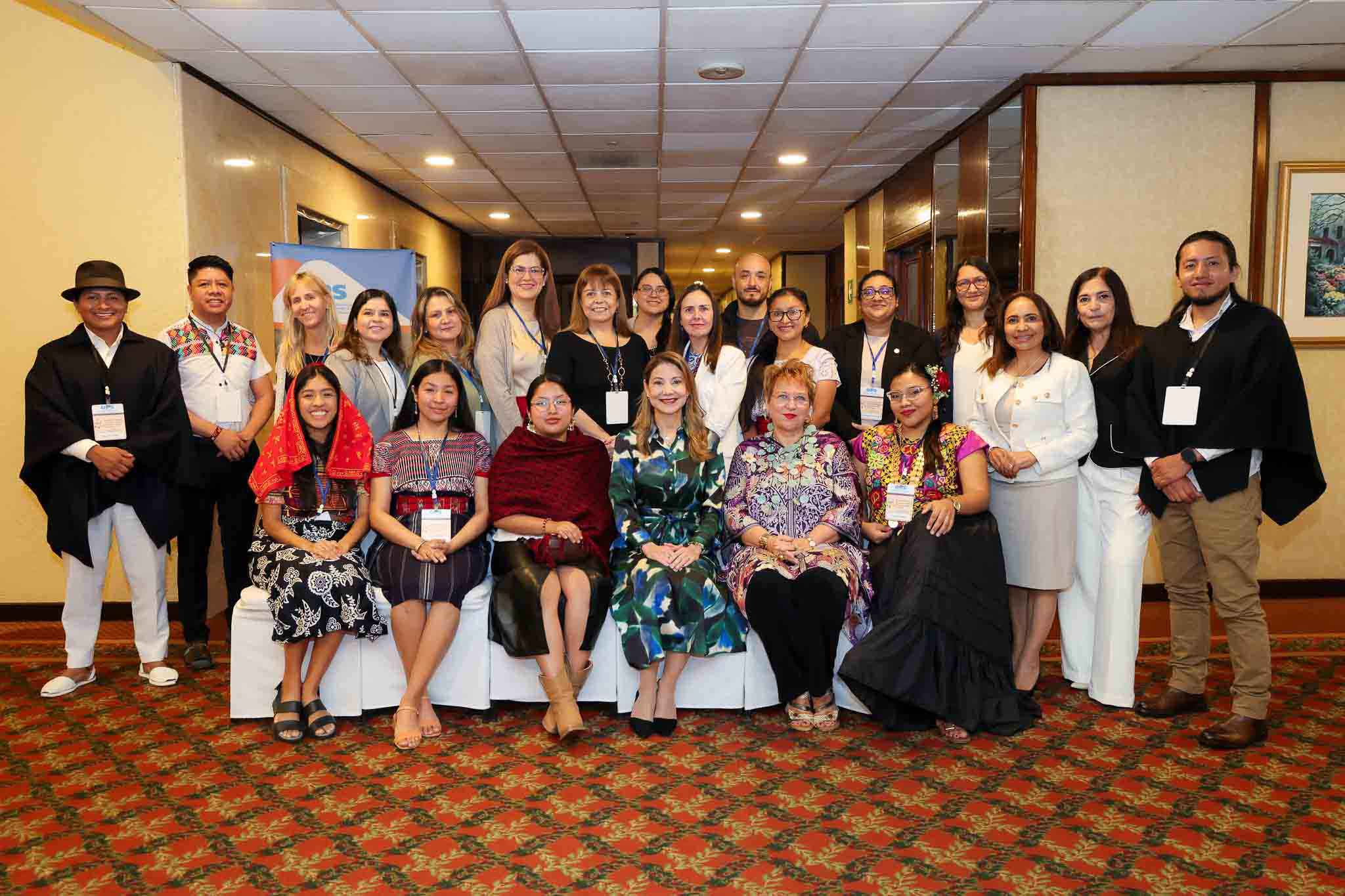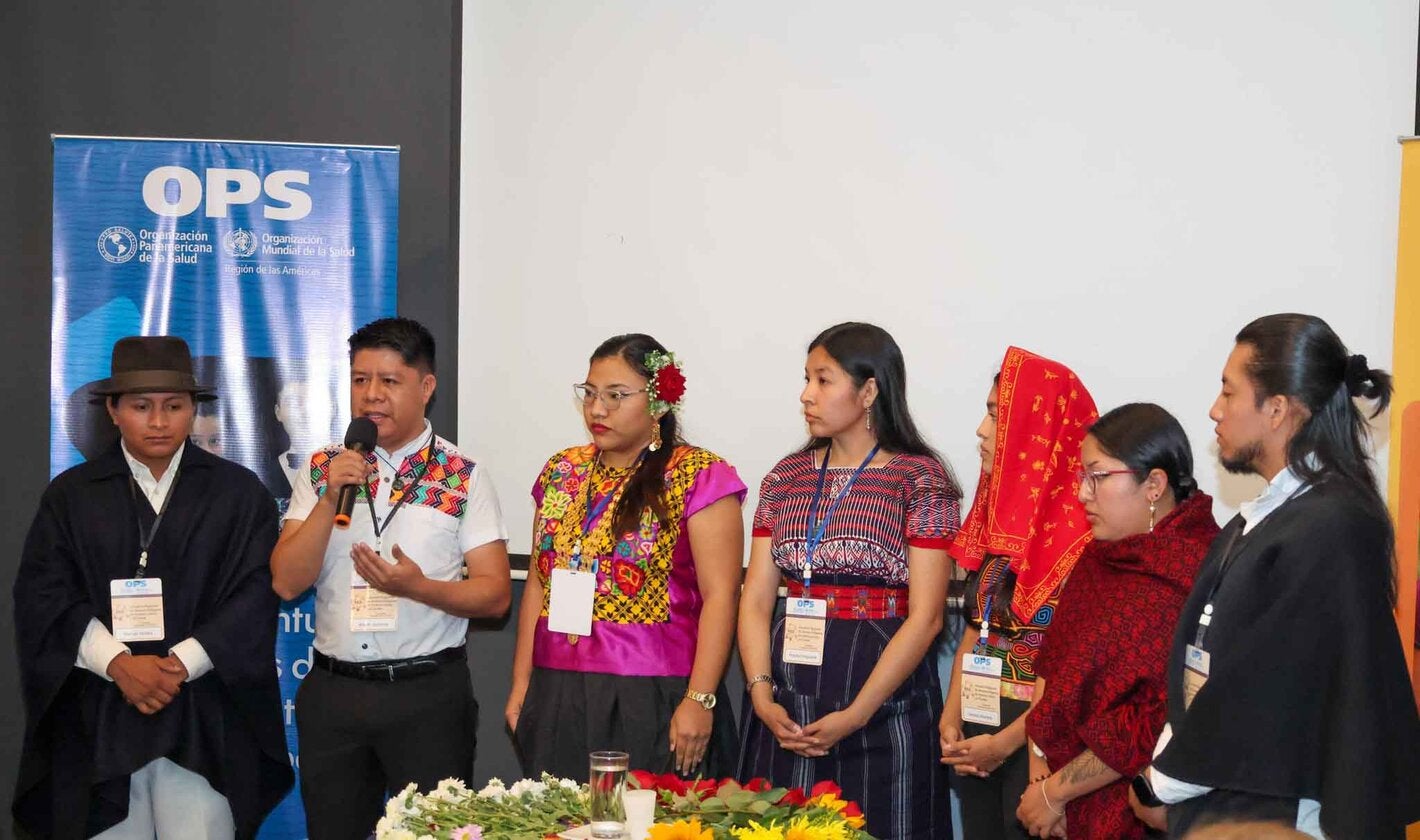
Guatemala, 1 December 2025 — Within the framework of the Ethnicity and Health Strategy, the Pan American Health Organization/World Health Organization (PAHO/WHO) organized the Regional Meeting of Indigenous Youth of Latin America and the Caribbean as a space to review the Indigenous Youth Health Plan for Latin America and the Caribbean and to identify priorities and strategic lines to address contemporary challenges such as the climate crisis, biodiversity loss, and gaps in access to culturally appropriate health services. The meeting also aimed to strengthen the capacities of Indigenous youth in the Intercultural Dialogue methodology and in key health topics, promoting its replication in local territories and contributing to the consolidation of a regional network of Indigenous youth leadership committed to promoting the right to health and equity.
During the opening session, Dr. Alma Morales, PAHO Representative in Guatemala, highlighted that this meeting represents a key moment to deepen Indigenous youth participation in public health processes across the region. She emphasized that the voices of young people are essential to strengthening interculturality in health services, enriching decision‑making, and guiding public policies that are more closely aligned with territorial realities. She also reaffirmed PAHO/WHO’s commitment to continuing to promote spaces in which youth contribute diagnoses, knowledge, and experiences that help advance more equitable and culturally relevant health systems.
The participation of Dr. Gerry Eijkemans, Director of Social and Environmental Determinants for Health Equity at PAHO, provided a key technical framework for the meeting. She noted that social determinants continue to disproportionately affect Indigenous peoples and that gaps in maternal and child health and in communicable diseases require coordinated, sustainable, and culturally adapted actions. She emphasized that the climate crisis is also a health and equity crisis and called for strengthening community resilience, evidence generation, and the articulation between ancestral knowledge and scientific medicine to address the challenges faced by Indigenous territories.
During the working sessions, participating youth shared territorial assessments that highlighted the prolonged effects of the pandemic, the impact of misinformation on health‑related issues, and the geographic, cultural, and linguistic barriers that limit timely access to services. They also identified specific challenges faced by Indigenous women and adolescents in maternal care and the prevention of early pregnancy. In addition, participants pointed to situations of inequality and discrimination that continue to affect well‑being and comprehensive health in their territories.
The meeting brought together representatives from SE‑COMISCA, ORAS‑CONHU, the Amazon Cooperation Treaty Organization (ACTO), and the Fund for the Development of Indigenous Peoples of Latin America and the Caribbean (FILAC). It also included the participation of PAHO/WHO specialists, among them Sandra del Pino, Eliette Valladares, María Landa, Andrea Villalobos, Beatriz Velasco, Lourdes Gutiérrez, Juan Carlos Fonseca, Édgar Domínguez, Conié Reynoso, and Mancel Martínez, who supported sessions on cultural diversity, immunization, sexual and reproductive health, and intercultural approaches to communicable diseases.
Throughout the meeting, capacities were strengthened on key issues from an intercultural perspective, reflecting on the complementarity between scientific medicine and ancestral knowledge, the importance of communication in Indigenous languages, and the transformative role of youth leadership in promoting the right to health. Priority actions for the new plan were also identified, including improving transportation and maternal accompaniment, expanding access to reliable information, incorporating intercultural content into professional training, and strengthening the recognition of midwives and traditional leadership within health systems.
The contributions gathered during the meeting will inform the formulation of the new Indigenous Youth Health Plan, which will guide regional and national actions in the coming years. PAHO/WHO reiterated its commitment to continue working alongside Indigenous youth, Member States, and strategic partners to reduce longstanding gaps, promote meaningful participation, and advance toward more intercultural, equitable, and resilient health systems.