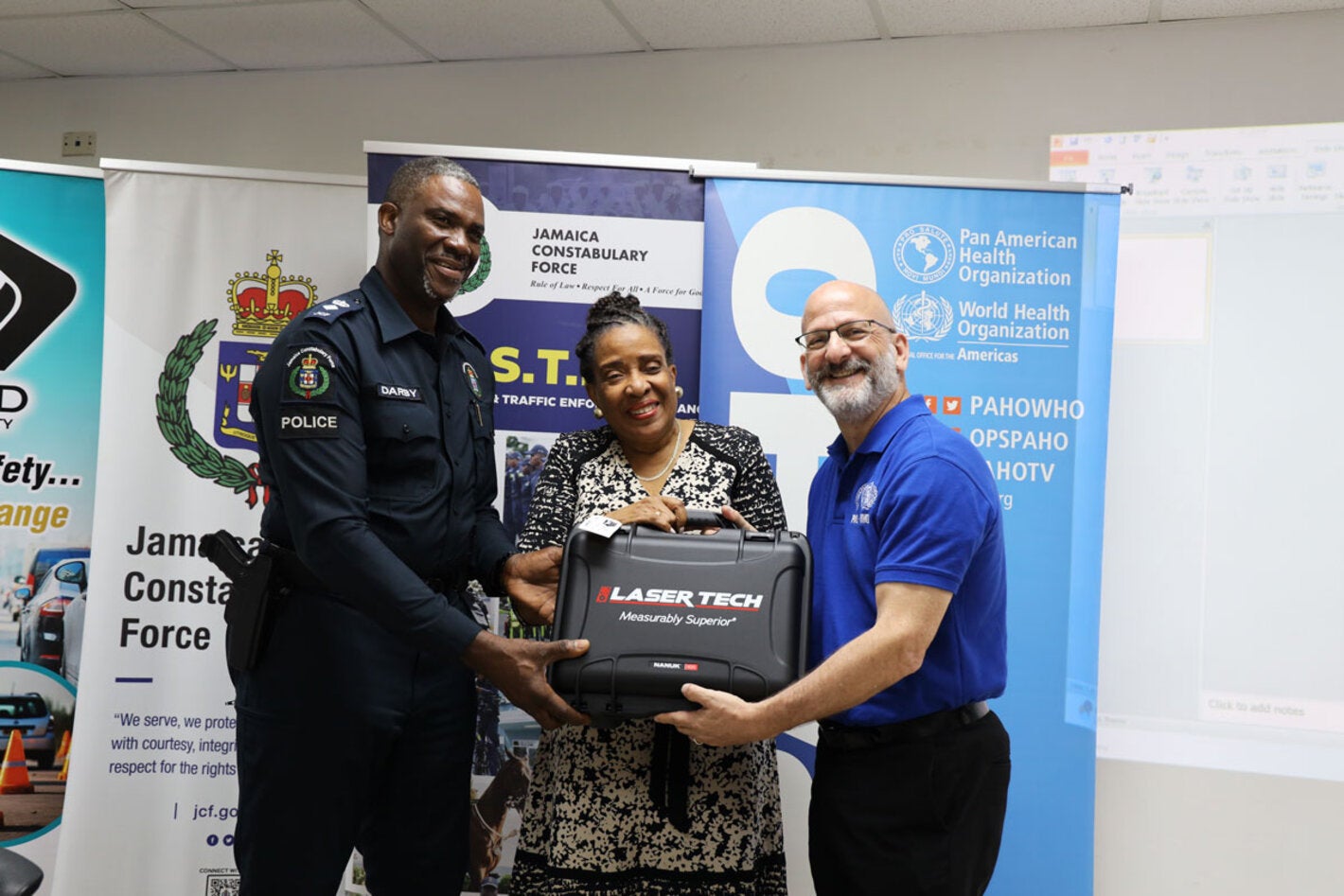
Kingston, Jamaica, 14 May 2026 (PAHO) – Excessive speeding remains one of the major causes of fatal crashes in Jamaica, devastating many families and communities across the island. Against this background, the handover of five new laser speed guns to the Public Safety and Traffic Enforcement Branch (PSTEB) on Tuesday, May 12, 2026, marked another important step in strengthening road safety enforcement and reducing risky behaviors on the nation’s roads.
The equipment, valued at approximately half a million dollars, was officially handed over by the Pan American Health Organization/World Health Organization (PAHO/WHO) and the National Road Safety Council (NRSC) through the UN Road Safety Project as part of ongoing efforts to strengthen traffic enforcement capacity in Jamaica. The initiative supports the country’s broader Safe Systems approach to road safety under the Second Decade of Action for Road Safety 2021–2030, which aims to reduce road traffic fatalities by 50 per cent. Jamaica has already seen encouraging progress this year, with 98 road fatalities recorded up to May 12, 2026, compared to 138 during the same period in 2025, representing a 29 per cent decrease.
The speed guns are expected to strengthen the ability of the Jamaica Constabulary Force to detect, deter, and prevent dangerous speeding, particularly in high-risk locations identified through national data. The Laser Tech devices are advanced traffic enforcement tools capable of capturing both speed measurements and video evidence, thereby strengthening the quality of evidence used in prosecutions while enhancing the consistency and effectiveness of speed-limit enforcement.
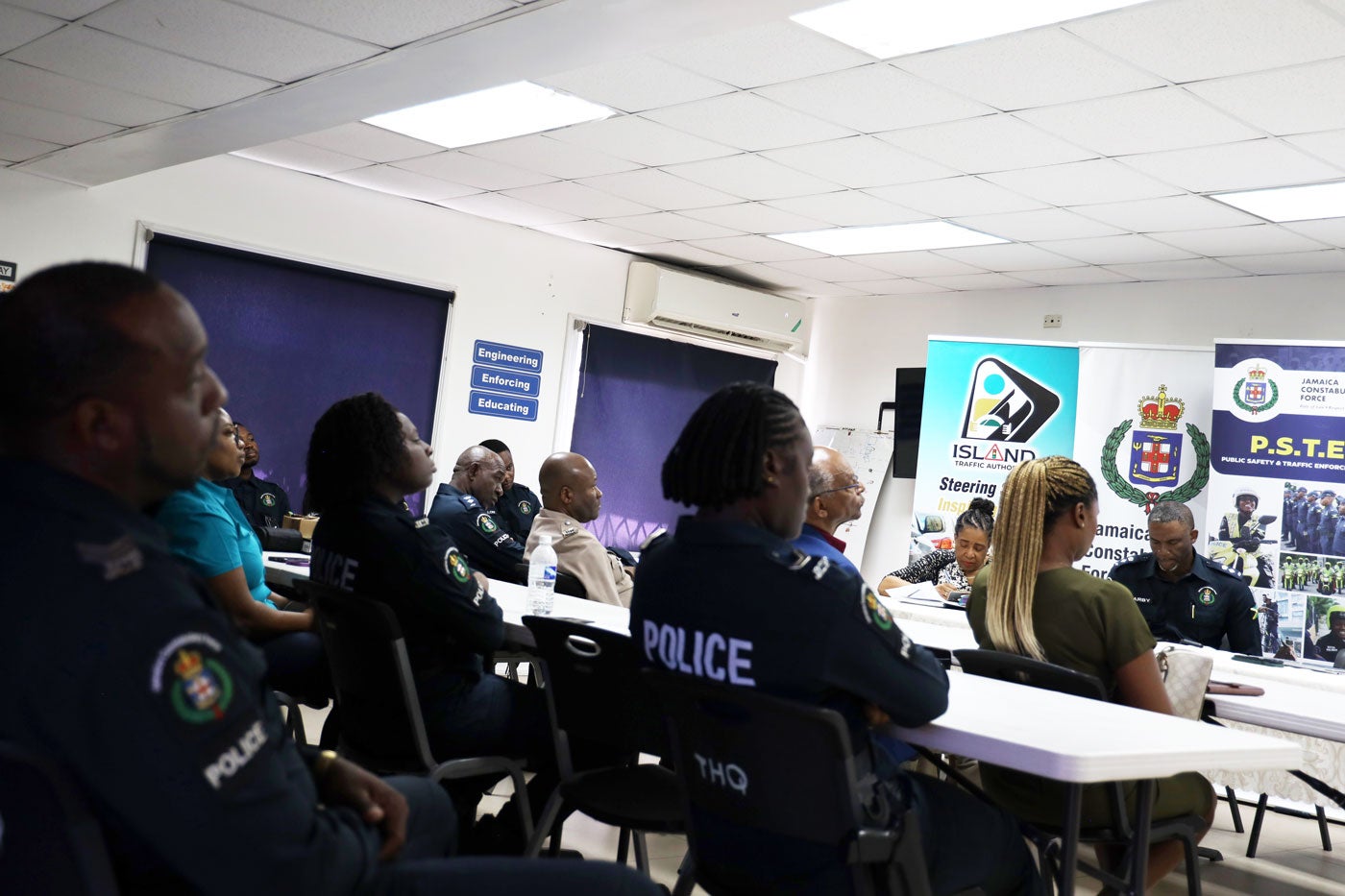
The handover also builds on earlier support provided under the same project to strengthen the country’s breathalyzer program, which remains a key component of efforts to address impaired driving. Previous support included 52 breathalyzers, mouthpieces, and supporting equipment valued at approximately J$8 million, significantly expanding PSTEB’s operational reach and roadside testing capacity across the island. This increased capacity contributed to more frequent checkpoints nationwide, with 29 additional alcohol checkpoints conducted between January and December 2025, compared to the previous year, representing a 40 per cent increase.
According to Acting Assistant Commissioner of Police Lloyd Darby, who presented findings from the Expansion of the Breathalyzer Program, the initiative remains one of the key cornerstones of PSTEB’s efforts to strengthen enforcement against impaired driving.
“Breath testing activity and detection rates have increased significantly over the past year,” ACP Darby revealed. “During 2025, some 15,730 motorists were breath tested, with 85 of them found to be over the legal breath alcohol limit and another 513 showing alcohol in their system but remaining below the limit. In comparison, during 2024, approximately 8,502 breath tests were conducted, resulting in 28 positive tests and 87 motorists registering alcohol levels below the legal limit,” he explained.
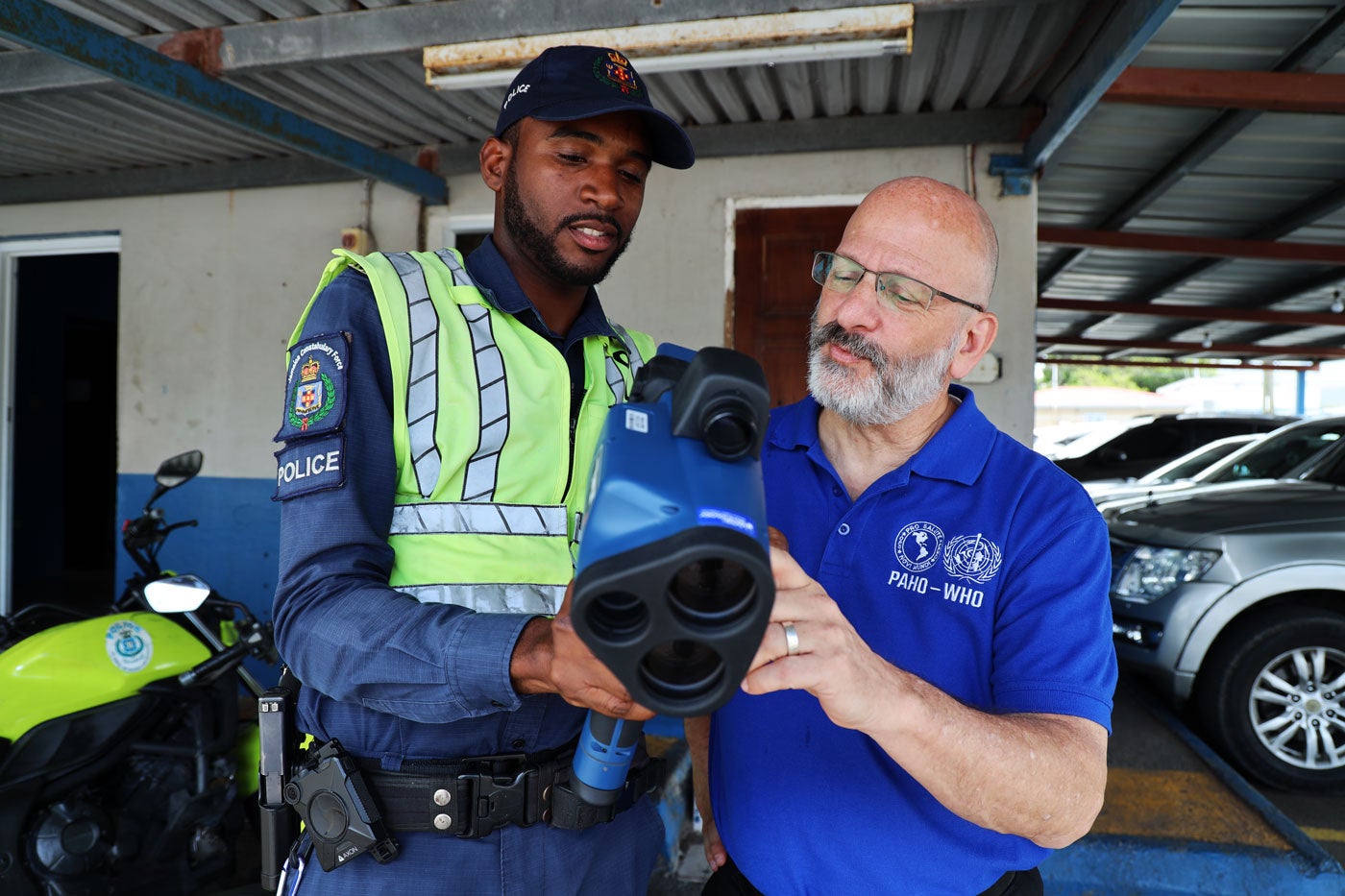
The expanded suite of equipment will strengthen PSTEB’s ability to identify and prosecute risky driving behaviors, particularly speeding and impaired driving, which remain major contributors to serious crashes. Coupled with stronger public cooperation and data-driven enforcement, these efforts are critical to protecting vulnerable road users and saving lives on Jamaica’s roads.
PAHO/WHO Representative in Jamaica, Mr. Ian Stein, speaking at the handover, said, “This moment represents more than the transfer of equipment; it represents a concrete investment in injury prevention, lives saved, and communities protected. What we are doing today aligns with Jamaica’s commitment to a Safe Systems approach to road safety—an approach that recognizes that people will make mistakes, but that those mistakes should not cost lives. Under this approach, effective road policing and speed enforcement are essential complements to safer roads, safer vehicles, post-crash care, and public education.”
Efforts to strengthen road safety in Jamaica are being advanced through funding from the United Nations Road Safety Fund, which supports the National Road Safety Council and collaborating partners, including the Road Traffic Unit within the Island Traffic Authority, the Ministry of Health and Wellness, and the Public Safety and Traffic Enforcement Branch (PSTEB) of the Jamaica Constabulary Force (JCF). Oversight for the initiative is being provided by the Pan American Health Organization/World Health Organization (PAHO/WHO).