This technical cooperation with Ecuador is supported by the Government of Canada.
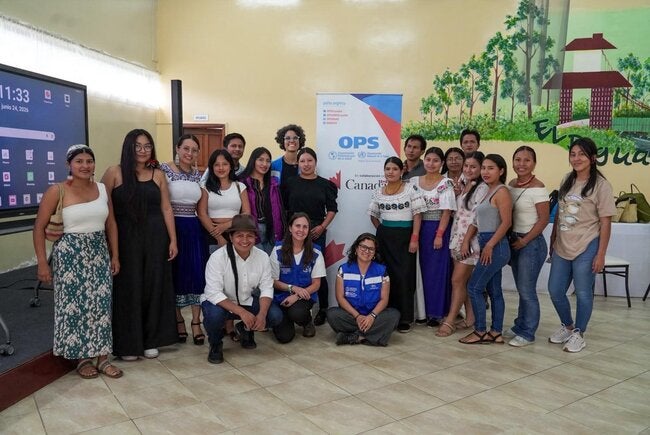
Washington, D.C., July 1, 2026 — The Pan American Health Organization (PAHO), in coordination with Ecuador’s Ministry of Public Health (MSP) and with funding from the Government of Canada, conducted a technical mission to apply the intercultural dialogue methodology to a range of priority health issues affecting the country’s Indigenous communities. Intercultural dialogues serve as a key tool for promoting the exchange of knowledge between communities and health personnel, with the aim of strengthening mutual understanding, building trust, and generating health responses that are appropriate to local cultural contexts. One of the priorities addressed through the intercultural dialogues promoted as part of this technical cooperation with Ecuador was trachoma, a neglected tropical disease that can cause blindness and whose elimination is a public health priority in the Americas. Trachoma is included in PAHO’s Disease Elimination Initiative, a strategy aimed at eliminating more than 30 communicable diseases and related conditions by 2030.
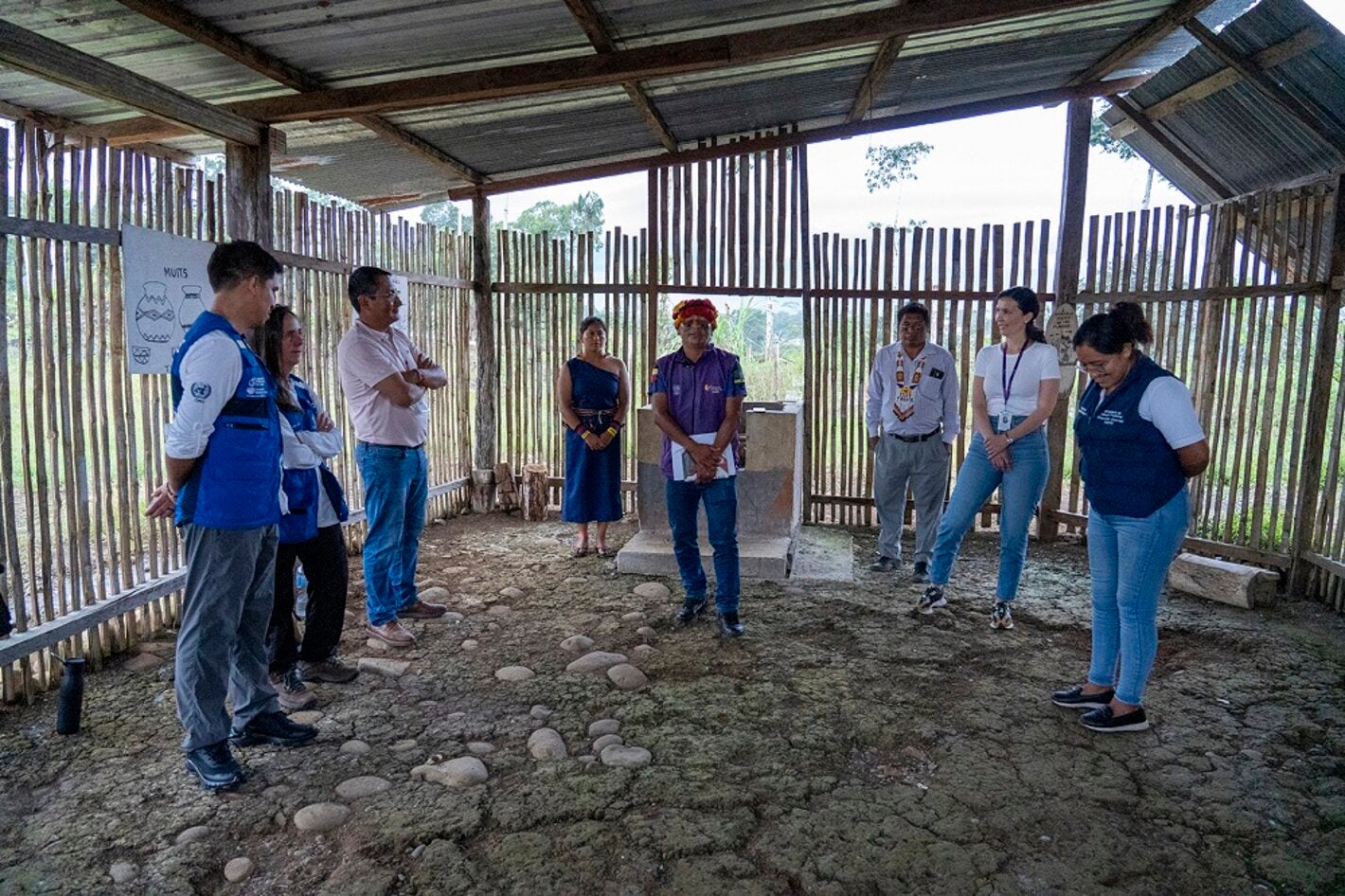
In the Amazonian locality of Taisha, in Morona Santiago Province, PAHO and the Ministry of Public Health conducted knowledge dialogues with Indigenous knowledge holders, community leaders, and health workers to better understand local perceptions of eye health, strengthen trust with the community, and foster collaboration between traditional Indigenous medicine and Western medicine. These exchanges represented a key step in preparing future epidemiological surveys that will help determine the burden of trachoma in Ecuador, particularly in the Amazonian territories of Taisha and Shushufindi, as well as in Esmeraldas.
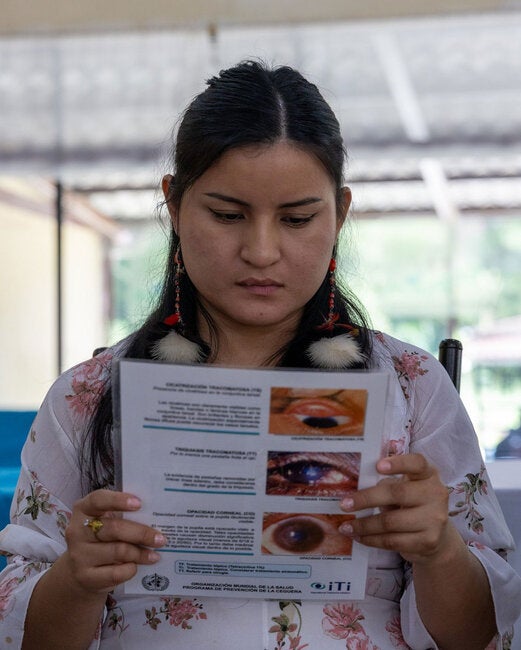
The mission also included workshops on intercultural health and knowledge dialogues for health personnel, aimed at strengthening their capacity to design and implement services that are more inclusive, respectful of cultural diversity, and responsive to the realities of Indigenous communities. In addition, visits were conducted to health facilities to assess progress and identify opportunities for improvement in the delivery of culturally appropriate health services.
Regarding trachoma, the agenda also addressed issues related to prevention and healthcare waste management, both of which are closely linked to the prevention of trachoma and other diseases. These activities highlighted the need for multisectoral responses—including in areas such as the management of waste generated through trachoma care and the prevention of environmental harm—that integrate health, environmental, and community participation approaches to reduce inequalities and improve living conditions among vulnerable populations. Particular attention was given to remote and isolated areas such as these, which often have limited health infrastructure. A workshop was held on healthcare waste management in small Amazonian communities, promoting technologies appropriate to the region for the treatment and final disposal of such waste. The objective was to ensure that any health intervention does not generate additional harmful impacts on either the community or the environment.
Traditional Midwifery and Young Migrants
In the area of sexual and reproductive health and culturally appropriate maternal and newborn health, PAHO facilitated knowledge dialogues with traditional midwives, as well as exchanges with Indigenous youth. These activities helped strengthen collaboration between ancestral medicine and health services, promote the use of community-based perinatal technologies, and advance efforts to address challenges such as adolescent pregnancy and maternal and neonatal mortality. In addition, they helped identify, from different worldviews and cultural perspectives, both the barriers and the opportunities for the full exercise of sexual and reproductive health rights and access to culturally appropriate health services.
Field activities were carried out in the provinces of Morona Santiago and Pastaza, including the localities of Taisha and Puyo, where the delegation met with health authorities, community leaders, and representatives of Indigenous Peoples. These engagements provided an opportunity to gather local experiences and jointly develop proposals to strengthen intercultural health policies in the country.
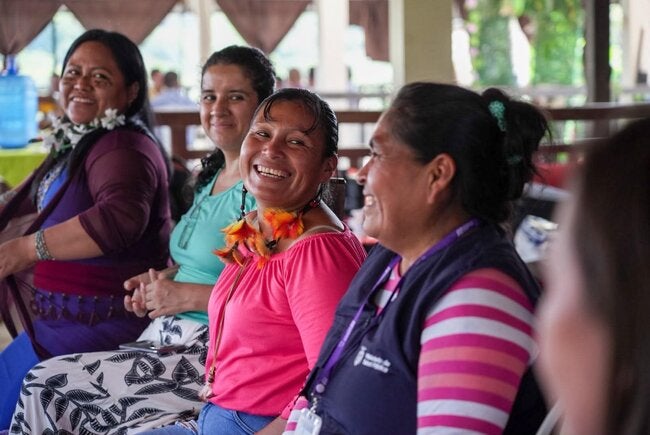
The mission to Ecuador, which brought together two strategic initiatives funded by the Government of Canada—trachoma elimination and the strengthening of sexual and reproductive health and rights—concluded in Quito with an event on the progress and challenges of intercultural health in Ecuador, as well as working meetings with authorities and technical teams from the Ministry of Public Health to define a follow-up roadmap. To strengthen collaboration with grassroots organizations, a meeting was held with representatives of the Confederation of Indigenous Nationalities of Ecuador (CONAIE) to discuss health priorities and opportunities for collaboration within the framework of the mandates on ethnicity and health adopted in the Region. CONAIE represents Ecuador’s 18 Indigenous peoples and 15 Indigenous nationalities.
The technical mission team also participated in a session with migrant adolescents organized to gather inputs that will contribute to the development of the Policy for the Prevention of Adolescent Pregnancy in the Metropolitan District of Quito.
“Health issues cannot be addressed solely in medical or scientific terms. There is an entire cultural dimension that must be understood in order to truly identify existing gaps and improve health for everyone. PAHO is a strong partner of Canada in advancing this work,” said Ysabel Blanco, Political, Economic and Development Counsellor at the Embassy of Canada in Ecuador.
PAHO Strategy and Plan of Action
The results of the mission underscore the importance of intercultural dialogues as an effective tool for building trust, improving access to health services, and advancing—through respect for communities and their traditional systems of medicine—toward the elimination of trachoma and other diseases. At the same time, they contribute to addressing other priority challenges, such as adolescent pregnancy and maternal and newborn health, while taking into account the needs of different population groups, including migrants.
Sandra del Pino, PAHO Advisor on Cultural Diversity, highlighted Ecuador’s progress in intercultural health and the importance of promoting integrated efforts to respond to the needs of communities. The country has also successfully aligned the knowledge dialogue methodology proposed by PAHO with the Methodological Tool “Circle of Dialogue – Intercultural Knowledge Dialogue in Health”, developed by the Intercultural Health Directorate of the Ministry of Public Health. “These advances are part of the efforts being promoted across the Region through the implementation of the Strategy and Plan of Action on Ethnicity and Health 2019–2025,” said Del Pino.