La Paz, August 13, 2025 (PAHO) – Bolivia is making progress in strengthening the capacities of sentinel hospitals and Departmental Health Services (SEDES) to apply the model for estimating hospitalizations attributable to influenza and respiratory syncytial virus (RSV), both in its direct and population-adjusted modalities.
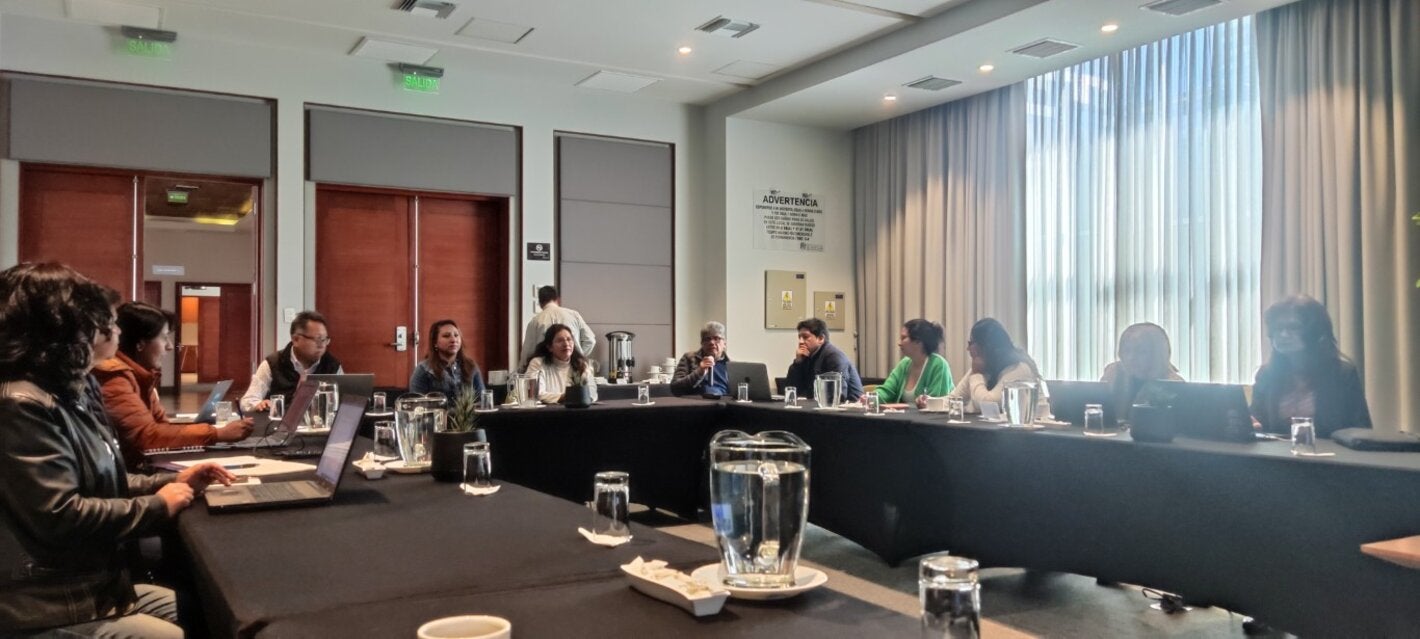
To this end, a workshop was held in La Paz to pilot the National Guide for the Estimation of Hospitalizations associated with Influenza and RSV, which trained teams from the city's sentinel hospital, with the support of SEDES La Paz and the Ministry of Health and Sports. The practical exercise made it possible to apply the model with real data and validate its usefulness in generating technically based local estimates.
During the activity, the minimum inputs for estimation were identified, including the quality, periodicity and structure of clinical, epidemiological, virological and population data. The initiative is part of the Pandemic Influenza Preparedness Plan (PIP), which promotes cooperation between Member States, industry and WHO/PAHO to strengthen pandemic preparedness and response by improving the sharing of influenza viruses and access to vaccines and essential supplies.
Sentinel surveillance of Severe Acute Respiratory Infections (SARI) has established itself as a key tool for monitoring the circulation of priority viruses such as seasonal influenza and RSV, as well as for estimating their impact on at-risk groups. However, transforming these data into accurate estimates requires standardized methodologies that consider variables such as viral positivity and the population at risk.
In response to this need, the Ministry of Health and PAHO developed the National Guide for the Estimation of Hospitalizations associated with Influenza and RSV, based on international methodologies adapted to the Bolivian reality. The development process included the review of regulatory frameworks and regional experiences, the analysis of local surveillance capacities and hospital data structure, the construction of a multiplicative model to calculate attributable hospitalizations, the incorporation of population adjustments by age group and catchment area, technical validation with national data and the development of operational tools such as templates and automated formulas.
This technical instrument will make it possible to transform surveillance data into actionable evidence to guide public policies, allocate resources and evaluate the impact of vaccination and other respiratory interventions.
The workshop, of a theoretical-practical nature, brought together professionals strategically linked to sentinel surveillance and public health decision making, who applied the population-adjusted multiplicative model to their own data, strengthening their capacity to replicate the exercise in other hospitals and subnational levels.