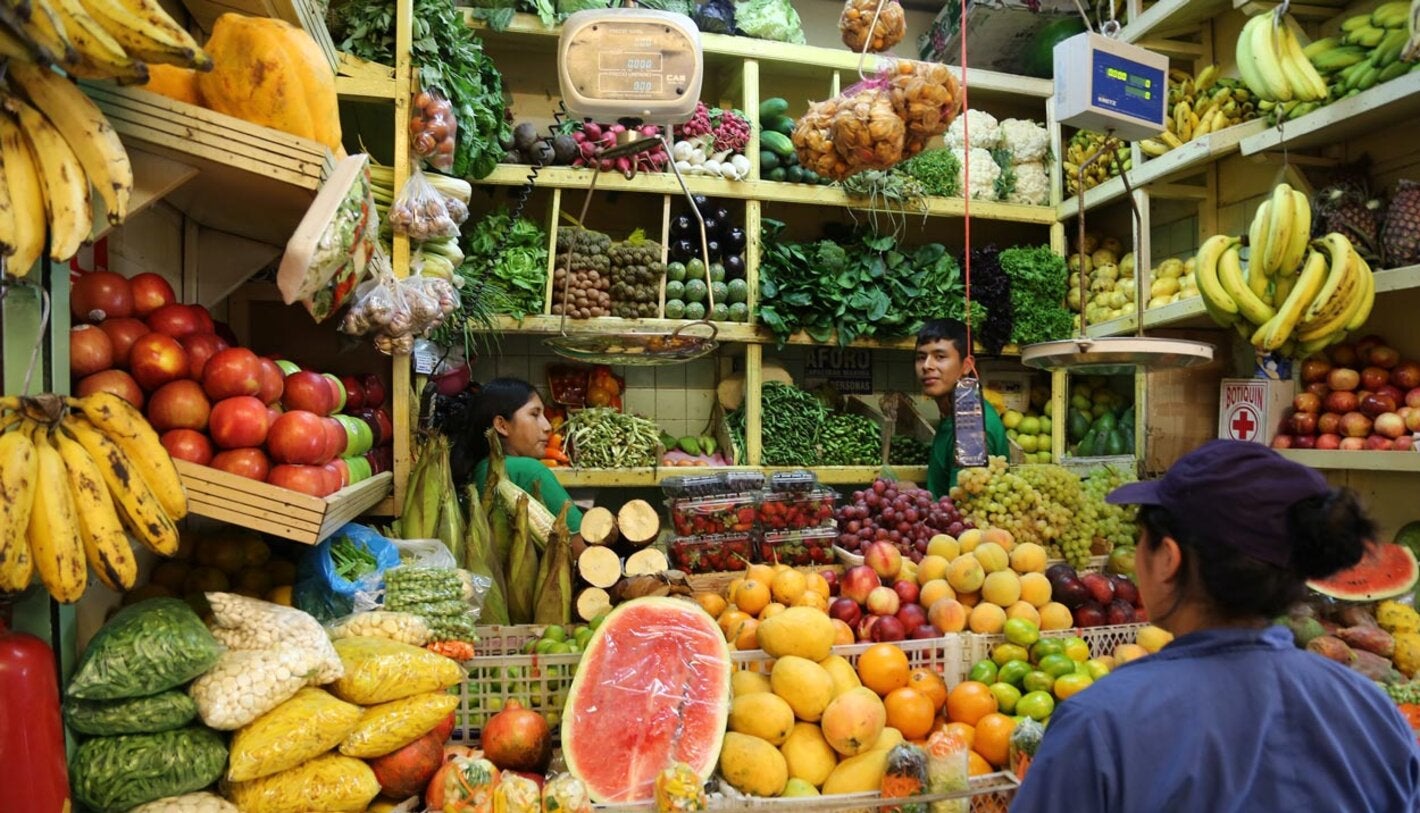
According to the publication of FAO, IFAD, PAHO, UNICEF and WFP, undernourishment and food insecurity dropped, though concerns remain around the cost of a healthy diet and steep obesity.
February 27, 2026, Santiago, Chile --In Latin America and the Caribbean undernourishment decreased for the fourth consecutive year, according to the 2025 Regional Overview of Food Security and Nutrition: Statistics and Trends, released today.
The report states that undernourishment affected 5.1% of the population in 2024, down from a peak of 6.1% in 2020. This means 6.2 million fewer people are experiencing hunger in the region.
The yearly report highlights that there are already four countries in the region (Brazil, Costa Rica, Guyana and Uruguay) with a prevalence of hunger below 2.5%, while two others (Chile and Mexico) are very close to this threshold, and five are now below 5% (Argentina, Barbados, Colombia, Dominica and Dominican Republic).
South America recorded the largest improvement in recent years, reaching an average prevalence of hunger of 3.8%, with a decrease of almost one percentage point between 2022 and 2024. Mesoamerican remained relatively unchanged at 5%, as did the Caribbean at 17.5%. This last result is explained by the prevalence of undernourishment in Haiti (54.2% in the 2022-2024 triennium).
Moderate or severe food insecurity affected 25.2% of the population in the region in 2024. This is below the global estimate of 28% and it also shows a steady decline since peaking at 33.7% in 2020. However, the gender gap remains significant, with prevalence 5.3 percentage points higher among women than men.
Despite improvements, over 33 million people still face hunger, 167 million experience food insecurity, 181.9 million cannot afford a healthy diet, while 141 million adults live with obesity.
Zoom in on nutrition
“The region managed to reduce the prevalence of hunger and food insecurity, but significant inequalities in access to and affordability of food and healthy diets persist. In addition, we must address, through a comprehensive and intersectoral approach, the rising levels of overweight and obesity. FAO is supporting countries in generating data for food security and nutrition and evidence to make better decisions, as well as implementing and evaluating policies and actions to eradicate hunger and reduce malnutrition in all its forms,” said FAO Assistant Director General and Regional Representative, Rene Orellana Halkyer.
Latin America and the Caribbean continues to feel the effects of the COVID-19 pandemic, supply disruptions and geopolitical conflicts that have intensified food price inflation, pushing up the cost of a healthy diet at both global and regional levels. In 2024, the cost of a healthy diet increased 3.8% in Latin America and the Caribbean, making it the region with the highest cost globally, estimated at USD 5.16 per day adjusted for purchasing power.
“While the region has made progress in reducing hunger, significant gaps persist. Women and rural communities continue to experience higher levels of food insecurity than men and urban populations. These findings should serve as a clear wake-up call to redouble efforts and direct investments toward those who need them most. Supporting rural development and the people who produce food is essential to strengthen food security, build resilience, and ensure sustainable growth”, said Rocío Medina Bolívar, IFAD Regional Director for Latin America and the Caribbean.
Despite the rising cost of a healthy diet, affordability has improved. In 2024, 15.4 million more people were able to afford a healthy diet compared to 2021, when unaffordability peaked at 197.3 million. Still, 27.4% of the population in LAC, 181.9 million people, could not afford a healthy diet in 2024.
“Although food security shows advances in Latin America and the Caribbean, the Regional Overview 2025 exposes deep inequalities between subregions, within countries, and between women and men. We cannot speak of real progress while gaps continue to leave millions behind, especially women. WFP is committed to reaching those in greatest need, from emergency response to strengthening social protection, school feeding, and resilience initiatives”, said the Regional Director of World Food Program, Lena Savelli.
Nutrition indicators show uneven advances. For instance, anaemia affected 19.9% of women aged 15 to 49 years in the region in 2023. While this prevalence remains considerably below the global estimate (30.7%), anaemia rates have increased steadily in the region since 2014.
At the same time, obesity among adults in the region doubled since 2000, reaching 29.9% in 2022, almost twice the global estimate of 15.8%.
“Unhealthy food environments, characterized by the high availability of ultraprocessed products and limited access to healthy foods, continue to drive high prevalence of overweight and obesity in the Americas,” said Dr. Jarbas Barbosa, PAHO Director. “PAHO is working to transform food systems through fiscal measures, marketing regulations, and front-of-package warning labeling to make healthy diets more accessible, affordable, and sustainable, helping prevent obesity and diet-related noncommunicable diseases.”
Among children under 5 years of age the prevalence of stunting stood at 12.4%, remaining consistently below the global estimate over the last 25 years. Today, one third of countries with available data are on track to achieve the 2030 target on stunting. Likewise, the prevalence of wasting in the region was estimated at 1.3% in 2024, and most countries have already achieved the World Health Assembly 2025 child wasting target.
Regarding overweight, the prevalence among children under 5 years of age has increased steadily since 2000, reaching 8.8% in 2024, above the global estimate. As a result, the region is not on track to achieve the 2030 target to reduce and maintain this prevalence under 3%.
"Important gains in reducing stunting reflect sustained investment and coordinated action for children’s wellbeing,” said Roberto Benes, UNICEF Regional Director for Latin America and the Caribbean. “At the same time, the region faces a complex nutrition challenge. While undernutrition persists in vulnerable populations, overweight and obesity rise steadily, including among children. Addressing malnutrition in all its forms, from stunting, wasting and micronutrient deficiencies to overweight and obesity, requires strengthened health, nutrition, education and social protection systems that ensure every child has access to affordable, diverse and nutritious diets.”
The Regional Overview of Food Security and Nutrition 2025 is a joint publication of the Food and Agriculture Organization of the United Nations (FAO), the International Fund for Agricultural Development (IFAD), the Pan American Health Organization/World Health Organization (PAHO/WHO), the World Food Programme (WFP), and the United Nations Children’s Fund (UNICEF).
Press liaison
FAO
María Elena Álvarez
María.alvarez@fao.org
Paulina Bravo P.
Paulina.BravoPrida@fao.org
IFAD
Ana Lucía Llerena
a.llerenavargas@ifad.org
PAHO/OMS
Sebastián Oliel
Mediateam@paho.org
UNICEF
Sendai Zea
sczea@unicef.org
WFP
María Gallar
Maria.gallar@wfp.org