Port-of-Spain, 11 September 2025 (PAHO) The Pan American Health Organization/World Health Organization (PAHO/WHO) Trinidad and Tobago Country Office facilitated the Vascular Ultrasound Training Programme 2025, a programme aimed at strengthening vascular imaging skills within the public health system. This initiative is a collaboration with the Ministry of Health, the North Central Regional Health Authority, the Radiological Society of Trinidad and Tobago, and the Unit of Access to Medicines & Health Technologies (IMT/AH) PAHO Headquarters, demonstrating a unified commitment to improving public health outcomes and enhancing the skills and competencies of the health workforce.
For members of the public, this training will mean even better access to timely and accurate diagnoses at public hospitals and clinics. It helps healthcare professionals build on their existing skills to detect and manage vascular issues, like blood clots or poor circulation, earlier and more effectively. Noncommunicable diseases (NCDs) such as diabetes and hypertension continue to burden the healthcare system, often leading to serious vascular complications. Vascular ultrasound is a safe, cost-effective, and radiation-free imaging tool that enables early detection of serious conditions. Early diagnosis means timely intervention, reducing the risk of stroke, amputation, and other life-threatening outcomes.
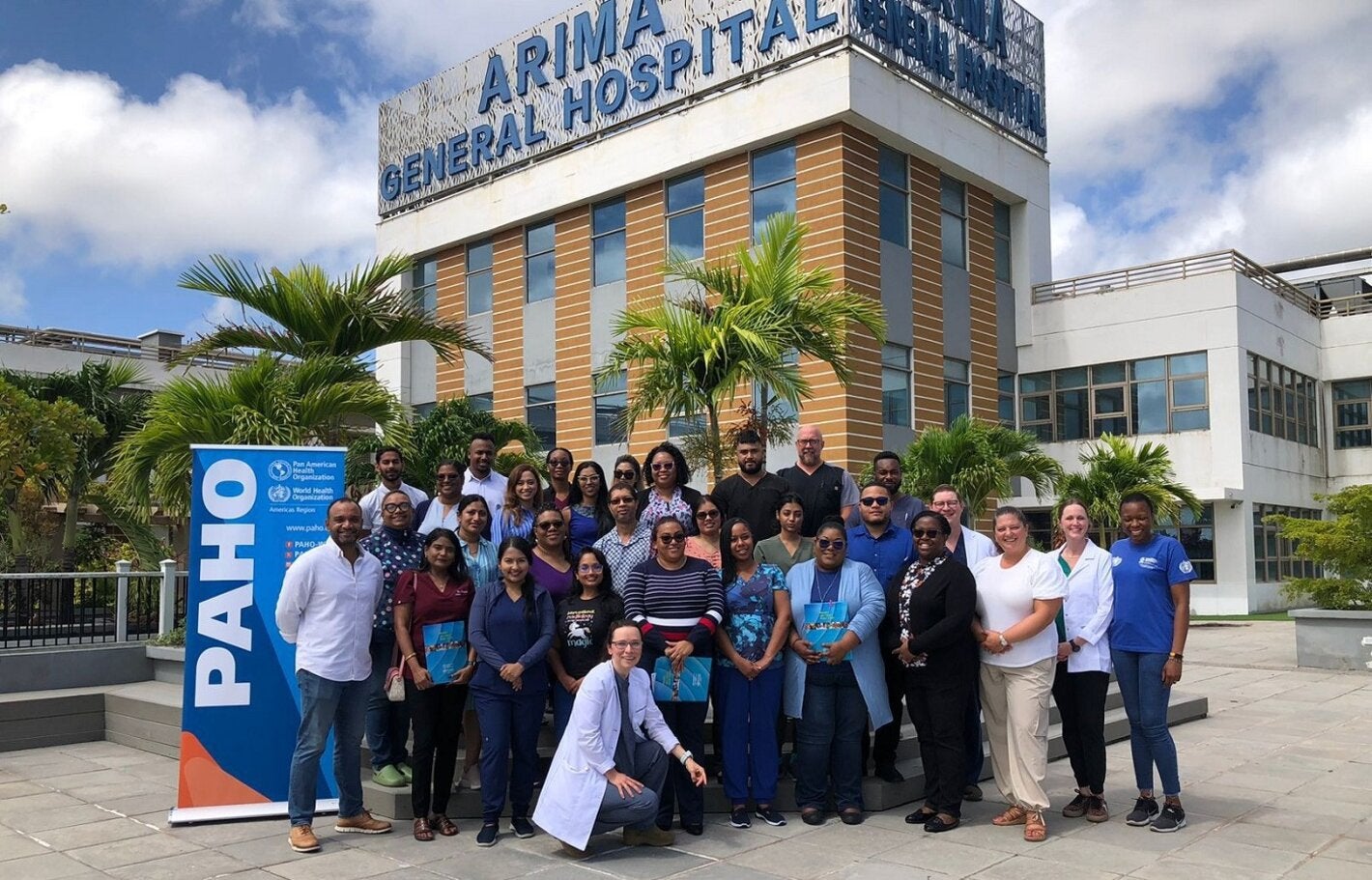
The training brought together participants from all five (5) Regional Health Authorities (RHAs) across Trinidad and from Tobago, including sonographers, radiologists, radiology residents, and vascular surgeons. It began with virtual sessions delivered via webinar, providing foundational knowledge and theoretical context. This was followed by an in-country workshop, which included expert-led technical lectures, and hands-on case presentations in a hybrid format with technical experts from PAHO Headquarters.
Following the workshop, between 5 -9 September, 2025 participants engaged in highly interactive sessions at five hospitals throughout the country: the Port of Spain General Hospital, Arima General Hospital, Eric Williams Medical Sciences Complex, Sangre Grande Hospital and San Fernando General/Teaching Hospital over a period of four days. Participants had the opportunity to practice scanning techniques on real patients under the guidance of the experienced facilitators. These sessions were instrumental in bridging the gap between theory and practice, allowing participants to refine their skills in a clinical setting and gain confidence in using vascular ultrasound technology.
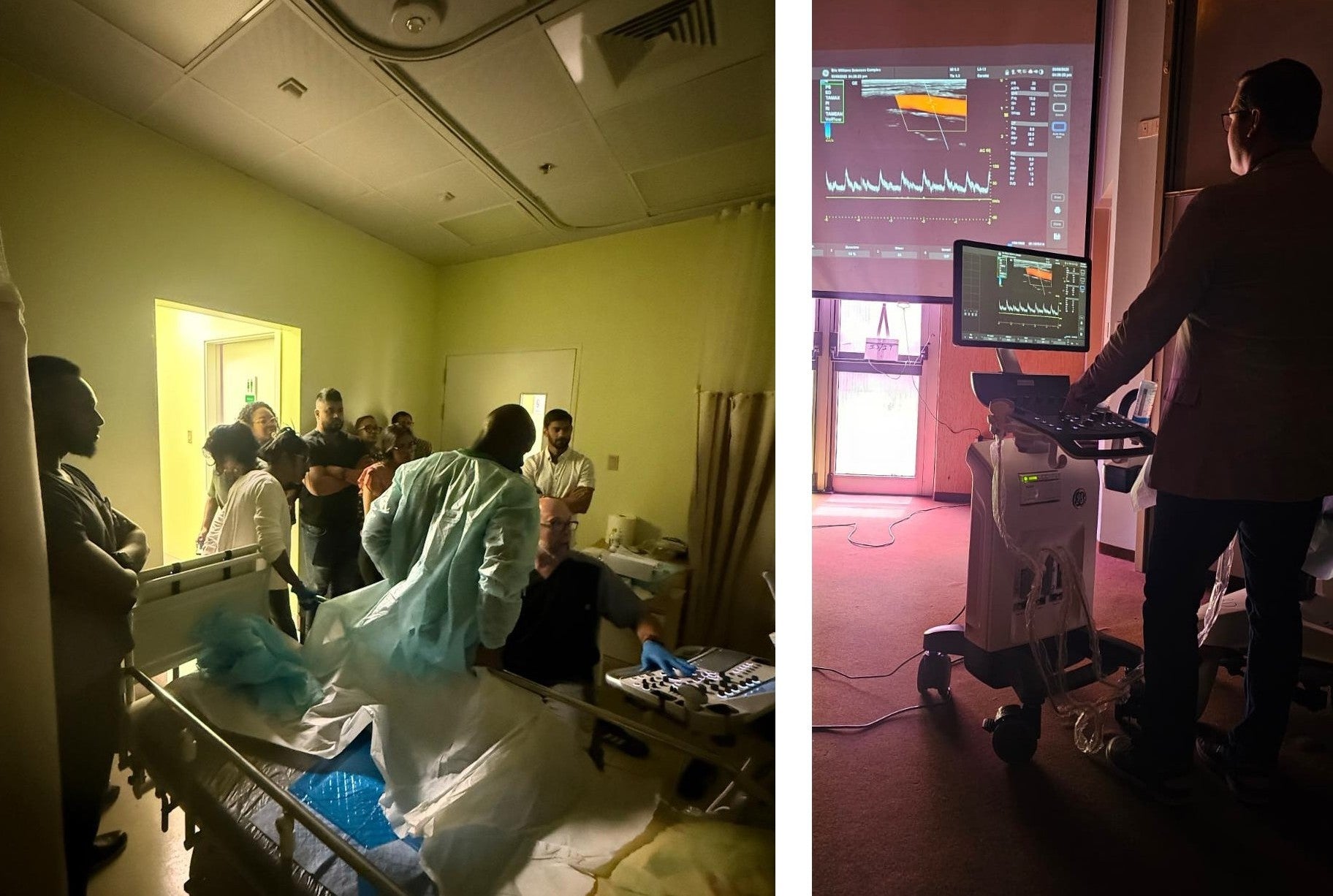
The Vascular Ultrasound Training Programme 2025 was formulated as a result of post-session consultations and feedback from the RHAs after the Breast Ultrasonography Workshop held in Trinidad and Tobago in 2023. Vascular ultrasonography was identified as a critical gap in diagnostic services. The current programme directly responds to that need, aiming to improve early detection and management of vascular complications, particularly those linked to diabetes and hypertension.
The contributions of Dr. Kayiba Medlen, Radiological Health Consultant, and Dr. Pablo Jiménez. Regional Advisor in Radiological Health of the IMT/AH, Dr Robbie Rampersad, Head of Radiology at the NCRHA and Dr. Shellon Bovell, Advisor - Health Systems and Services in the PAHO/WHO Trinidad and Tobago Country Office were invaluable in the development and execution of this important programme. The programme reflects a truly collaborative effort to build a connected and proactive health system that continues to prioritize prevention, safety, and high-quality care in Trinidad and Tobago