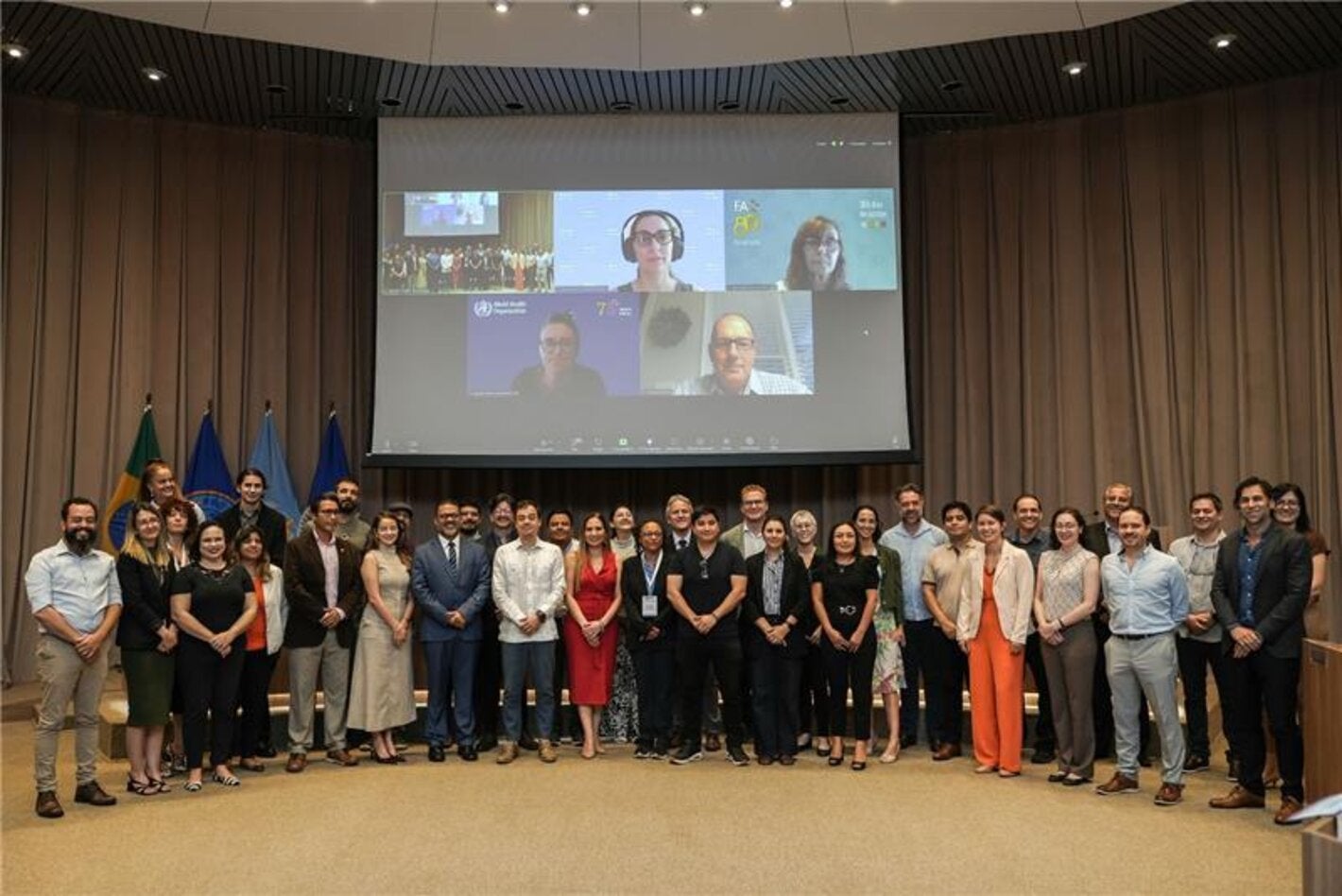
Brasilia, November 7, 2025 (PAHO/WHO) – Representatives from ten countries, together with regional and global institutions, met at the headquarters of the Pan American Health Organization (PAHO) in Brazil to analyze the regional context and advance the development of key recommendations on intersectoral genomic surveillance of zoonotic influenza within the framework of the Intersectoral Commission for the Prevention and Control of Zoonotic Influenza in the Americas (CIPCIZA).
During this technical meeting, experts from ministries of health, official veterinary services, environmental authorities, academia, and the WHO Collaborating Center on Animal Influenza at St. Jude Children's Research Hospital in Memphis participated. In addition, on behalf of PAHO, representatives from the World Health Organization (WHO), the Food and Agriculture Organization of the United Nations (FAO), the OFFLU network (FAO and World Organization for Animal Health network), the Andean Community, the Permanent Veterinary Committee of the Southern Cone, and the Inter-American Institute for Cooperation on Agriculture also took part. The meeting focused on strengthening collaboration across sectors to improve genomic surveillance capacities in the face of zoonotic threats with pandemic potential.
"Having integrated genomic surveillance across sectors is imperative if we are to confront the threats posed by zoonotic influenza and other emerging pathogens," said Dr. Andrea Vicari, head of the Infectious Hazards Management Unit at the Pan American Health Organization (PAHO).
One of the key topics discussed was the formal incorporation of genomic surveillance as an essential component of national surveillance systems across three sectors: public health, animal health, and wildlife. Participants also emphasized the importance of the secure and seamless exchange of genetic data and sample origin (metadata) between the three sectors.
"It is essential to incorporate an intersectoral genomic surveillance dynamic in which results from different sectors—animal health, wildlife, and public health—are jointly analyzed to obtain an integrated interpretation of viral evolution and its impact on cross-species transmission and disease severity," highlighted Dr. Manuel Sanchez, coordinator of the Epidemiology Area at PANAFTOSA.
Participants also identified existing capacities and critical gaps in infrastructure, equipment, technical training, and bioinformatic analysis. They discussed the development of technical guidelines and best practices to integrate genomic surveillance into national and regional protocols, as well as proposing mechanisms for joint data analysis and its application in risk assessment and public health decision-making.

Regional commitment to emerging threats
The recommendations developed will be compiled in a regional technical report that will guide intersectoral actions to strengthen genomic surveillance across countries. This work is particularly relevant given the continued circulation of avian influenza viruses in the Americas, the emergence of variants with new genetic markers, and recent evidence of decreased antiviral effectiveness, greater adaptability in mammals, and potential transmission from animals to humans.
Given this complexity, it is urgent to strengthen cooperation across sectors to consolidate effective surveillance, preparedness, and response systems that protect public and animal health and prevent the spread of disease.
About CIPCIZA
The Intersectoral Commission for the Prevention and Control of Zoonotic Influenza in the Americas (CIPCIZA) is a platform coordinated by PAHO that promotes technical cooperation among the public health, animal health, and environmental sectors under the One Health approach. CIPCIZA aligns with key resolutions adopted by Member States, such as the International Health Regulations (updated in 2024), the One Health Policy, and the Regional Genomic Surveillance Strategy, which promote preparedness for outbreaks and pandemics through the strategic use of scientific evidence.